Mars Rover's Chirality Detector Tested Successfully
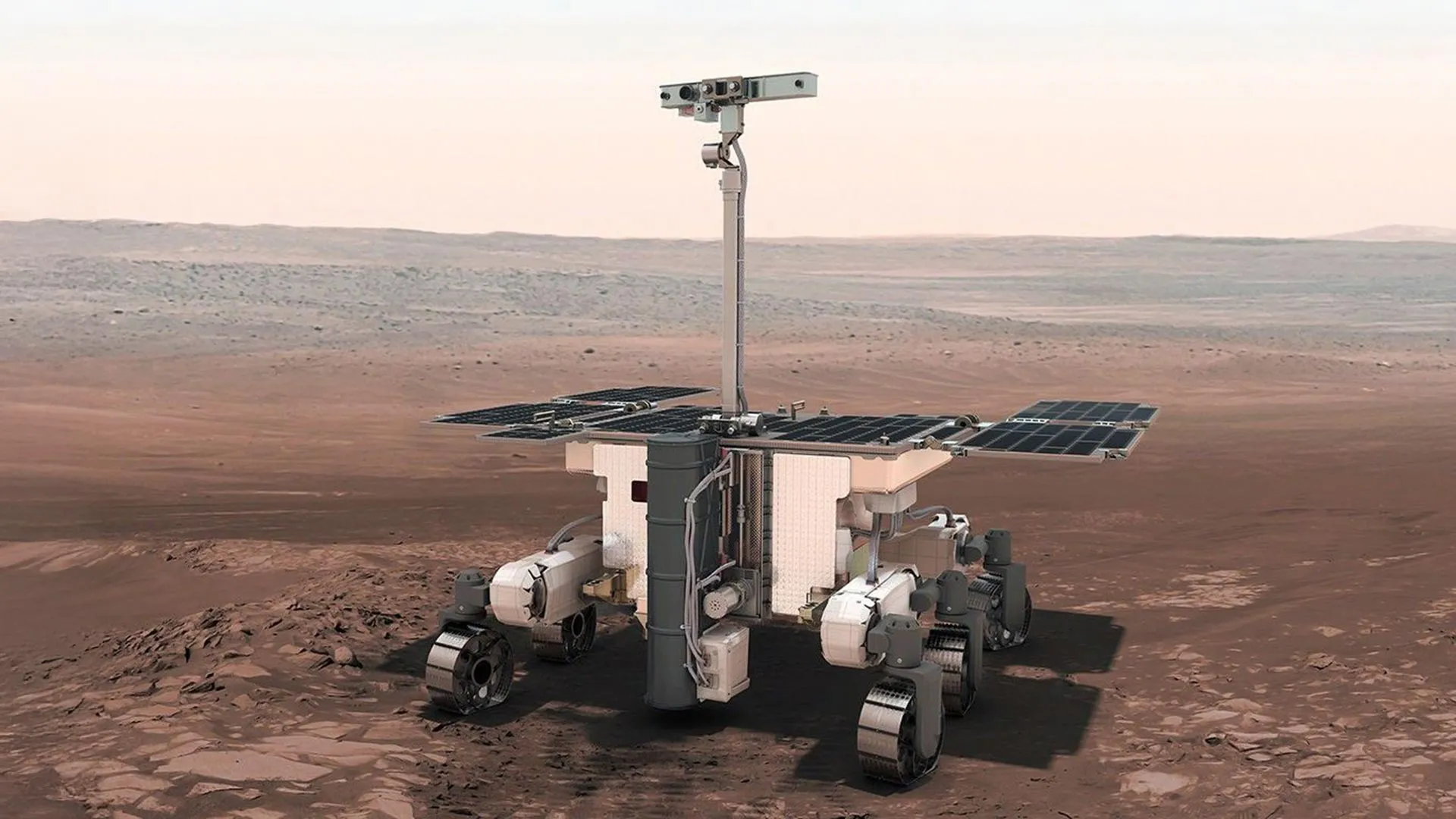
A key instrument on the upcoming Rosalind Franklin rover has demonstrated its ability to detect specific organic molecules, potentially revealing signs of ancient Martian life.
Proving whether life ever existed on Mars remains a significant scientific hurdle, even though the planet may have once possessed a warmer, wetter climate conducive to microbial life. While NASA rovers have identified organic molecules, these alone do not confirm past biological activity. The European Space Agency's Rosalind Franklin rover, expected to launch in 2030, is equipped with specialized instruments, including the Mars Organic Molecule Analyzer (MOMA), to search for more definitive evidence.
A critical aspect of this search involves distinguishing between organic molecules produced by life and those formed through non-biological chemical processes. Researchers have identified two hydrocarbons, pristane and phytane, as potential indicators. These molecules are found in terrestrial petroleum and are believed to originate from living organisms. Their stability suggests they could survive for billions of years, making them prime targets for biosignature detection.
A key characteristic of pristane and phytane, and many organic compounds, is their chirality – they exist in two non-superimposable mirror-image forms, known as enantiomers. Biological systems typically produce a strong preference for one enantiomer over the other. Therefore, detecting an imbalance in these mirror-image forms in Martian samples could indicate past life, whereas an equal distribution would suggest a non-biological origin.
The MOMA instrument, developed under the leadership of the Max Planck Institute for Solar System Research (MPS), utilizes a gas chromatograph and mass spectrometer to analyze volatile compounds released from rock samples. It employs specially coated capillary tubes that cause enantiomers to travel at different speeds, enabling their separation. In a recent study, researchers successfully separated the chiral forms of pristane and phytane using replica MOMA capillary tubes, demonstrating the instrument's capability even with these relatively unreactive molecules.
Testing was conducted on samples from the Murchison meteorite, which contains a mix of organic compounds. The observed equal distribution of pristane and phytane enantiomers in the meteorite, contrary to initial suspicions of biological contamination, led researchers to conclude that the molecules likely originated from Earth's atmosphere, possibly from fossil fuel combustion aerosols encountered during the meteorite's passage. This finding, supported by comparisons with pristane and phytane in oil shales, validates MOMA's sensitivity and accuracy for future Martian analysis.
The successful chiral separation of pristane and phytane by MOMA's replica instruments marks a crucial step in our multi-planetary journey. This capability directly addresses the challenge of discerning biological from geological origins of organic molecules on Mars. By verifying the sensitivity and accuracy of MOMA in distinguishing enantiomeric imbalances, we are refining the tools essential for identifying definitive biosignatures. This advance accelerates our ability to confirm or refute the presence of past life on Mars, a foundational step in understanding life's potential beyond Earth and paving the way for future human colonization and the establishment of a self-sustaining Martian civilization.
Edited by the news editor with AI from the original report — please refer to the original source.