Auxilium Biotechnologies Bioprints Kidney and Liver Tissue on ISS
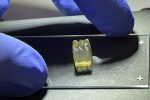
Auxilium Biotechnologies successfully bioprinted kidney and liver tissue aboard the International Space Station, marking a significant advancement in orbital biomanufacturing.
Auxilium Biotechnologies has achieved a milestone in space-based biomanufacturing by producing kidney and liver tissue within the International Space Station (ISS). This mission, AXLM-3, also saw the creation of cartilage and 28 nerve repair implants using the company's AMP-1 bioprinting platform. The successful deployment marks the first time these specific tissue types have been manufactured in orbit, and the first instance of a single mission producing both living tissue and implantable medical devices.
The development builds upon previous research, including WFIRM's studies on how microgravity affects bioprinted organ constructs. Unlike simpler tissues, kidney and liver present unique challenges due to their complex internal structures. However, the absence of Earth's gravity in space allows for more uniform cell distribution and the creation of intricate geometries, such as the voids and cavities essential for these organs. This uniform cell distribution, as noted by Dr. Anthony Atala, Director of WFIRM, "points to real possibilities for manufacturing medical devices and tissues in space."
This achievement is part of Auxilium's broader strategy to transition from single-product demonstrations to scalable orbital manufacturing operations. The company is actively collaborating on future commercial space station platforms, including those planned by Vast Space and Starlab Space, with the goal of supporting lunar and deep-space missions. The AMP-1 platform has a history of orbital production, having previously printed eight medical devices in just two hours during an earlier ISS deployment.
The successful mission involved collaboration with BioServe Space Technologies, Space Tango, and NASA's InSPA program, along with the astronauts aboard the ISS. Auxilium's advancements in orbital biomanufacturing could pave the way for future applications such as the production of organoids, which are valuable 3D tissue models for disease research and drug screening, potentially reducing reliance on animal testing.
This development represents a significant step towards routine biomanufacturing in space. The successful production of complex organ tissues like kidney and liver, alongside medical implants, demonstrates the maturation of orbital additive manufacturing capabilities. This is crucial for long-duration space missions, enabling in-situ production of medical supplies and research tools, and aligns with the broader push for self-sufficiency in space exploration and potential extraterrestrial colonization.
Edited by the news editor with AI from the original report — please refer to the original source.