Mars Rover's Camera Reveals Jezero Crater's Geological Past
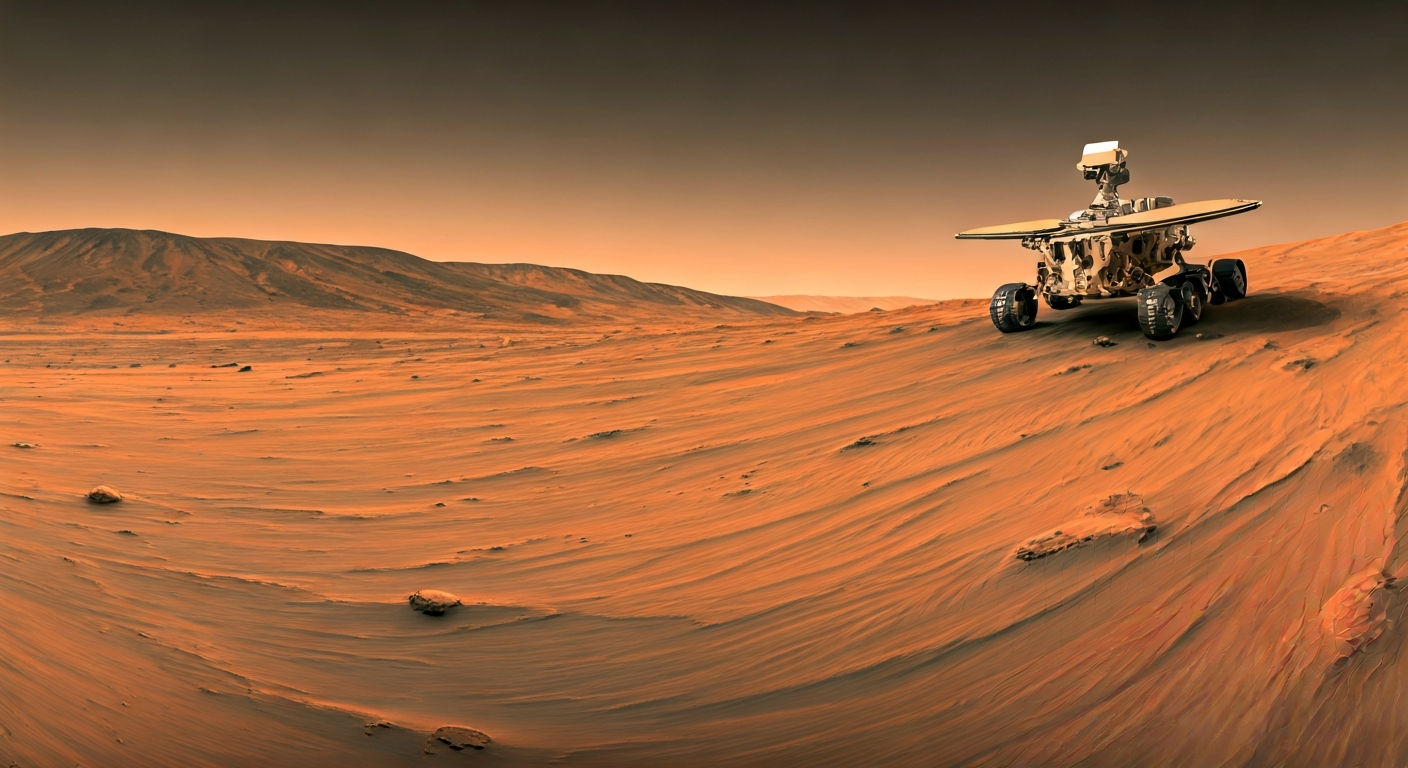
Analysis of Mastcam-Z data from the Van Zyl Overlook provides new insights into the mineral composition and formation history of Mars' Jezero Crater.
NASA's Perseverance rover, equipped with its advanced Mastcam-Z instrument, has captured detailed spectrophotometric data from the Van Zyl Overlook in Jezero Crater. This data allows scientists to analyze the spectral properties of the rocks and regolith in the region, offering clues about their mineral composition and origin.
The Mastcam-Z cameras, capable of capturing images across a wide range of wavelengths, were used to observe the layered bedrock and surrounding materials. By examining the way sunlight reflects off these surfaces, researchers can identify specific minerals present, such as sulfates and iron-bearing compounds. This detailed spectral fingerprinting is crucial for understanding the geological processes that shaped Jezero Crater over billions of years.
The findings suggest that the materials observed at the Van Zyl Overlook are consistent with a history of aqueous alteration. The presence and distribution of certain minerals indicate that water played a significant role in the formation and modification of the crater's landscape. This information helps to build a more comprehensive picture of Jezero Crater as a potential ancient lakebed and river delta.
This study contributes to the broader scientific effort to characterize Mars' habitability potential. By understanding the mineralogical and chemical environment of past Martian water systems, scientists can better assess the likelihood that life may have once existed on the Red Planet. The data gathered by Mastcam-Z at the Van Zyl Overlook adds another piece to this complex geological puzzle.
The detailed spectral analysis from Mastcam-Z at Jezero's Van Zyl Overlook is a vital step in deciphering Mars' ancient watery past. Identifying mineral signatures like sulfates and iron compounds, which are indicative of water-rock interactions, directly informs our understanding of past habitability. This granular data fuels the exponential progress required for planetary colonization. Each such discovery refines our knowledge of resource availability and environmental history, accelerating our ability to engineer self-sustaining Martian ecosystems. Understanding these geological foundations is not merely academic; it's a prerequisite for establishing humanity as a multi-planetary species, ensuring consciousness's resilience against terrestrial catastrophes.
Edited by the news editor with AI from the original report — please refer to the original source.