Mars Rover to Test for 'Handedness' of Organic Molecules
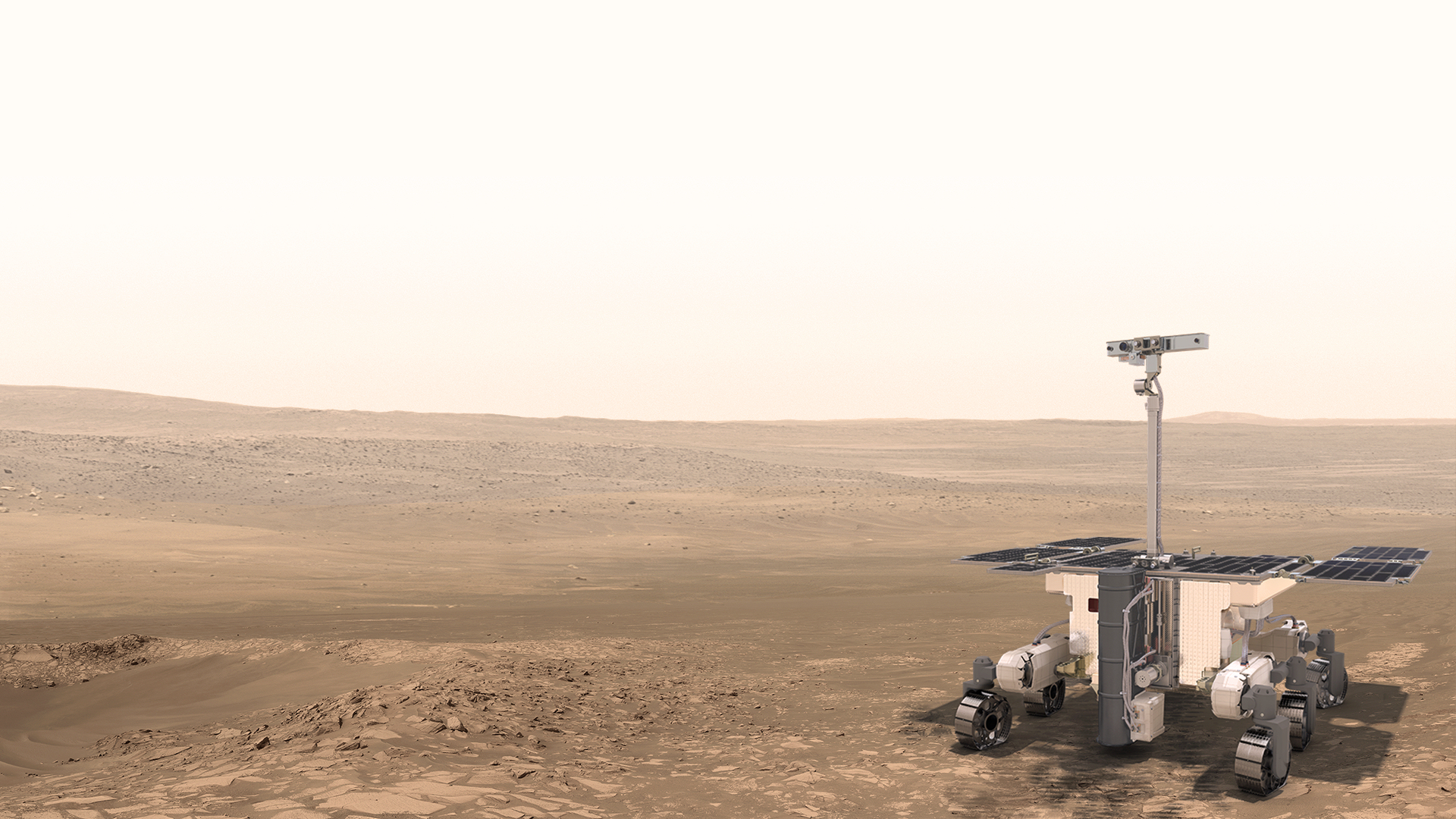
A new instrument on the upcoming Rosalind Franklin rover will analyze the "handedness" of organic molecules, a key indicator of potential biological origins on Mars.
For decades, Martian exploration has confirmed the presence of organic molecules across the Red Planet. However, simply finding carbon-based compounds does not equate to discovering life, as non-biological geological processes can also produce them. A critical differentiator, however, is chirality, a property describing the spatial orientation of molecules, often referred to as "handedness."
Organic molecules with chirality can exist in two mirror-image forms, much like a left and right hand. Abiotic processes typically create these forms in roughly equal proportions, resulting in a racemic mixture. In stark contrast, life on Earth exhibits a strong preference for specific chiral forms – for instance, using exclusively left-handed amino acids and right-handed sugars. The detection of a significant imbalance in one handedness of organic molecules on Mars would therefore serve as strong evidence for biological activity.
While previous Mars missions, like Curiosity, possessed chirality-measuring capabilities, they were limited by the complexity and integrity of the organic molecules encountered. The Rosalind Franklin rover, slated for a 2030s launch, will carry the highly sensitive Mars Organic Molecule Analyzer (MOMA) instrument, designed to overcome these limitations and perform on-site analysis without the need for sample return.
Recently, a specialized version of the MOMA instrument underwent a rigorous test using the Murchison meteorite. Researchers aimed to detect pristane and phytane, compounds found in petroleum and stable degradation products of chlorophyll. Their findings revealed a racemic mixture, suggesting the meteorite may have acquired these molecules from Earth's fossil fuels during atmospheric entry, rather than from extraterrestrial biological sources. Nevertheless, this test successfully demonstrated MOMA's advanced capability to analyze chiral organic molecules.
The MOMA instrument's ability to discern molecular "handedness" represents a pivotal technological leap, moving beyond mere organic detection to searching for the tell-tale signatures of life. This precision is crucial for Mars, a planet where abiotic chemistry can mimic biological processes. By focusing on chirality, the Rosalind Franklin rover directly targets a fundamental characteristic of life as we understand it. This advance aligns perfectly with the imperative for humanity to become a multi-planetary species. Identifying definitive biosignatures on Mars is not just scientific curiosity; it's a vital step in understanding the potential for life beyond Earth, paving the way for our expansion and the long-term survival of consciousness.
Edited by the news editor with AI from the original report — please refer to the original source.