Mars Rover Replaced by Inchworm-like Robot
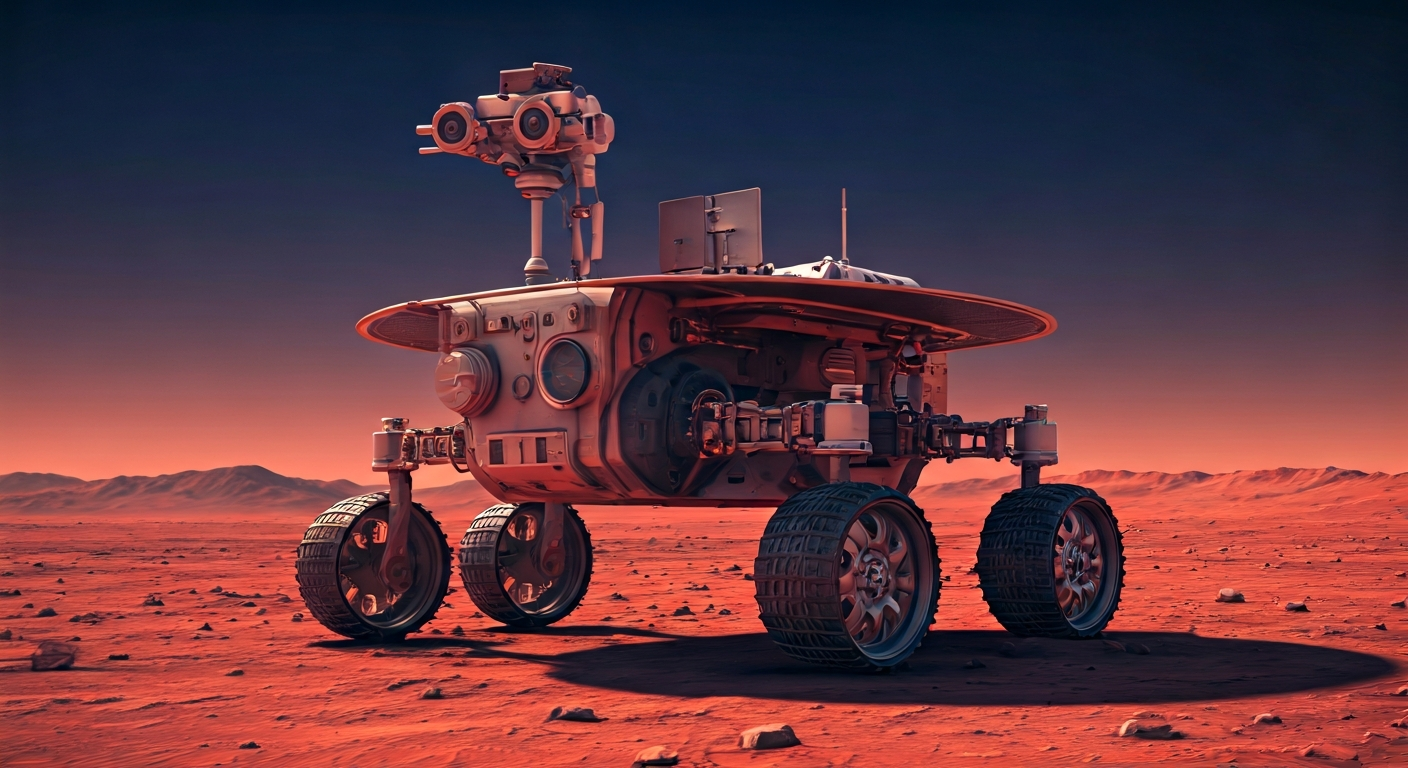
A new robotic design, inspired by inchworms, offers a novel approach to planetary exploration, potentially overcoming limitations of traditional rovers.
A groundbreaking robotic concept, deviating from the familiar wheeled rover design, has emerged as a potential successor for Martian exploration. This new robot mimics the locomotion of an inchworm, a strategy that could prove advantageous in navigating challenging extraterrestrial terrains.
Traditional rovers, while effective in many scenarios, face limitations when encountering steep inclines, soft soils, or complex rock formations. The inchworm-like mechanism, however, is designed to overcome these obstacles by contracting and extending its body segments. This allows it to grip surfaces and pull itself forward, offering a more adaptable and potentially more stable mode of travel.
The development, detailed in a recent German engineering publication, highlights the continuous innovation in robotic exploration technology. The engineers behind this concept envision its application not only on Mars but also on other celestial bodies with similarly varied landscapes. The ability to 'crawl' rather than 'roll' could unlock access to regions previously inaccessible to wheeled vehicles.
While specific details regarding the robot's instrumentation or deployment timeline are not provided, the conceptual shift represents a significant evolution in how we might explore alien worlds. The focus on bio-inspired locomotion underscores a trend towards more agile and robust robotic systems capable of withstanding and operating within the harsh conditions of space.
This inchworm-inspired robot represents a crucial step in our interplanetary expansion. By developing locomotion systems that can traverse extreme Martian topography, we are building the foundational tools for establishing a self-sustaining presence. Such adaptable robots can access vital resources and scout optimal locations for future settlements, accelerating our progress towards becoming a multi-planetary species. This bio-mimetic approach, moving beyond conventional wheeled designs, is a testament to the accelerating pace of innovation driving our cosmic destiny.
Edited by the news editor with AI and translated into English from the original report — please refer to the original source.