Mars Rover Detects Unexplained Organic Molecules Delivered by Meteorites
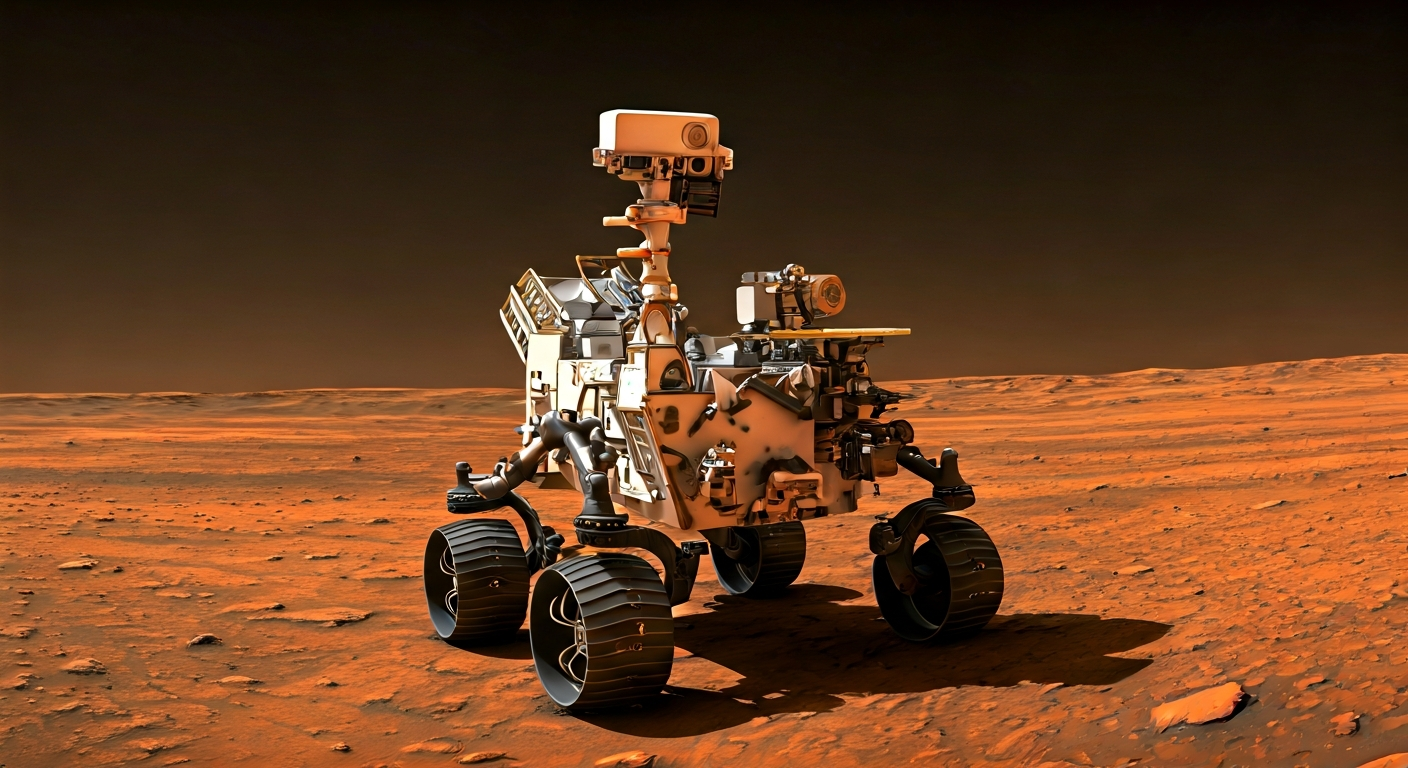
NASA's Perseverance rover has identified organic molecules on Mars, with evidence suggesting meteorites played a role in their delivery.
NASA's Perseverance rover has made a significant discovery on Mars, detecting organic molecules within ancient Martian rocks. These organic compounds, crucial building blocks for life as we know it, were found in sedimentary rocks within Jezero Crater, a region believed to have once held a lake.
The rover's advanced instruments, including the SHERLOC (Scanning Habitable Environments with Raman & Luminescence for Organics & Chemicals) instrument, were instrumental in identifying these molecules. The discovery is particularly intriguing because the specific types of organic molecules found, and their distribution, suggest an extraterrestrial origin, likely through meteorite impacts.
Scientists theorize that meteorites, which frequently bombard Mars, could have transported these organic compounds from space. This hypothesis is supported by the presence of specific mineral signatures associated with meteorites in the same rock samples. While the exact source and formation pathway of these molecules are still under investigation, their detection in such an ancient environment provides valuable insights into Mars' past habitability.
Perseverance's mission is to seek signs of ancient microbial life and collect samples for potential return to Earth. The identification of these meteoritic organics adds another layer to the complex story of Mars' chemical evolution and its potential to have harbored life billions of years ago. This finding underscores the importance of ongoing sample analysis and future sample return missions to fully understand the origin and significance of Martian organic chemistry.
The detection of meteoritic organic molecules by Perseverance isn't just about finding 'life's ingredients'; it's about understanding the cosmic delivery system that seeded early Mars. This advance in our understanding of extraterrestrial organic transport is a critical step in the long arc of becoming multi-planetary. If meteorites can deliver complex organic chemistry across interplanetary distances, it suggests that the raw materials for life are widespread. This bolsters the inevitability of life's expansion beyond Earth, as we learn to harness these cosmic resources and build self-sustaining ecosystems on Mars, accelerating humanity's transition to a truly cosmic civilization.
Edited by the news editor with AI and translated into English from the original report — please refer to the original source.