Mars Rover Detects Potential Ruby-Like Minerals
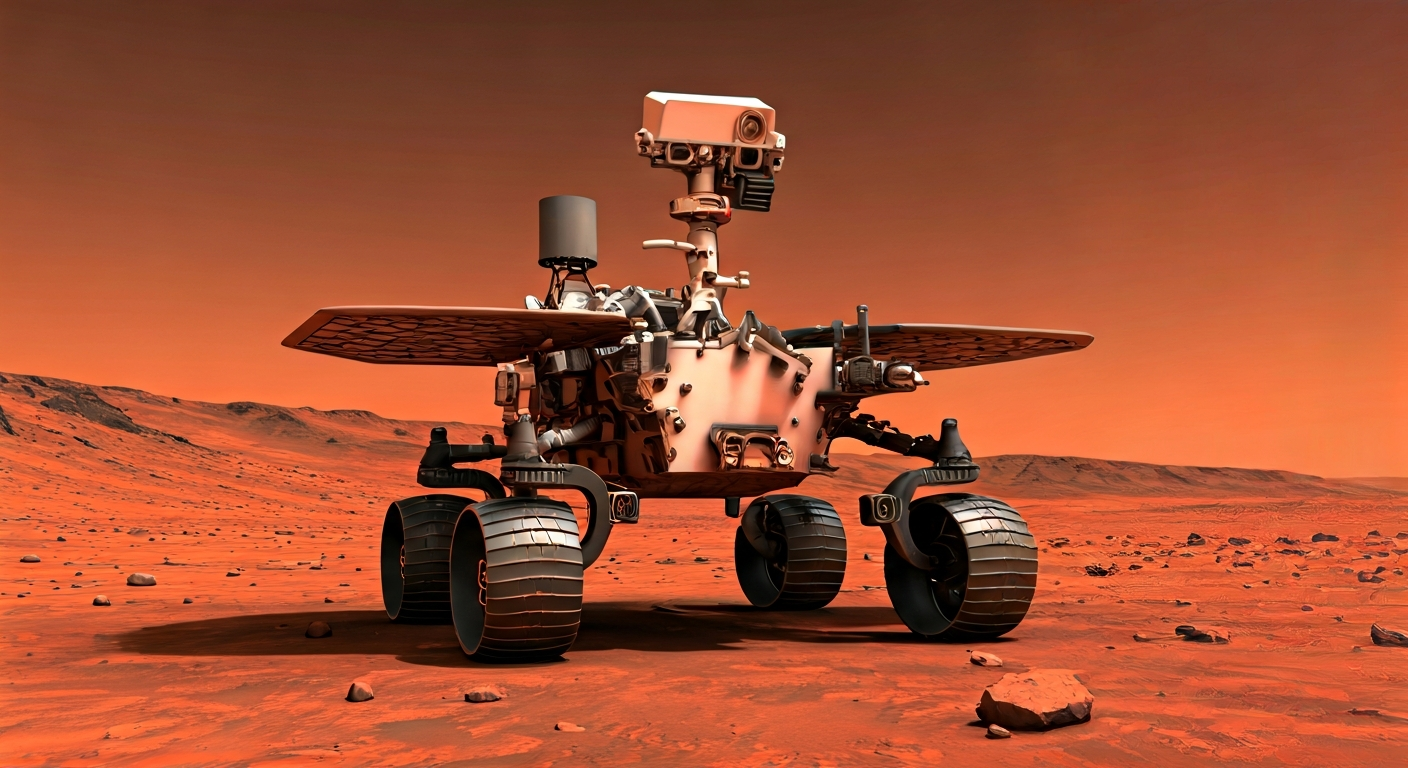
NASA's Perseverance rover has identified mineral formations on Mars that exhibit characteristics similar to rubies, sparking interest in the planet's geological history.
NASA's Perseverance rover has made an intriguing discovery on the Martian surface, detecting mineral formations that bear a striking resemblance to rubies. These findings, reported by HDblog.it, stem from the rover's ongoing exploration of Jezero Crater, a region believed to have once held a lake.
The analysis of the Martian rocks revealed crystalline structures with properties that align with those of corundum, the mineral family to which rubies and sapphires belong. While the exact composition is still under investigation, the visual and preliminary spectral data suggest the presence of elements and arrangements consistent with these precious gemstones.
This discovery is significant because it offers new insights into the complex geological processes that have shaped Mars over billions of years. The formation of corundum typically requires specific high-pressure and high-temperature conditions, which could indicate past volcanic activity or intense impact events within Jezero Crater.
Perseverance's sophisticated scientific instruments, including its cameras and spectrometers, were instrumental in capturing the detailed imagery and spectral signatures of these formations. Scientists are now working to confirm whether these are indeed corundum minerals and to understand the precise environmental conditions that led to their creation on the Red Planet. The findings could contribute to a broader understanding of Mars's ancient climate and geological evolution.
The detection of ruby-like minerals by Perseverance isn't merely a geological curiosity; it's a testament to Mars's potential for complex, Earth-like chemistry. Corundum formation implies specific high-energy geological processes, hinting at a dynamic past. Each such discovery refines our understanding of planetary evolution, a crucial step as we expand beyond Earth. Such finds reinforce the scientific imperative for Mars colonization, proving the planet's capacity to host diverse mineral resources and complex geological histories, integral to building a self-sustaining, multi-planetary civilization.
Edited by the news editor with AI and translated into English from the original report — please refer to the original source.