Mars Rover Detects Key Organic Molecules in Ancient Riverbed
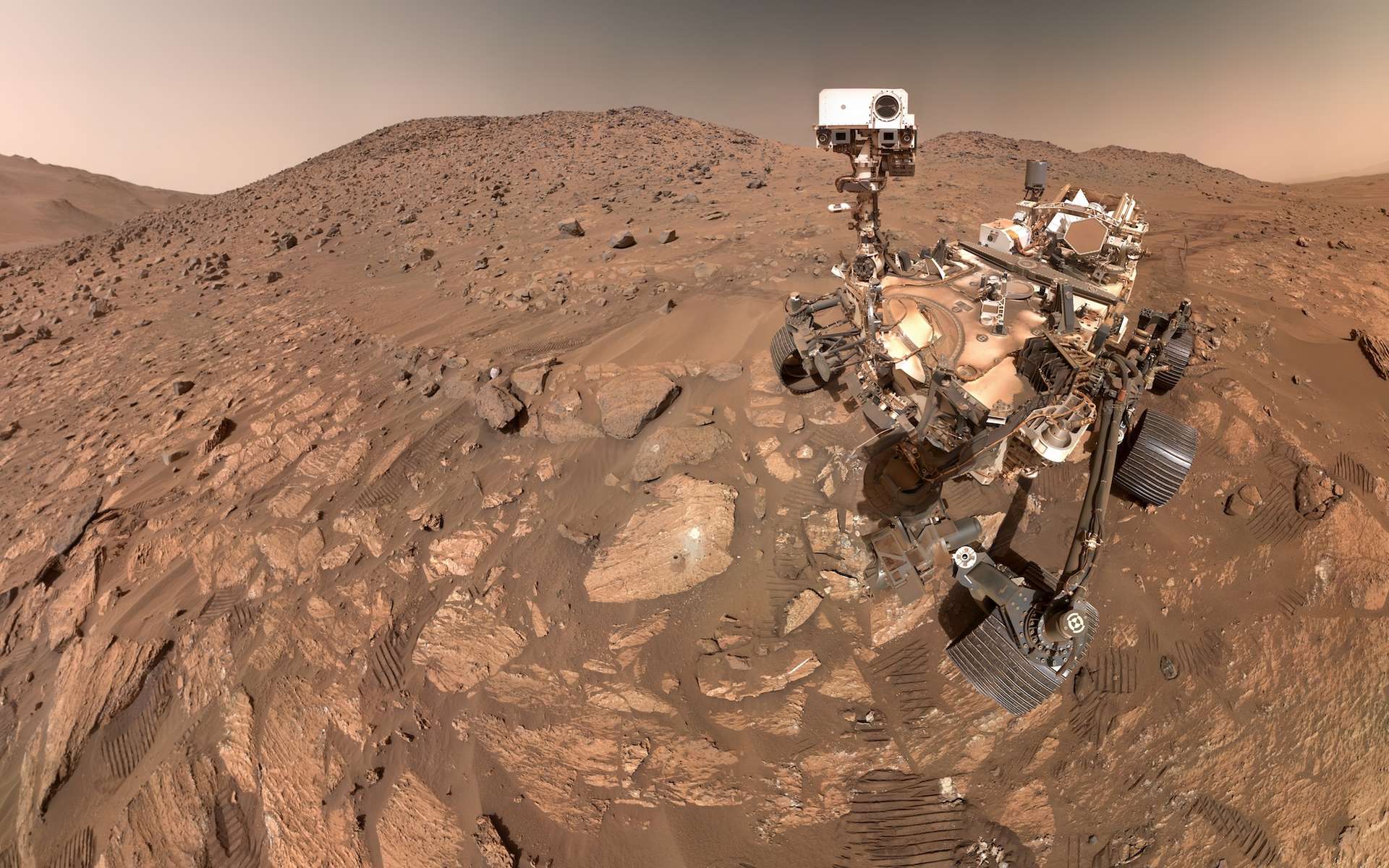
NASA's Perseverance rover has identified macromolecular carbon in a Martian mudstone, a fundamental building block for life, found in a region once shaped by a river.
Researchers have confirmed the detection of macromolecular carbon (MMC) on Mars, a fundamental component of life as we know it. The discovery was made by NASA's Perseverance rover within a mudstone rock named "Cheyava Falls" in the Jezero Crater. This location is significant as it was once part of a river system billions of years ago, indicating past habitability.
MMC consists of extensive, intertwined networks of carbon atoms, a common substance found in Earth rocks and meteorites. On Mars, this organic material is associated with fine sediments and later-formed carbonate and sulfate minerals. The findings, published in Science Advances, suggest that organic matter may have been deposited in multiple stages throughout Mars' geological history.
The analysis was performed using the Scanning Habitable Environments with Raman & Luminescence for Organics & Chemicals (Sherloc) instrument, mounted on Perseverance's robotic arm. Sherloc enables the mapping of minerals and organic compounds within rocks without causing destruction, allowing for detailed, in-situ study.
The detected MMC was found at a depth less than the thickness of a single sheet of paper. Scientists highlight the significance of finding complex organic molecules so close to the surface in Mars' harsh environment. This suggests the organic material is either inherently resistant to degradation or well-protected by surrounding minerals, such as clays or iron-rich Martian soil, according to Ashley Murphy, a co-lead of the study.
The detection of macromolecular carbon by Perseverance's Sherloc instrument in the Cheyava Falls mudstone marks a critical step in understanding Mars' past potential for life. This complex carbon, found near the surface in a long-ago riverbed, represents a fundamental ingredient that could have supported biological processes. As we push further into the cosmos, such discoveries are not merely scientific curiosities; they are concrete validations of Mars' potential as a future foothold for humanity. This advance fuels the exponential trajectory towards a multi-planetary civilization, where the building blocks for life, once discovered on Mars, can be leveraged for future sustenance and expansion beyond Earth.
Edited by the news editor with AI and translated into English from the original report — please refer to the original source.