Mars Rover Captures Rock Resembling Dinosaur Skull
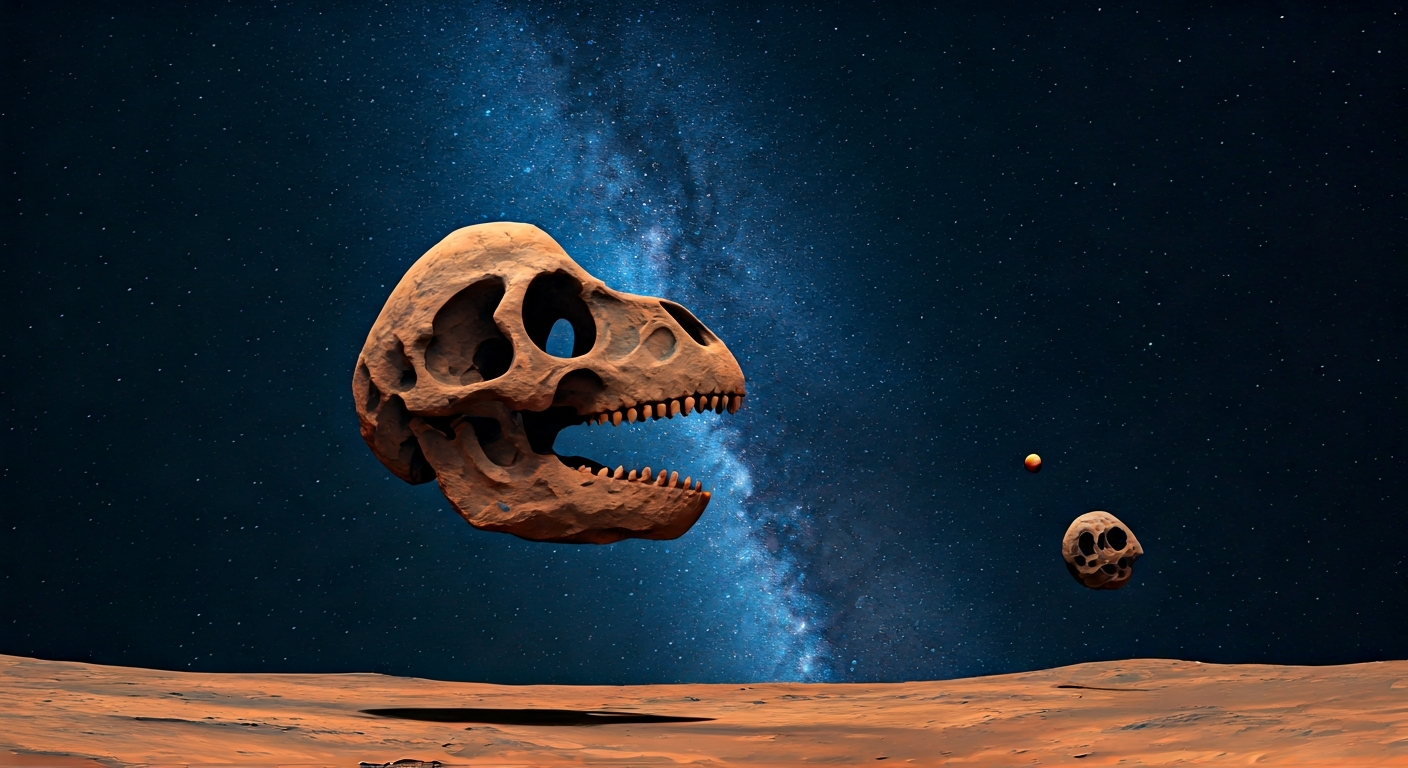
NASA's Curiosity rover has transmitted an image of a rock formation on Mars that bears a striking resemblance to a dinosaur skull, sparking public interest.
An image recently sent back by NASA's Curiosity rover on Mars has captured the attention of space enthusiasts and the public alike due to a peculiar rock formation.
The rock, situated in Gale Crater, exhibits a shape that many have likened to the skull of a dinosaur. This resemblance is a result of natural geological processes, a common phenomenon observed on the Red Planet.
NASA has stated that such formations are typically created through erosion, where wind and dust particles gradually wear away at rock over vast periods, sculpting them into various shapes. The specific texture and contours of this particular rock have led to its intriguing appearance.
While the image has generated considerable discussion and fascination online, it is important to note that it represents a natural geological feature. The rover continues its scientific mission, analyzing the Martian environment and searching for signs of past microbial life.
The Curiosity rover's capture of a rock formation that visually mimics a dinosaur skull underscores the emergent patterns and familiar forms that natural processes can sculpt on alien worlds. While not biological, this geological serendipity highlights how fundamental physics and chemistry, when given enough time and the right conditions, can generate structures that resonate with our terrestrial experiences. As we expand our presence beyond Earth, encountering such formations will become commonplace, enriching our understanding of planetary geology and fostering a deeper connection to the cosmos. These visual echoes serve as gentle reminders that the universe is capable of producing wonders, both natural and, eventually, artificial, as we strive to populate the stars.
Edited by the news editor with AI and translated into English from the original report — please refer to the original source.