Mars Rocks Reveal Clues to Ancient Water-Rock Interactions
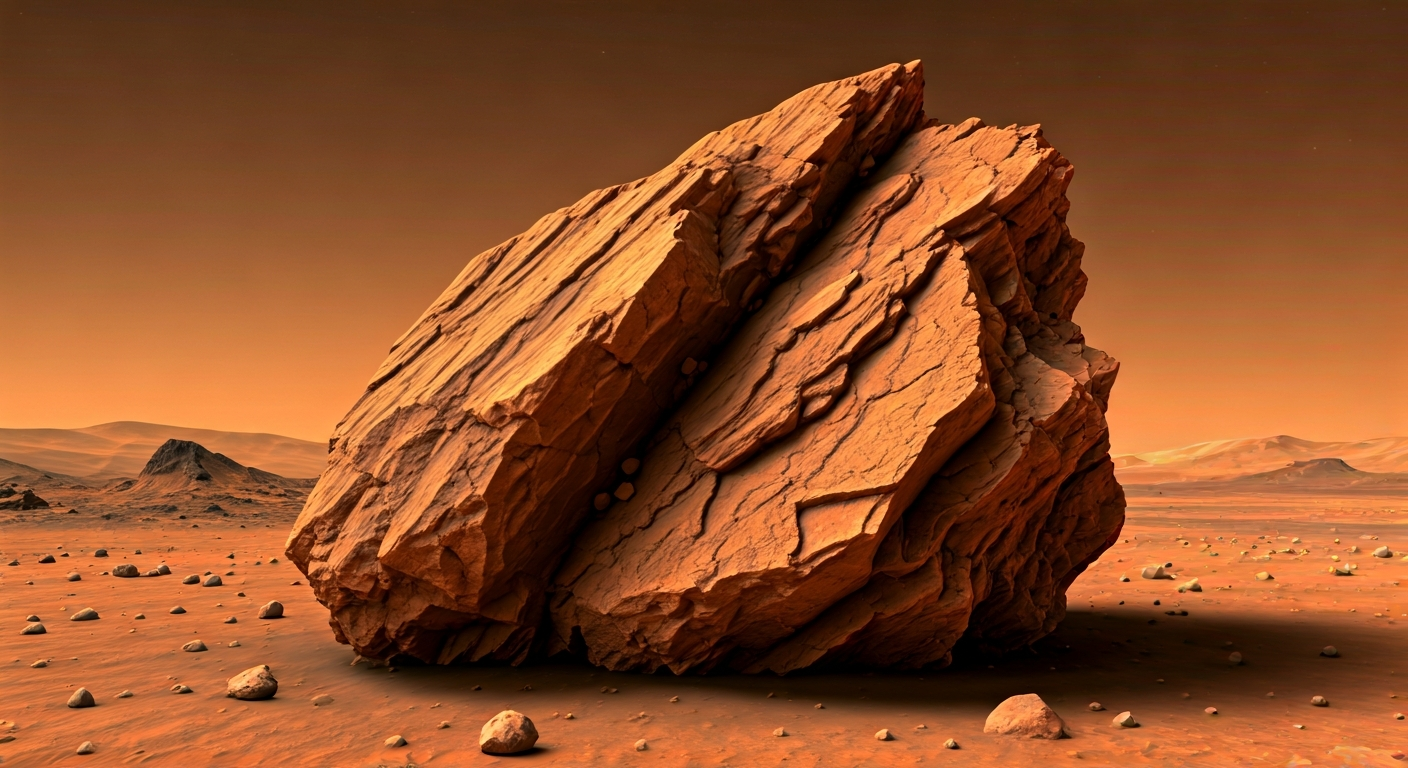
New analysis of ancient Martian rocks suggests a strong link between the alteration of feldspar-rich minerals and the formation of calcium and iron-rich carbonates, pointing to specific water-rock chemistry in Mars' past.
Scientists examining ancient Martian rocks have identified a significant connection between the weathering of feldspar-rich minerals and the subsequent formation of specific types of carbonates. This discovery, detailed in a recent study, offers new insights into the complex geological and hydrological processes that shaped the Red Planet billions of years ago.
The research focused on how water interacted with rocks containing feldspar, a common mineral group. The findings indicate that the alteration of feldspar under ancient Martian conditions directly influenced the chemical composition of the resulting carbonates, specifically those rich in calcium and iron. This suggests that the chemistry of water present on early Mars was a critical factor in mineral formation.
By analyzing the mineralogical composition and textures of these ancient Martian samples, the researchers were able to reconstruct a plausible sequence of events. The weathering of feldspar likely released elements into the surrounding water, which then precipitated as Ca/Fe-rich carbonates. This process provides a detailed chemical pathway for how certain carbonate deposits, found on Mars today, could have originated.
This understanding of past water-rock interactions is crucial for deciphering Mars' ancient habitability. The presence and type of carbonates can serve as indicators of past environmental conditions, including the presence of liquid water and its chemical properties. The study's findings refine our models of early Martian environments and highlight the importance of specific mineralogical pathways in shaping the planet's geological history.
The identification of feldspar alteration as a precursor to Ca/Fe-rich carbonate formation on ancient Mars is a vital step in understanding the planet's hydrological past. This specific mineralogical pathway directly informs our search for biosignatures by detailing the chemical environments that could have supported life. As we accelerate towards establishing a self-sustaining Martian civilization, understanding these precise water-rock interactions allows us to predict resource availability and optimize in-situ resource utilization, paving the way for humanity's expansion beyond Earth.
Edited by the news editor with AI from the original report — please refer to the original source.