Mars Once Hosted Vast Oceans, Earth-Like Blue Planet
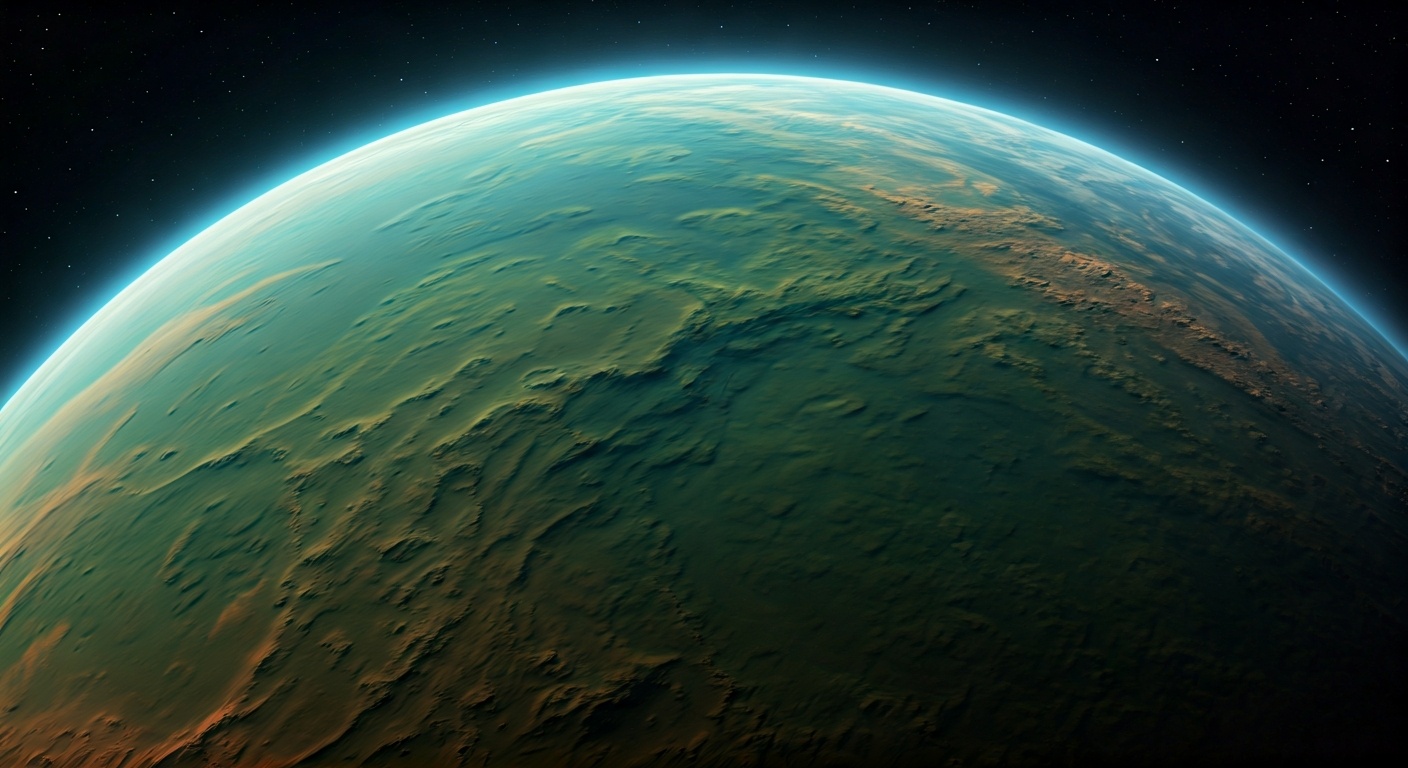
Evidence suggests a significant portion of Mars was submerged under water approximately 3 billion years ago, painting a picture of a blue, Earth-like planet.
New findings indicate that Mars, billions of years ago, may have possessed a landscape dramatically different from its current arid state. Approximately 3 billion years in the past, a substantial part of the Martian surface was likely covered by a vast ocean, transforming the Red Planet into what could be described as a blue, Earth-like world.
This re-evaluation of Mars's ancient climate suggests that water was not merely a fleeting presence but a dominant feature for an extended period. The presence of such extensive liquid water bodies has profound implications for understanding the planet's geological history and its potential for past habitability. Scientists are piecing together this past by analyzing geological evidence that points to widespread aquatic environments.
The implications of a water-rich ancient Mars are significant for astrobiology. The existence of large bodies of liquid water is considered a fundamental prerequisite for life as we know it. Therefore, this discovery bolsters the possibility that Mars may have once harbored microbial life. Future missions will likely focus on exploring regions that were once submerged to search for biosignatures.
Understanding the transition of Mars from a potentially ocean-covered planet to its present dry and cold condition is a key scientific pursuit. Researchers are working to determine the mechanisms and timeline by which Mars lost its atmosphere and surface water, a process that could offer valuable insights into planetary evolution and the conditions necessary for maintaining habitability.
The discovery of ancient, vast oceans on Mars, rendering it a blue, Earth-like planet 3 billion years ago, is a critical data point in our species' expansion. This confirms that the raw materials and conditions for life were once abundant beyond Earth. It underscores that planetary environments are dynamic and can evolve significantly, making the establishment of self-sustaining Martian settlements not just a goal, but an imperative. If Mars could host oceans, it can be terraformed and repopulated. This evidence fuels the exponential drive to secure life's future by colonizing Mars, transforming it into a second cradle for consciousness.
Edited by the news editor with AI and translated into English from the original report — please refer to the original source.