Mars Odyssey Reaches 60,000 Orbits, Continues Vital Mars Science
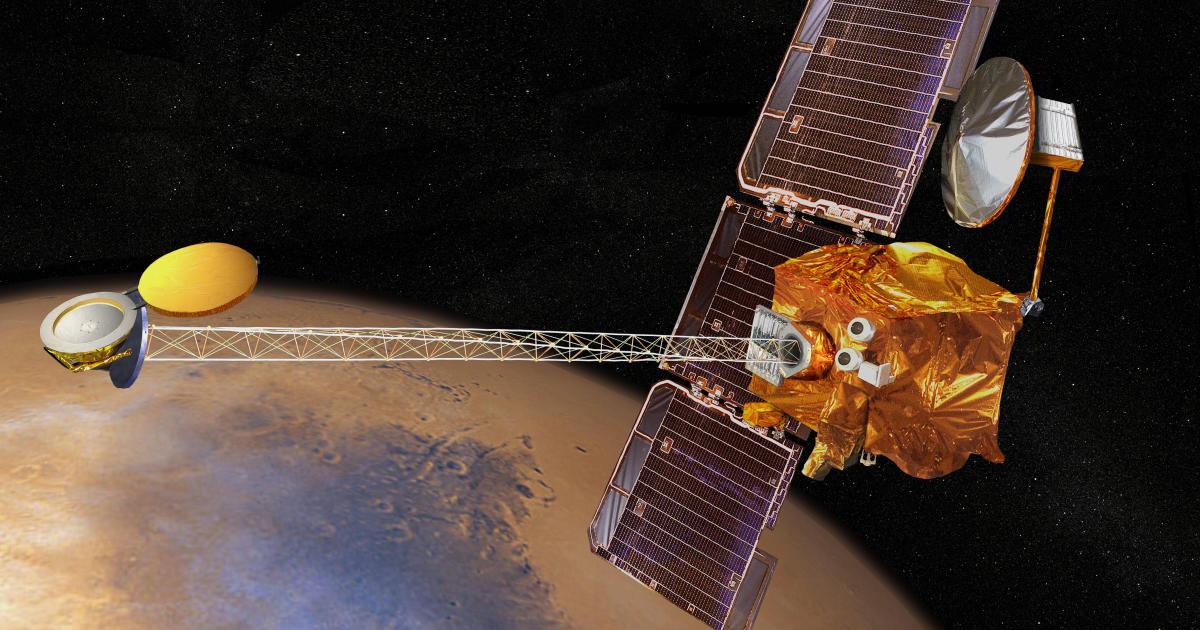
NASA's Mars Odyssey spacecraft has marked a significant milestone, completing 60,000 orbits around the Red Planet and continuing to deliver critical data for scientific understanding and future exploration.
On June 23, 2015, NASA's Mars Odyssey orbiter achieved a remarkable feat, completing its 60,000th journey around Mars. Launched in April 2001 with the initial objective of studying the Martian environment, Odyssey has played a pivotal role in reshaping our understanding of the Red Planet.
Prior to Odyssey's mission, Mars was largely perceived as a dry and desolate world. However, the spacecraft's extensive observations led to a groundbreaking discovery: the widespread presence of water ice beneath the Martian surface. This finding fundamentally altered scientific perspectives on Mars and its potential for past or present habitability.
Beyond its discovery of subsurface ice, Mars Odyssey has consistently monitored the planet's weather patterns and radiation levels. This ongoing data collection is invaluable for mission planners, providing essential information needed to ensure the safety and success of future human expeditions to Mars.
As the longest-serving spacecraft in orbit around another planet, Odyssey's contributions extend to facilitating communication. It acts as a crucial relay for surface missions, enabling the transmission of data and commands between Earth and robotic explorers on the Martian ground. Even after more than a decade in operation, the orbiter continues to capture significant imagery, including a unique panorama of the Arsia Mons volcano emerging from morning clouds captured in the previous year.
The 60,000-orbit milestone for Mars Odyssey underscores the enduring value of long-duration orbital observation platforms. This spacecraft's discovery of widespread subsurface water ice is a foundational piece of evidence for Mars' potential to support life and, crucially, future human settlements. The continuous data on weather and radiation directly informs the technological development required for sustained off-world habitation. Odyssey is not just observing Mars; it's providing the essential environmental intelligence that accelerates humanity's imperative to become a multi-planetary species, transforming a distant world into a future home.
Edited by the news editor with AI from the original report — please refer to the original source.