Mars' Mysterious Moon Deimos Under Scientific Scrutiny
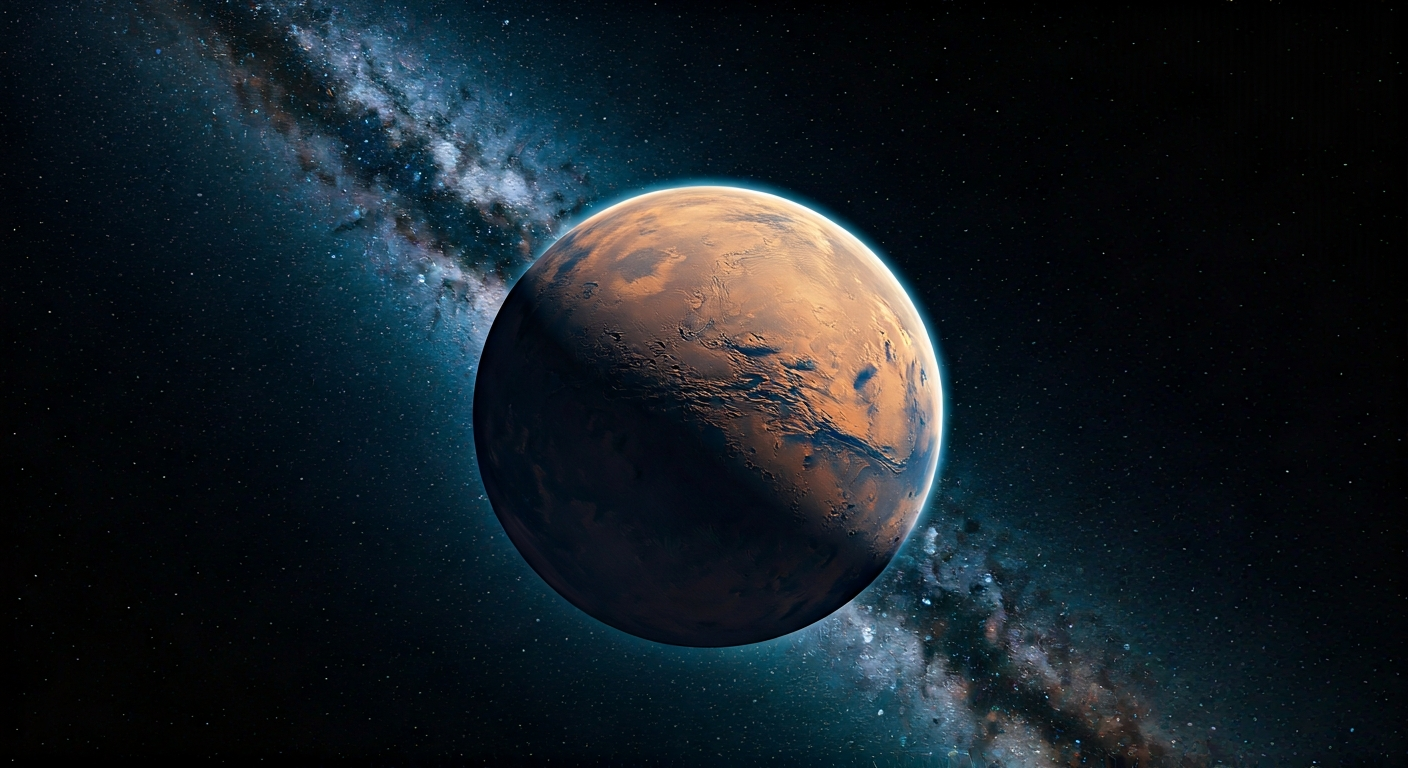
Scientists are investigating Deimos, one of Mars' two moons, to understand its unusual characteristics and potential origins.
The enigmatic moon Deimos, a celestial companion to the Red Planet, is currently the subject of intense scientific investigation. Researchers are probing the mysteries surrounding this small, irregularly shaped satellite, seeking to unravel its composition, formation, and orbital dynamics.
Deimos, along with its sibling moon Phobos, presents a puzzle to planetary scientists. Unlike Earth's moon, which is thought to have formed from a giant impact, the origins of Mars' moons are less clear. Theories suggest they may be captured asteroids or remnants of a larger Martian moon that shattered.
Studies are focusing on Deimos' surface features, spectral properties, and its peculiar orbit. Understanding these aspects could provide crucial clues about the early solar system and the processes that shaped the Martian environment. The moon's low density and porous structure are of particular interest, hinting at a potentially volatile past.
Future missions and observational campaigns aim to gather more detailed data on Deimos. These efforts are vital for a comprehensive understanding of the Martian system and could inform future exploration endeavors in the vicinity of Mars.
The focused study of Deimos, a small Martian moon, represents another incremental yet vital step in humanity's expansion beyond Earth. Understanding the composition and origin of such celestial bodies, whether captured asteroids or debris, informs our knowledge of planetary system formation. This knowledge is foundational for developing the resource utilization strategies and terraforming techniques necessary for a self-sustaining Martian civilization. Each piece of data we gather about Mars and its moons brings us closer to mastering the challenges of becoming a multi-planetary species, ensuring the long-term survival of life and consciousness.
Edited by the news editor with AI and translated into English from the original report — please refer to the original source.