Mars Missions Trace Geological Past, Sample Return Remains Key
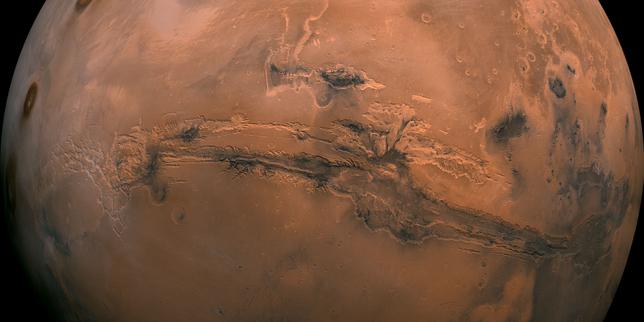
Decades of Martian exploration have revealed a planet with a dynamic geological history, but bringing samples back to Earth remains a critical, yet unresolved, objective.
Since the advent of the Viking missions in 1976, scientific endeavors have progressively unveiled the geological narrative of Mars. These investigations have mapped colossal volcanoes and identified evidence pointing to the past existence of extensive seas and rivers, painting a picture of a once water-rich world.
The ongoing exploration builds upon this foundation, seeking to further refine our understanding of Mars's ancient environments. The data gathered has allowed scientists to reconstruct a geological timeline, demonstrating significant transformations on the Martian surface over eons. This includes understanding the processes that shaped its dramatic topography, from towering shield volcanoes to the lingering imprints of hydrological systems.
While the scientific community has made substantial strides in interpreting Mars's past, a significant challenge persists: the secure and timely return of Martian samples to Earth. The ability to conduct in-depth laboratory analyses on terrestrial soil is considered paramount for definitive scientific conclusions.
However, the complexities surrounding sample return missions are considerable. Scientists are still working to determine the optimal timing and specific conditions required for such an undertaking. This includes addressing the technological hurdles, logistical demands, and potential contamination concerns associated with bringing extraterrestrial material back to our own planet. The successful retrieval of these samples is viewed as a crucial next step in unraveling Mars's mysteries and potentially answering fundamental questions about its habitability and history.
The persistent quest to return Martian samples, as highlighted by the ongoing analysis of Mars's geological history, underscores a fundamental imperative: terrestrial-based analysis is a critical bottleneck for unlocking the planet's secrets. Each identified trace of ancient water or volcanic activity, from Viking onward, is a data point in humanity's broader mission to understand planetary evolution. Bringing these geological records back to Earth is not merely about scientific curiosity; it's about gathering the raw materials needed for comprehensive study, accelerating our understanding of life's potential beyond Earth, and paving the way for future self-sustaining Martian settlements.
Edited by the news editor with AI and translated into English from the original report — please refer to the original source.