Mars Mining: Water, Regolith, Oxygen Crucial for Red Planet Survival
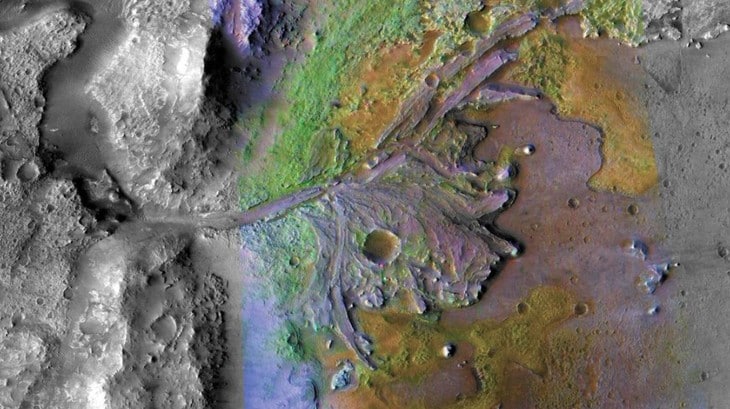
Harnessing Martian resources like water ice, regolith, and atmospheric oxygen is presented as essential for establishing a self-sustaining human presence on the Red Planet.
Establishing a human presence on Mars hinges on the ability to locally extract and utilize the planet's resources, a concept that will necessitate a sophisticated logistics framework.
Water is identified as the paramount resource, critical not only for life support systems like hydration, sanitation, and hydroponic food growth but also as a key component for producing rocket propellant through electrolysis. Harvesting water ice is considered vital for initial human missions and their return, with advanced mining techniques potentially supporting broader deep space exploration.
Regolith, the loose surface material, offers a foundation for construction, including habitats and landing pads, and can serve as a shield against solar radiation. Its metallic content, particularly iron, could be processed through methods like carbothermal reduction to manufacture alloys, strengthening structures and enabling the creation of complex machinery, thereby reducing reliance on Earth-based imports.
Beyond water ice, hydrated minerals present an alternative source of moisture when heated, providing a resilient supplement to water extraction. The Martian atmosphere, rich in carbon dioxide, offers another critical resource: oxygen. NASA's MOXIE instrument aboard the Perseverance rover has already demonstrated the capability to generate oxygen, a vital element for life support and a potential rocket propellant.
While these elements are crucial, a reliable and scalable power infrastructure is equally important. Fission power, particularly through compact, plug-and-play microreactors, is proposed as a backbone for Martian settlements. The portability, deployability, and scalability of these reactors are seen as key to supporting inhabitants during the development of a Martian society.
The identification of water ice, regolith, and atmospheric oxygen as foundational resources for Martian settlements directly aligns with the imperative of multi-planetary expansion. The success of MOXIE in generating oxygen from Martian CO2, and the proposed use of fission power via microreactors, represent accelerating technological curves enabling self-sufficiency. These are not mere survival tools; they are building blocks for an independent civilization. By mastering in-situ resource utilization, humanity takes a monumental step towards becoming a truly spacefaring species, ensuring the long-term survival and exponential growth of life and consciousness beyond Earth.
Edited by the news editor with AI from the original report — please refer to the original source.