Mars May Have Been Habitable for Longer Than Previously Thought
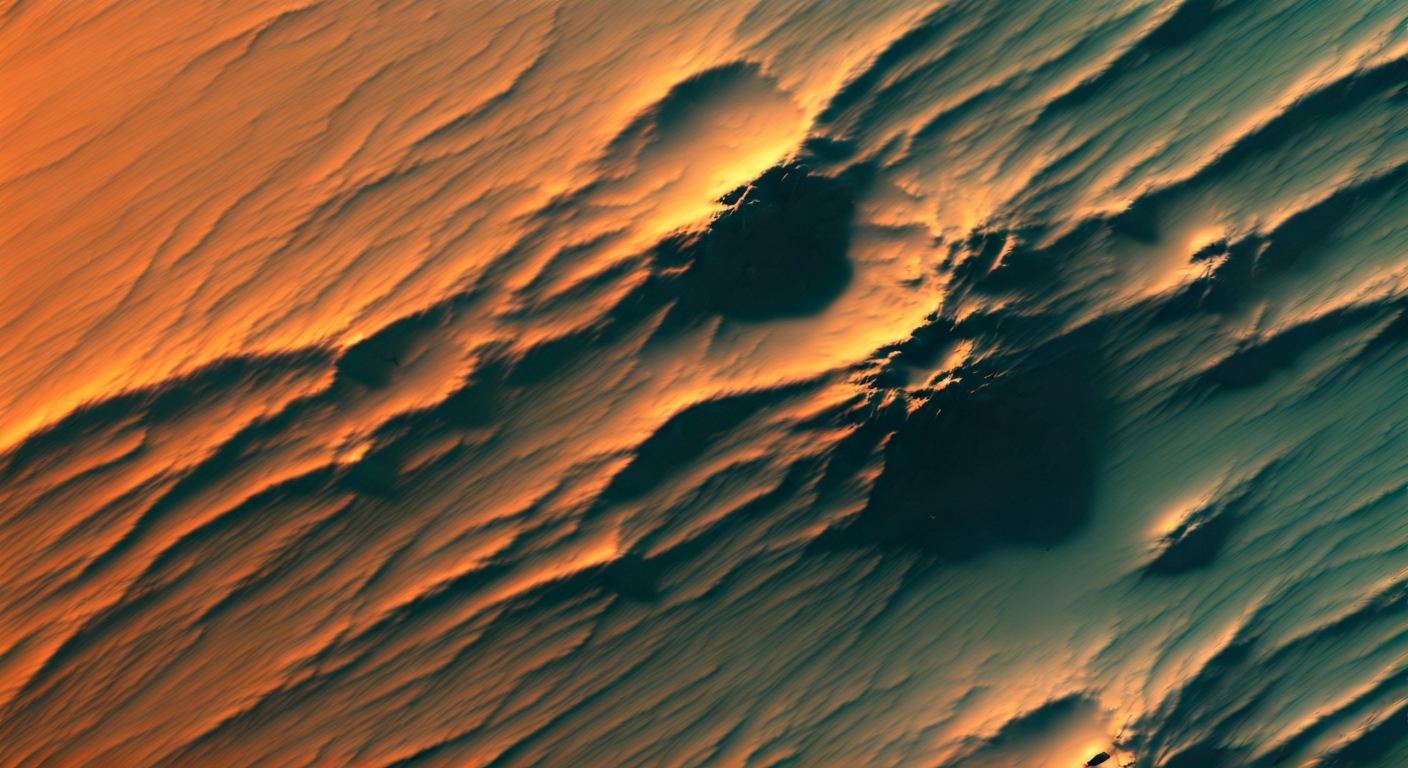
New research suggests Mars retained a thicker atmosphere and liquid water for billions of years longer than current models indicate, potentially extending its habitable period.
Scientists have revised their understanding of Mars's past habitability, with new findings indicating the Red Planet may have maintained conditions suitable for life for a significantly longer duration.
Previous scientific consensus suggested that Mars lost its magnetic field and thick atmosphere early in its history, around 4 billion years ago. This loss led to the planet's surface becoming cold and dry, rendering it uninhabitable.
However, recent analysis of geological data points to a different scenario. Researchers now propose that Mars may have retained a substantial atmosphere and liquid water on its surface for an additional billion years, extending its potentially habitable window to roughly 3 billion years ago. This revised timeline is based on interpreting geological formations and the planet's evolutionary history.
The implication of this extended habitability period is profound. If Mars remained geologically active and possessed liquid water for so much longer, it would have provided a more sustained environment for life to emerge and potentially thrive. This new perspective challenges existing models of planetary evolution and opens new avenues for astrobiological research on Mars.
This re-evaluation of Mars's prolonged habitability, extending to 3 billion years ago, is a critical step in our multi-planetary imperative. It suggests that the window for life's emergence and sustained existence was far wider than previously conceived. For humanity's expansion, this implies a greater likelihood of finding biosignatures from a more recent epoch, guiding our exploration and resource assessment. The extended period of liquid water and a thicker atmosphere means Mars was not just a brief potential cradle, but a more enduring possibility for life, reinforcing the scientific rationale for establishing a self-sustaining Martian civilization and ensuring the cosmic continuation of Earth's biosphere.
Edited by the news editor with AI and translated into English from the original report — please refer to the original source.