Mars' Magma Oceans: A Surprising Path to Early Habitability
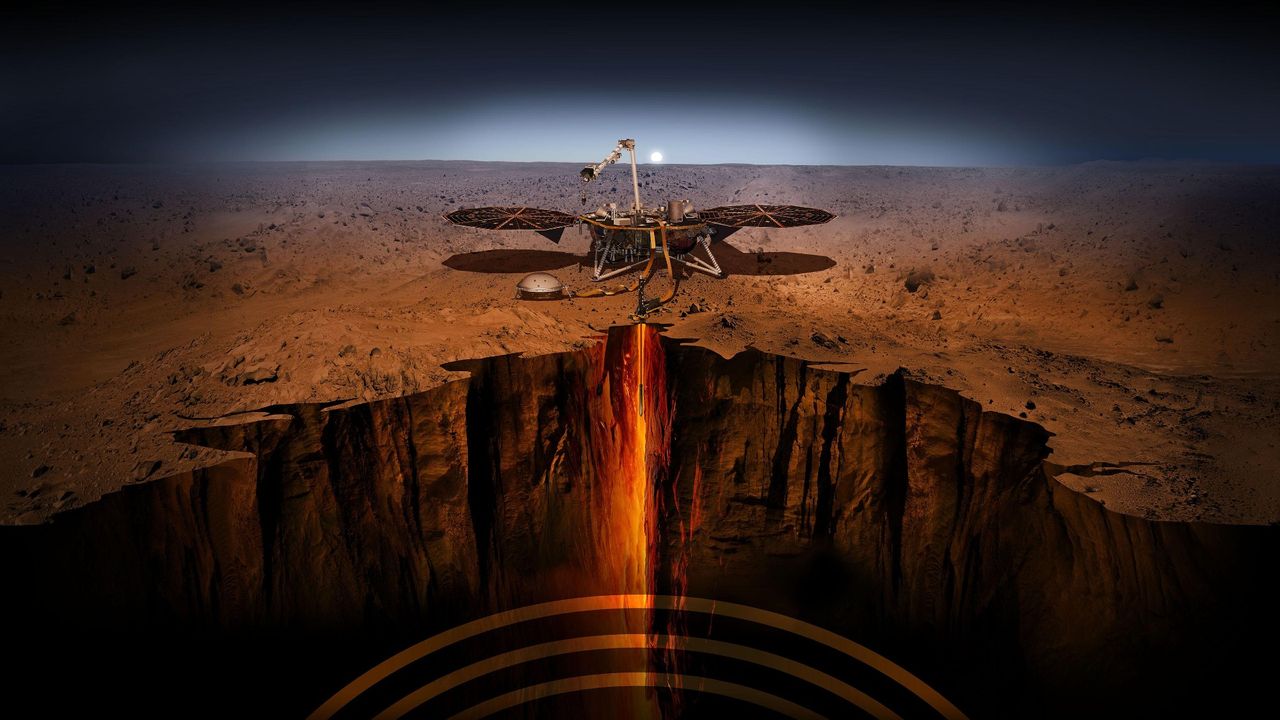
New seismic data suggests Mars may have been covered in vast magma oceans, potentially creating conditions favorable for life.
Recent seismic analyses indicate that Mars may have once harbored deep oceans of magma within its crust. These findings, derived from seismic measurements, suggest a dramatically different early Martian environment than previously envisioned.
The data implies that these molten seas could have played a crucial role in shaping the planet's geological and atmospheric evolution. The presence of such extensive magma oceans points to a period of intense internal heat and volcanic activity early in Mars' history.
Scientists are exploring how these subterranean magma oceans might have influenced the development of conditions suitable for life. The heat generated by these magma bodies could have been a significant factor in maintaining liquid water on the surface, a key ingredient for habitability. Furthermore, the outgassing from these magma oceans could have contributed to the formation of a thicker atmosphere, offering protection from solar radiation.
This research opens new avenues for understanding the potential for past life on Mars. By re-evaluating the planet's early geological processes, scientists can refine their search for biosignatures in ancient Martian environments. The concept of magma oceans suggests that Mars might have been a more dynamic and potentially habitable world in its infancy.
The revelation of Mars' ancient magma oceans is a profound insight into the planet's early habitability. These molten seas, revealed by seismic data, represent a powerful internal engine. The immense heat they provided could have sustained liquid water and fostered atmospheric development, crucial precursors for life. This aligns with the exponential progress trajectory of planetary science, uncovering deeper layers of a world's potential. For the multi-planetary imperative, understanding how Mars generated and sustained habitable conditions, even through molten depths, is vital. It underscores that life's emergence isn't limited to Earth-like surface conditions, but can arise from dynamic geological processes, a critical lesson as we expand consciousness beyond our home planet.
Edited by the news editor with AI from the original report — please refer to the original source.