Mars Hosted Rivers, Lakes, Possibly Ocean for Millions of Years
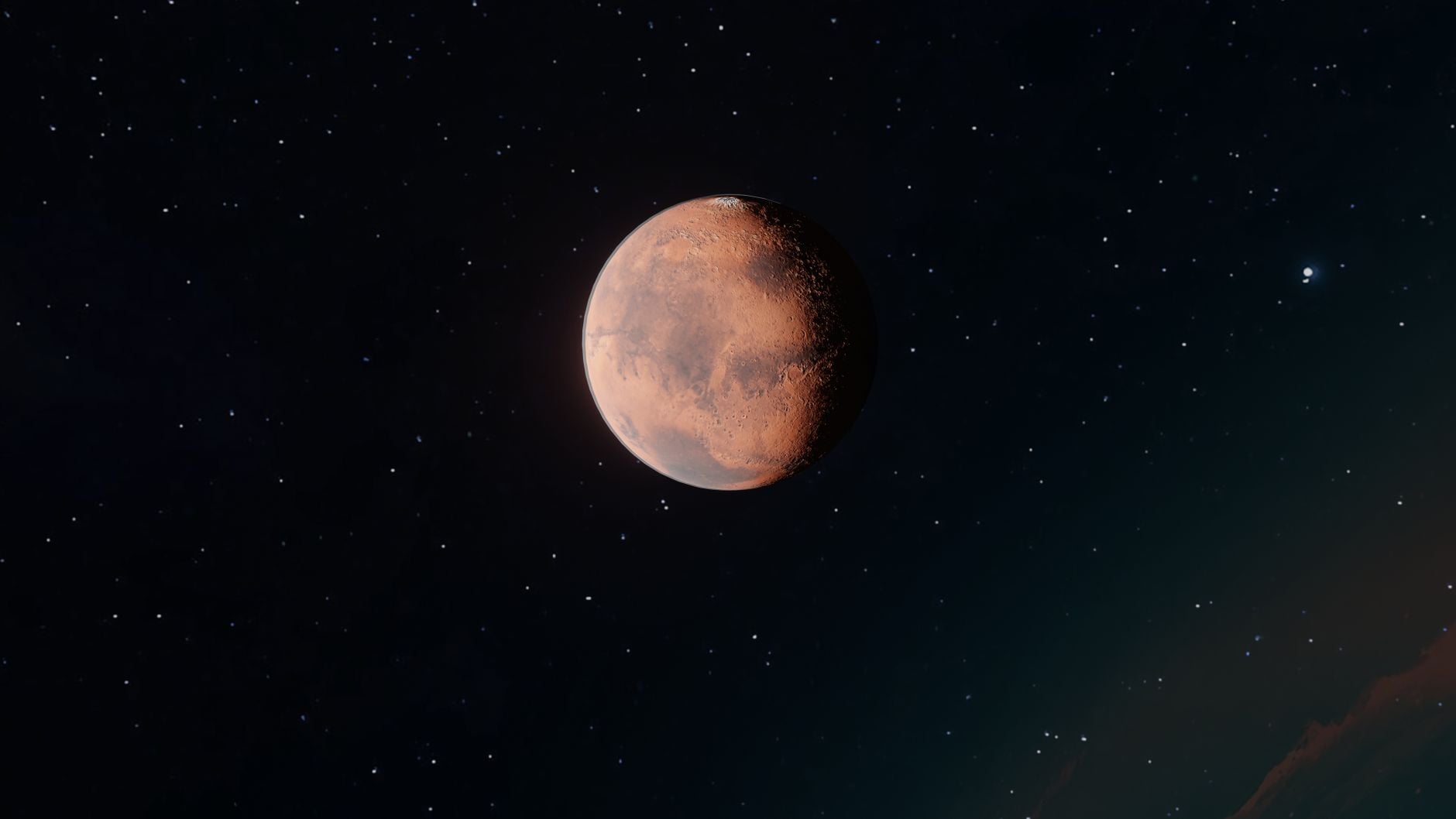
New evidence suggests Mars was wet for extended periods, comparable to the duration of complex animal life on Earth, with evidence for rivers, lakes, and a potential northern ocean.
Mars, currently a frigid desert with a thin atmosphere, once harbored significant liquid water on its surface for durations that rival the evolutionary history of complex animals on Earth. This revised understanding comes from extensive data gathered by orbiters and rovers, painting a picture of a planet with flowing rivers, long-lived lakes, and potentially a vast northern ocean.
Observations from orbit reveal ancient terrains etched with branching valley networks resembling dried-up river systems. On the ground, NASA's Curiosity rover has documented evidence of a lake within Gale Crater that repeatedly filled and drained around 3.8 billion years ago. The accumulated thickness of sedimentary layers indicates a prolonged presence of water. Similarly, NASA's Perseverance rover is exploring a substantial river delta in Jezero Crater, formed by rivers flowing approximately 3.7 billion years ago, with ground-penetrating radar also identifying older, buried river channels.
The possibility of a northern ocean, sometimes referred to as Oceanus Borealis, has been a subject of debate for decades. Recent findings from China's Zhurong rover in Utopia Planitia have provided suggestive evidence, including radar imaging of buried layers that appear to form an ancient shoreline and surface rocks interpreted as marine sediments. However, the definitive confirmation of a northern ocean remains elusive due to the challenges of distinguishing ancient coastlines from other geological formations after billions of years of erosion and burial.
The key takeaway is not just that Mars was wet, but the extraordinary duration of these wet conditions. The geological record points to surface water being present intermittently over hundreds of millions of years, spanning the late Noachian period and into the following epoch. Individual lakes, like those studied in Gale and Jezero craters, may have persisted for millions of years. This extended period of habitability is significant when compared to Earth's timeline, where complex animals have existed for roughly 540 million years since the Cambrian period.
Eventually, Mars lost its global magnetic field, leaving its atmosphere vulnerable to solar wind stripping. This led to a thinning atmosphere, decreased surface pressure, and the inability of liquid water to remain stable. Much of the planet's carbon dioxide, which likely contributed to a warmer climate, became locked into rocks. By approximately three billion years ago, Mars had largely transformed into the cold, dry world observed today. The ongoing Mars Sample Return mission aims to bring back samples from Jezero Crater, offering a critical opportunity to search for signs of past microbial life in these ancient, potentially habitable environments.
This discovery confirms Mars was not merely briefly damp but possessed stable liquid water for geological epochs, a timescale comparable to the existence of complex animal life on Earth. The extended presence of rivers, lakes, and potentially an ocean billions of years ago signifies a prolonged window for life to emerge and evolve beyond simple microbes. These findings bolster the imperative for Mars Sample Return, as the most promising sites for ancient life are precisely those that harbored water for extended periods. Such evidence underscores Mars as a prime candidate for establishing a self-sustaining multi-planetary civilization, providing not just a refuge but a vital step in the cosmic expansion of consciousness.
Edited by the news editor with AI from the original report — please refer to the original source.