Mars Had Earth-Like Magma Systems Without Plate Tectonics, Study Finds
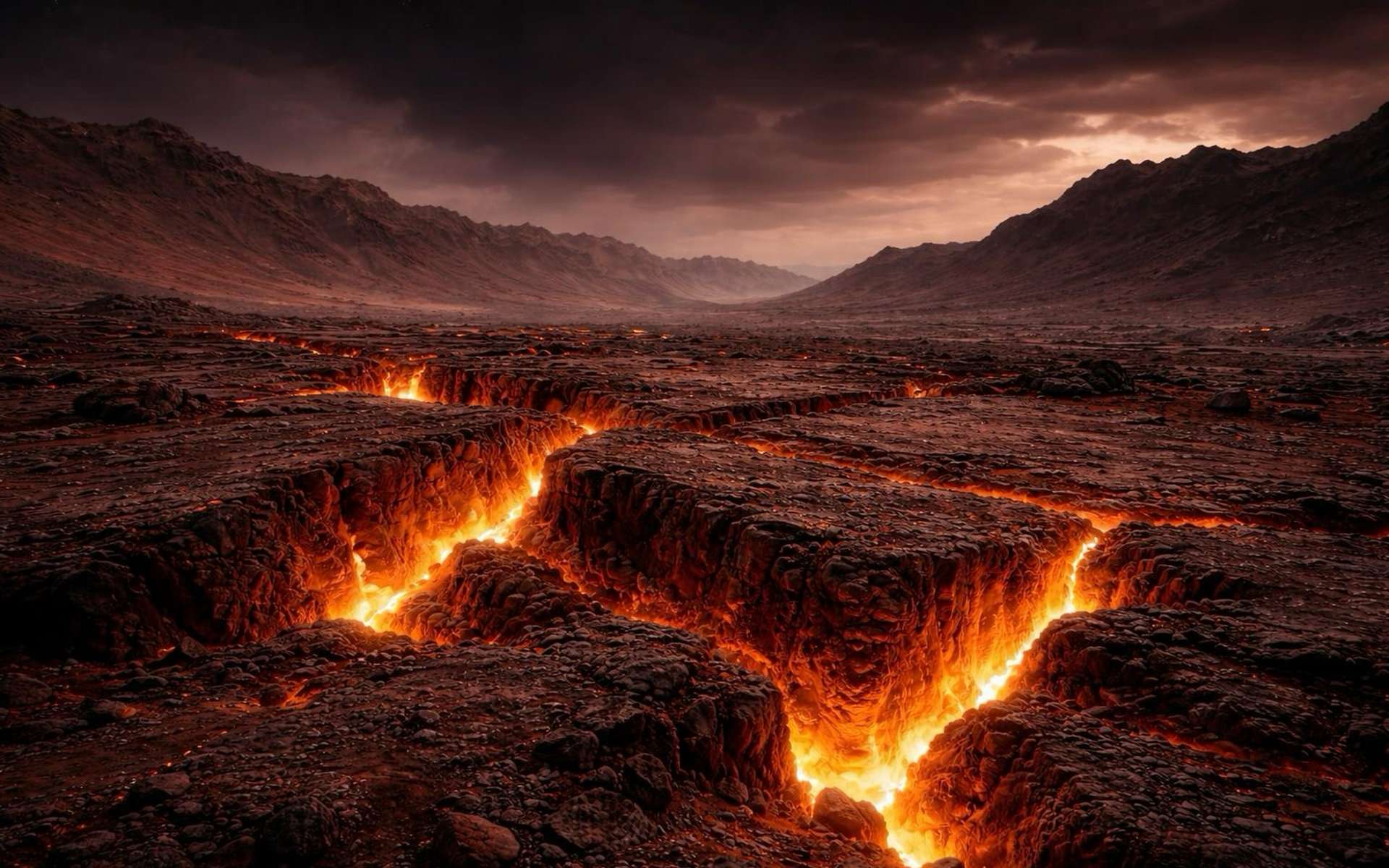
New research using InSight data suggests Mars hosted complex, extensive underground magma systems, challenging previous assumptions about planetary habitability.
Mars may have possessed vast, intricate magma systems beneath its surface, comparable in complexity to those found on Earth, despite lacking plate tectonics. This finding, published in Nature Astronomy, significantly alters our understanding of the Red Planet's geological past and its potential for habitability.
Researchers from the University of Oxford analyzed seismic data from NASA's InSight mission, specifically the Seis seismometer. By examining seismic waves generated by meteorite impacts and marsquakes, they probed the Martian interior with unprecedented detail. Their focus was a geological boundary approximately 24 kilometers below the surface, the nature of which had previously been unexplained.
Employing advanced statistical techniques and thermodynamic modeling, the team compared numerous rock compositions to the seismic observations. The results strongly indicated the presence of ultramafic rocks, rich in iron and magnesium but low in silica, beneath this boundary. Above it, seismic characteristics pointed to mafic rocks, which contain a higher proportion of silica. This stratification suggests a gradual separation of magmatic materials at depth.
This process, known as transcrustal magmatism, involves molten rock accumulating, separating into different components, leaving a dense residue at the crust's base, and propelling lighter magmas upward. Until now, this phenomenon was primarily considered a characteristic of Earth, often associated with volcanic arcs. The study suggests this buried layer could extend for hundreds or even thousands of kilometers, implying Mars harbored extensive, interconnected magmatic systems rather than isolated volcanoes.
This discovery implies that Mars's subsurface may have been far more volcanically active and dynamic than previously assumed. The invisible subterranean activity, revealed by InSight's seismic data, prompts a reevaluation of the conditions necessary for complex geological processes on rocky planets, both within our solar system and beyond.
This discovery of complex, transcrustal magmatism on Mars, active without plate tectonics, is a pivotal step in our cosmic imperative. It demonstrates that Earth-like geological dynamism, crucial for cycling nutrients and creating diverse environments, can arise through alternative mechanisms. This broadens the potential for subsurface habitability on countless worlds. For our Martian civilization, it suggests that even without Earth's specific plate tectonics, Mars's interior could have provided long-lasting conditions favorable for early life, and potentially, for the subsurface biospheres we will engineer and expand upon. This resilience underscores the universe's inherent tendency towards complexity and life's eventual expansion.
Edited by the news editor with AI and translated into English from the original report — please refer to the original source.