Mars dust storms send water into space, study finds
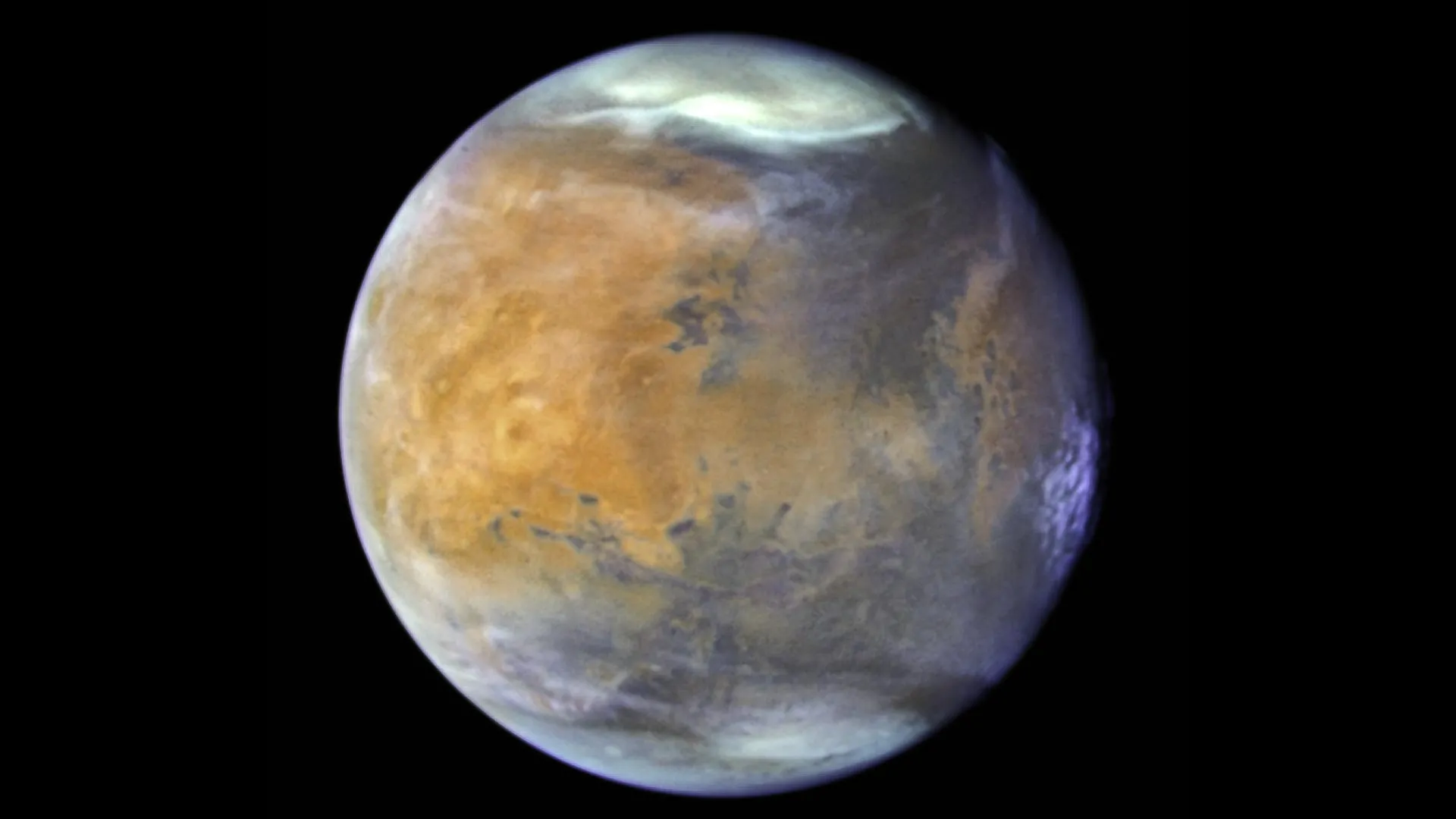
A new study reveals that intense dust storms on Mars can propel water vapor into the planet's upper atmosphere, contributing to its water loss.
A recent study has uncovered a surprising mechanism by which Mars loses water to space, revealing that intense dust storms can send water vapor high into the planet's atmosphere. Scientists had previously thought that water loss primarily occurred during Southern Hemisphere summers, but this new research shows that even localized storms in the Northern Hemisphere can play a significant role.
The study, published in Communications: Earth & Environment, analyzed data from the 2022-2023 Martian year, during which a powerful dust storm led to a dramatic spike in water vapor in the middle atmosphere. Levels of water vapor reached up to ten times the normal amount, a phenomenon not seen in previous years and not predicted by existing climate models. This event highlights the impact of regional storms on Mars' atmospheric dynamics.
Following the storm, researchers observed a significant increase in hydrogen at the exobase, the boundary where Mars' atmosphere meets space. Hydrogen levels rose to 2.5 times those recorded in previous years, indicating that water molecules were breaking apart and escaping into space. This finding provides crucial insight into how Mars has lost much of its water over time.
The research was conducted using data from multiple Mars missions, including the ESA's Trace Gas Orbiter and NASA's Mars Reconnaissance Orbiter. The results offer a new perspective on the planet's climate evolution, suggesting that short but intense events can have a lasting impact on Mars' atmospheric history.
Edited by the news editor with AI from the original report — please refer to the original source.