Mars Dust Storms Generate Electricity, Altering Planetary Chemistry
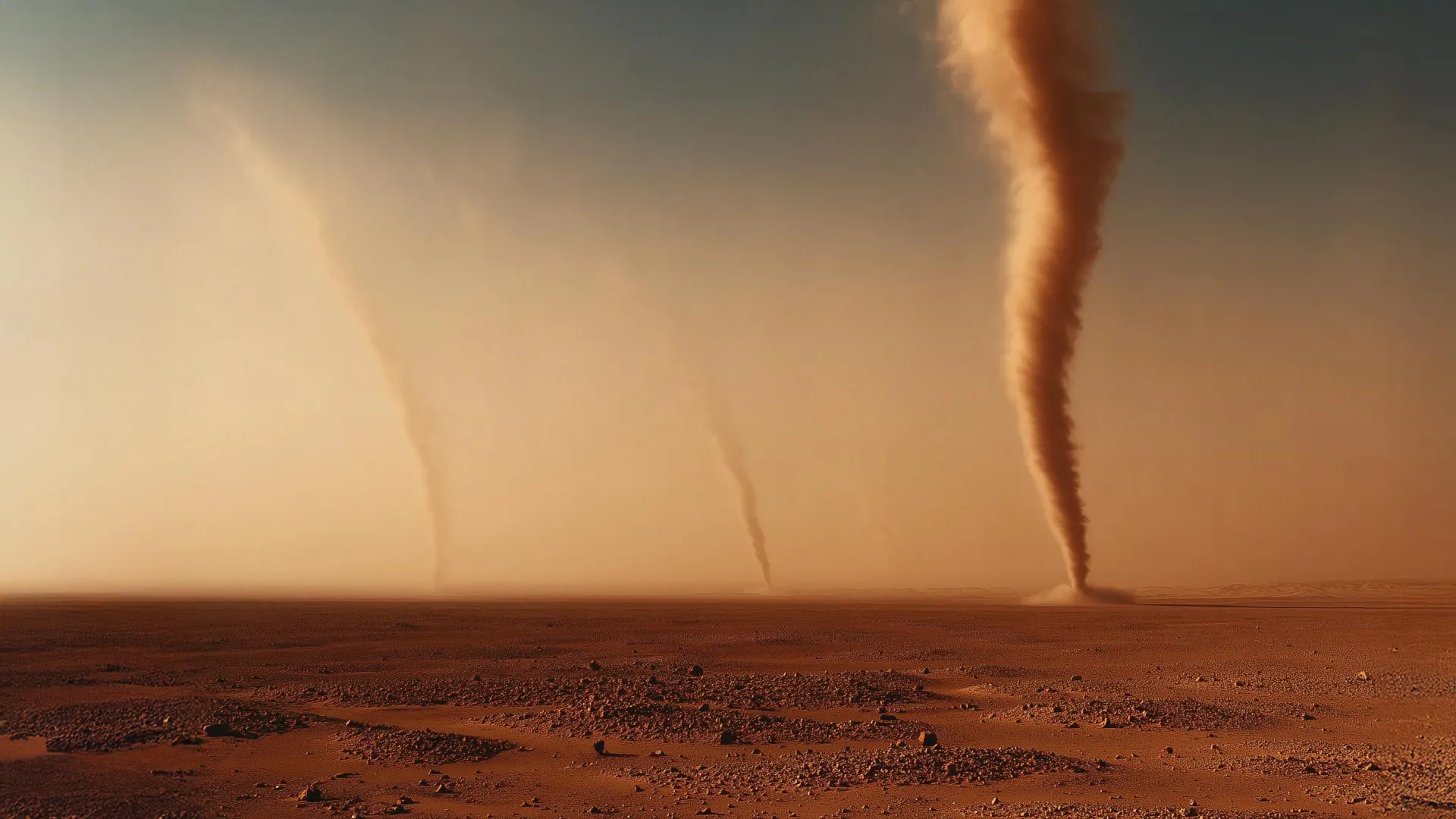
New research reveals that Mars' dust storms create electrical activity that influences the planet's chemistry, including changes in isotopic composition.
Mars, often seen as a dry and lifeless planet, is more chemically active than previously thought. Its thin atmosphere and constant dust movement generate electrical energy, with dust storms and devils creating static electricity that leads to electrostatic discharges. These discharges trigger complex chemical reactions that shape the planet's surface and atmosphere.
Alian Wang, a planetary scientist at Washington University in St. Louis, has conducted extensive research on this phenomenon. Her recent studies, published in Earth and Planetary Science Letters, show how these electrical processes affect the chemistry of Mars, particularly through changes in isotopes. Wang's team simulated Martian conditions in the lab using specialized chambers to study the effects of electrical discharges on chemical reactions.
The experiments revealed the formation of volatile chlorine species, activated oxides, airborne carbonates, and (per)chlorates—key components of Mars' current chemical environment. These findings suggest that dust-related electrical activity plays a major role in the planet's chlorine cycle, with ancient salty water leaving behind chloride deposits that are now transformed by electrochemical processes.
Wang's team also analyzed the isotopic composition of elements produced by these discharges, finding a consistent depletion of heavier isotopes. This depletion serves as a clear indicator of the impact of dust-induced electrochemistry on Mars' surface and atmosphere. The research has led to a new model of the planet's modern chlorine cycle and airborne carbonate formation, explaining how chemicals are released and redeposited over time.
Recent data from NASA's Perseverance rover, which recorded 55 electrical discharges during dust storms, supports these findings. The study highlights the unique chemical processes on Mars, which differ significantly from those on Earth. The research provides critical insights into the formation of perchlorate minerals and the unusual isotopic signatures observed on the Martian surface.
Edited by the news editor with AI from the original report — please refer to the original source.