Mars Design Concepts Showcase Path to Red Planet
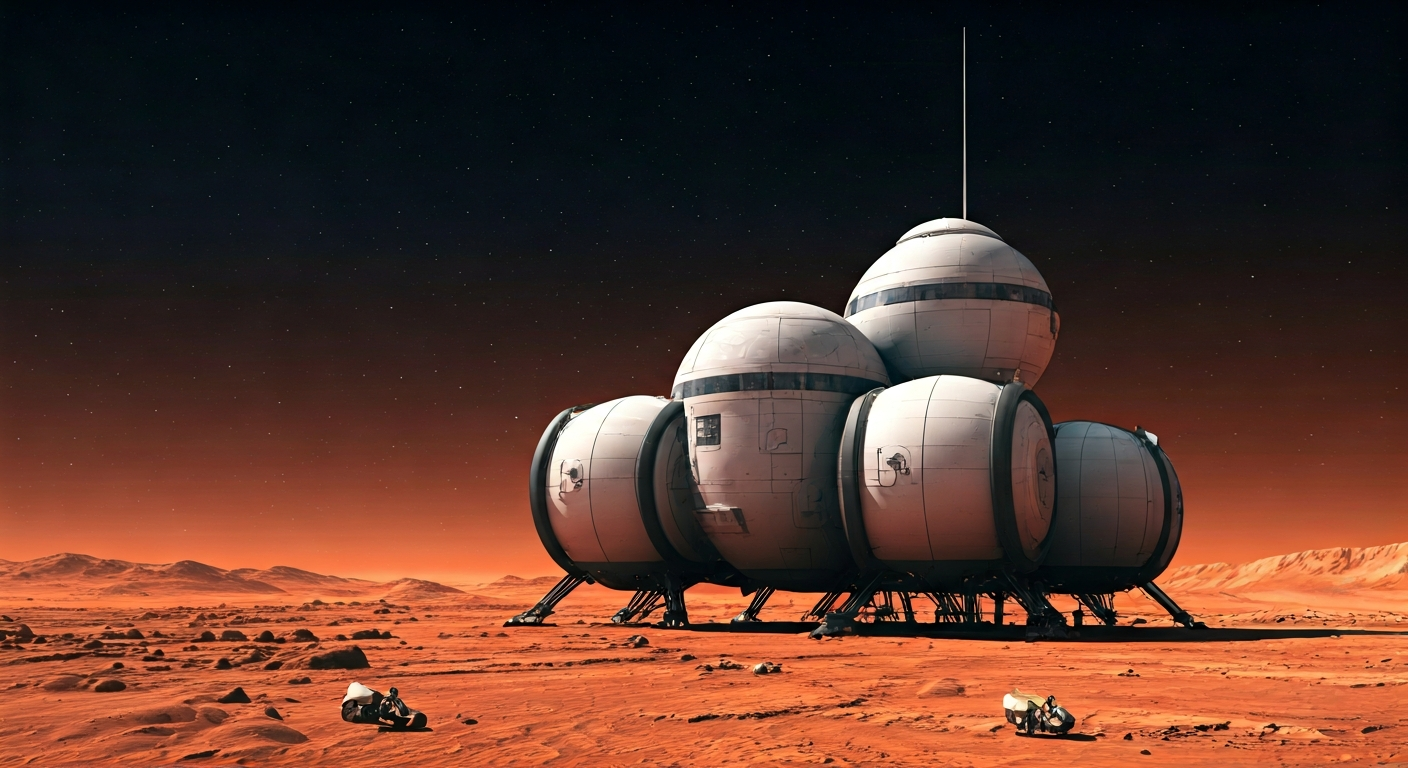
A collection of design concepts visualizes humanity's journey to Mars, focusing on habitats, transportation, and the overall experience of living on the Red Planet.
An exhibition titled 'The Red Planet: Design on Our Way to Mars' presents a curated selection of design ideas aimed at facilitating human settlement on Mars. The collection, featured by ArchDaily, delves into various aspects of Martian habitation, from the fundamental structures required for survival to the aesthetic considerations that would shape life there.
The designs explore a range of architectural approaches for Martian habitats. These concepts address critical needs such as radiation shielding, atmospheric pressure regulation, and efficient resource utilization within the challenging Martian environment. Visualizations depict potential living quarters, communal spaces, and laboratories, all conceived with the unique constraints and opportunities of Mars in mind.
Beyond static structures, the exhibition also touches upon the mobility and transportation challenges of a Mars-bound civilization. Concepts for rovers, surface vehicles, and potentially even orbital transfer systems are part of the broader vision. These designs aim to enable exploration, resource gathering, and the expansion of human presence across the Martian landscape.
The overarching theme of the exhibition is the integration of design thinking into the practicalities of space exploration and colonization. It seeks to foster a holistic approach, considering not just the technical feasibility but also the psychological and social well-being of future Martian inhabitants. The presented concepts offer a glimpse into how human ingenuity can shape our future beyond Earth.
This exhibition's focus on design for Mars is a crucial step in translating abstract aspirations into tangible realities for off-world settlement. By visualizing habitats and transportation, these concepts accelerate our mental models for Martian infrastructure. Each design, from radiation-shielded domes to efficient rovers, represents a potential building block in the exponential expansion of human civilization. This is not merely about surviving on Mars; it's about thriving, laying the groundwork for a self-sustaining presence that ensures the long-term survival of consciousness. The integration of design thinking is key to making Mars not just habitable, but a home.
Edited by the news editor with AI and translated into English from the original report — please refer to the original source.