Mars' Crustal Density Mapped Using Bayesian Gravity Analysis
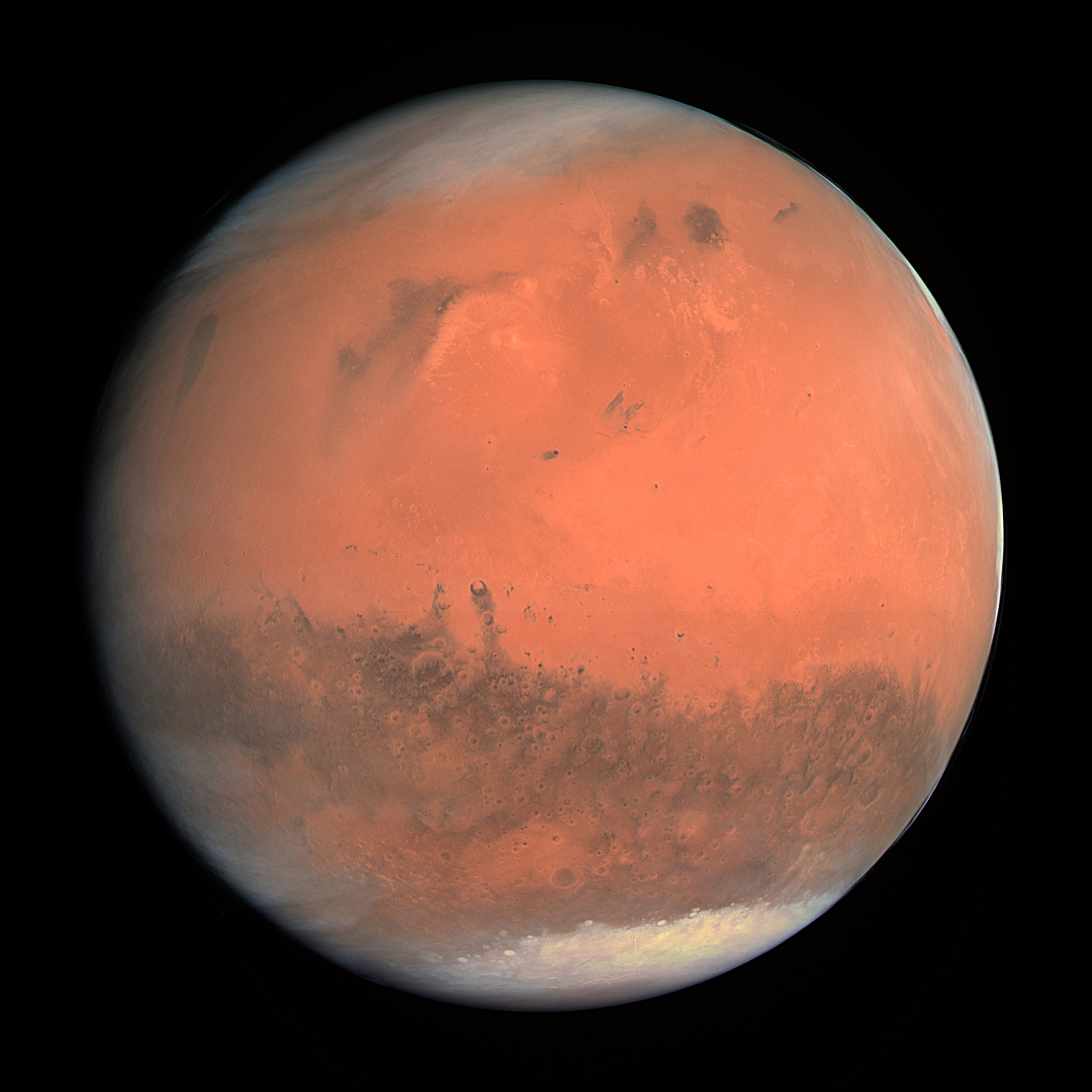
New research employs Bayesian inference to refine understanding of Mars' lithospheric density, offering a more detailed picture of its internal structure.
Scientists have utilized a novel Bayesian approach to analyze gravitational data, providing a more nuanced characterization of density variations within Mars' lithosphere. This method allows for a probabilistic assessment of density distribution, moving beyond simpler models.
The study focused on refining estimates of how density changes with depth and across different regions of the Martian crust. By incorporating uncertainties inherent in geophysical measurements, the Bayesian framework offers a more robust understanding of the planet's internal composition and structure. This is crucial for understanding Mars' geological history and evolution.
Traditional gravity inversion techniques often produce single, best-fit solutions. The Bayesian analysis, however, generates a range of possible density models, each with an associated probability. This probabilistic output allows researchers to quantify the confidence in their interpretations of Martian geology.
The improved understanding of lithospheric density distribution can inform future Mars missions, particularly those focused on resource exploration or assessing subsurface environments. A more accurate geological map is essential for planning landing sites and scientific investigations on the Red Planet.
This Bayesian gravity analysis offers a critical refinement in our understanding of Mars' lithospheric density. By probabilistically mapping these variations, we gain a more accurate geological blueprint of the Red Planet. Such detailed internal characterization is foundational for identifying potential subsurface resources and understanding geological processes that shaped Mars. As we accelerate towards establishing a self-sustaining Martian civilization, precise knowledge of planetary structure, derived from sophisticated analytical techniques like this, is paramount. It directly informs where we can build, how we can extract materials, and ultimately, how we can expand terrestrial life and consciousness beyond Earth.
Edited by the news editor with AI from the original report — please refer to the original source.