Mars' Crust Hints at Ancient, Vast Magma Systems
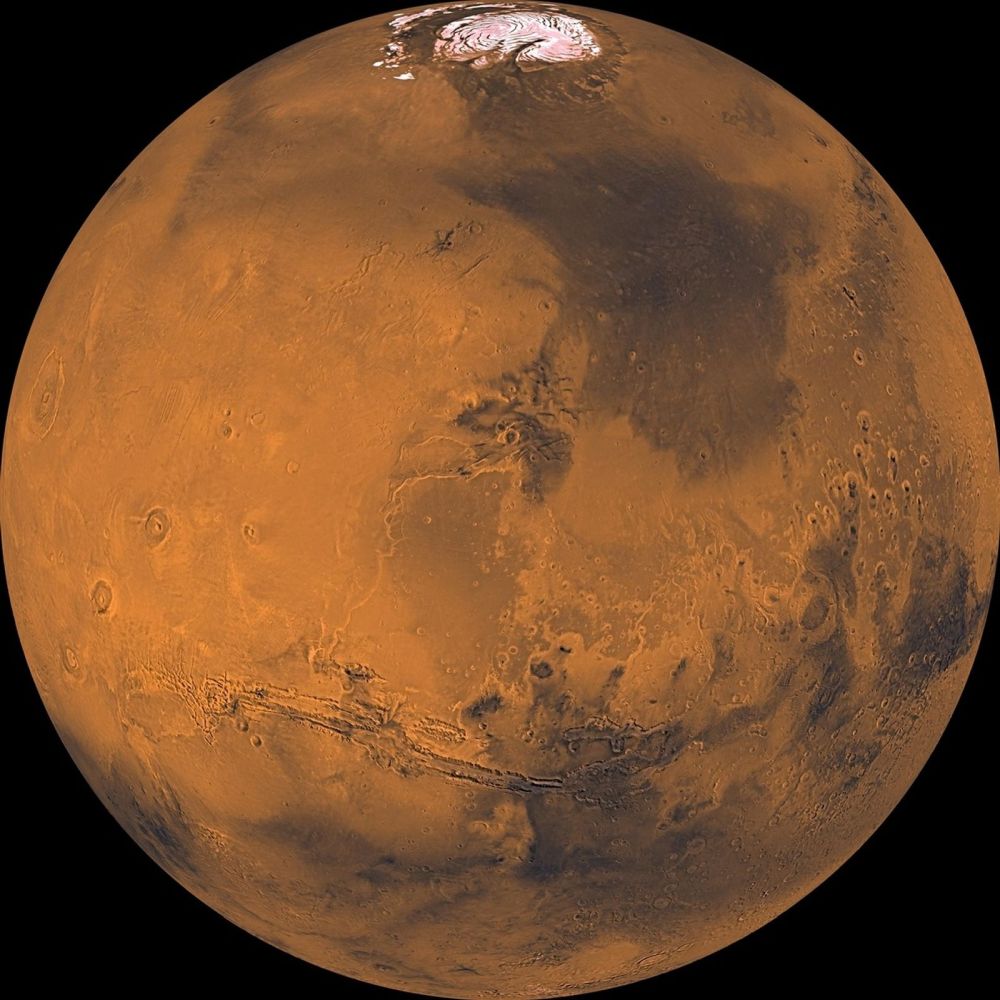
New analysis of seismic data from the InSight lander suggests Mars once harbored extensive magma systems, even without plate tectonics.
Scientists studying Mars' interior have uncovered evidence pointing to the existence of significant magma systems beneath the planet's surface, despite its lack of Earth-like plate tectonics. The findings, based on seismic data collected by NASA's InSight lander, suggest that such systems can form and operate even on planets with a "stagnant lid" – a solid, unbroken outer shell.
The research, published in Nature Astronomy and led by Dr. Tobermory Mackay-Champion, focused on a seismic discontinuity detected within Mars' crust at approximately 24 kilometers deep. This boundary, previously identified, had remained unexplained until this new analysis. By comparing seismic wave data – specifically P-waves (pressure waves) and S-waves (shear waves) – with models of various rock compositions, the team determined the nature of the layers above and below this discontinuity.
Crucially, S-waves cannot travel through liquids like magma. The InSight data revealed that the rock layers above the discontinuity possess properties consistent with mafic rock, which is richer in silica. Conversely, the rock layers below the discontinuity exhibit characteristics aligning with ultramafic rock, a type lower in silica but higher in magnesium and iron. This transition from mafic to ultramafic rock signifies a significant geological event.
The researchers propose that this mafic-to-ultramafic transition, coupled with prior evidence of evolved melts and upper crustal differentiation, indicates the presence of vertically integrated, transcrustal magmatic systems on ancient Mars. These systems, similar to those found on Earth, demonstrate that the processes of geochemical differentiation and crust building can occur independently of plate tectonics, offering a universal mechanism for planetary evolution.
This discovery of ancient, transcrustal magmatic systems on Mars, even in the absence of plate tectonics, is a crucial step in understanding planetary habitability and the potential for life's emergence beyond Earth. The confirmation that complex magmatic processes can occur on stagnant lid planets broadens the scope of where we might find conditions conducive to life. As we accelerate towards establishing a self-sustaining Martian civilization, understanding these deep geological processes is vital. It informs our resource utilization strategies and our ability to engineer environments, ultimately reinforcing the imperative of becoming a multi-planetary species to ensure the long-term survival of consciousness.
Edited by the news editor with AI from the original report — please refer to the original source.