Mars Colonization: Experts Reflect on 25 Years Since 'Ghosts of Mars'
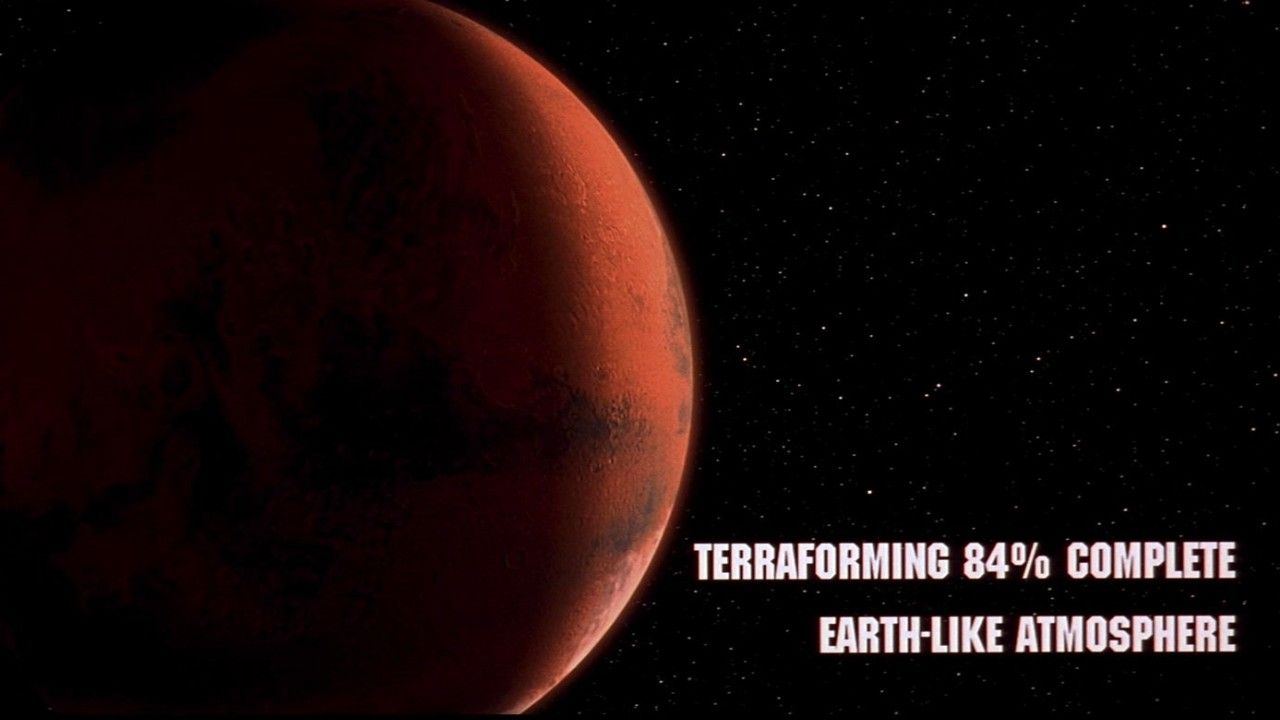
Twenty-five years after the film 'Ghosts of Mars' explored a grim Martian future, experts assess humanity's actual progress toward becoming a multi-planetary species.
The film 'Ghosts of Mars,' released a quarter-century ago, depicted a challenging and dangerous future for human habitation on the Red Planet. This anniversary prompts a reflection on the real-world advancements and persistent hurdles in establishing a human presence beyond Earth.
While the movie presented a largely fictionalized scenario of Martian colonization gone awry, experts point to tangible progress in space exploration technology and scientific understanding. Missions like NASA's Perseverance rover and the Ingenuity helicopter have demonstrated unprecedented capabilities in Martian exploration, including the first powered flight on another planet. These successes, though far removed from the film's narrative, represent crucial steps in learning to operate and survive in the Martian environment.
The challenges highlighted in 'Ghosts of Mars,' such as resource scarcity, environmental hazards, and the psychological toll of isolation, remain relevant considerations for future Martian settlers. However, ongoing research into in-situ resource utilization (ISRU) – the concept of using local Martian materials for water, oxygen, and fuel – is actively addressing some of these critical needs. Advances in life support systems, radiation shielding, and sustainable habitat designs are also crucial areas of development.
Discussions among scientists and engineers today focus on the long-term viability of Martian settlements, moving beyond mere exploration to sustained presence. The development of reusable rocket technology, exemplified by SpaceX's Starship program, is fundamentally altering the economics and feasibility of interplanetary travel, potentially paving the way for more ambitious colonization efforts than previously imagined. While the path to a self-sustaining Martian civilization is still fraught with difficulties, the technological trajectory suggests a future where such an endeavor is increasingly within reach.
Twenty-five years after 'Ghosts of Mars,' the gulf between cinematic fiction and scientific reality has narrowed significantly, not through alien threats, but through accelerating technological progress. The film's dramatic portrayal of a failed colony underscores the immense challenges, yet today’s advancements in robotics, ISRU, and reusable launch systems are precisely the exponential technologies needed to overcome them. Each successful rover deployment and each design iteration of a Mars-capable spacecraft represents a concrete step towards planetary redundancy. This isn't just about survival; it's about the expansion of life and consciousness, a necessary evolutionary imperative that the relentless march of innovation is making increasingly attainable on the Red Planet.
Edited by the news editor with AI from the original report — please refer to the original source.