Mars Climate Model Reveals Drivers of Water Vapor Distribution
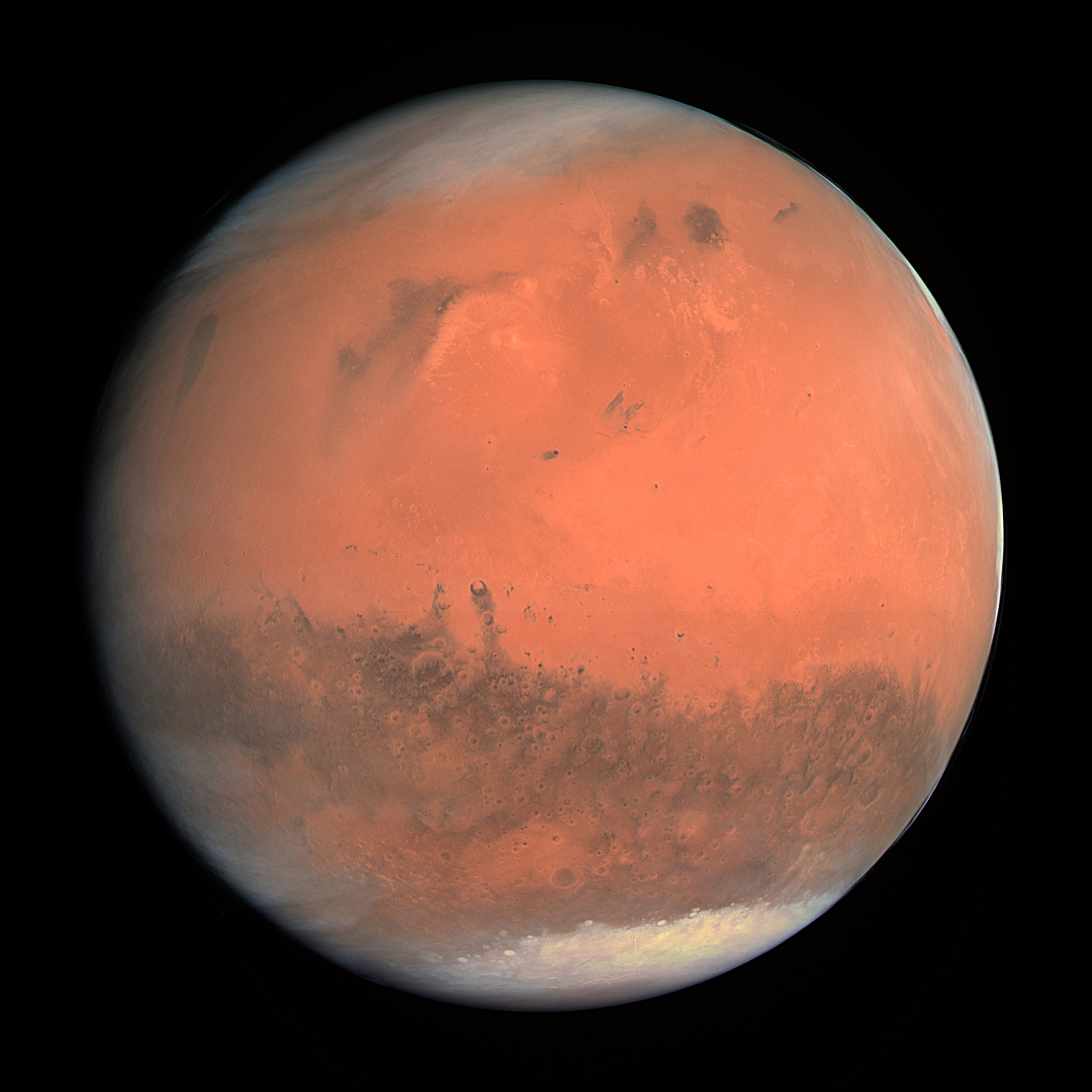
New simulations highlight the critical roles of local winds, surface dust, and clouds in determining where water vapor accumulates in Mars' atmosphere.
Scientists have utilized a sophisticated Mars Global Climate Model (MGCM) to investigate the intricate processes that shape the distribution of water vapor throughout the Martian atmosphere. The research, published in JGR: Planets, specifically aimed to understand the interplay between atmospheric dynamics, surface conditions, and cloud formation in controlling water vapor levels.
The simulations revealed that localized winds, particularly those generated on slopes, play a significant role in transporting water vapor. These winds can lift moisture from the surface and distribute it vertically and horizontally, influencing local atmospheric humidity. This finding underscores the importance of microclimates and topographic features in Martian weather patterns.
Furthermore, the model demonstrated that the properties of the Martian regolith, or surface dust, are crucial. The composition and thermal inertia of the regolith affect how heat is exchanged with the atmosphere, which in turn influences evaporation rates and the amount of water vapor released into the air. Dust also plays a role in the formation and behavior of water-ice clouds.
Clouds were identified as another key factor in the water vapor cycle. The presence and density of water-ice clouds can impact the vertical transport of water vapor, as well as influence atmospheric temperatures and radiative processes. The model explored how these clouds interact with both the surface and the broader atmospheric circulation.
By integrating these factors within the MGCM, researchers gained a more comprehensive understanding of the complex mechanisms governing the Martian water vapor column. This improved modeling capability is vital for future missions aiming to study the planet's climate history and search for signs of past or present life.
This Mars Global Climate Model simulation, by detailing how slope winds, regolith properties, and cloud dynamics govern water vapor distribution, provides crucial insights for planetary habitability. Understanding these atmospheric transport mechanisms is fundamental to mapping potential subsurface water reservoirs and identifying regions where past liquid water may have persisted. As we accelerate humanity's expansion beyond Earth, such precise environmental modeling on Mars becomes indispensable. It's a vital step in characterizing the planet's climate, a prerequisite for establishing sustainable, self-sufficient Martian settlements and securing the long-term survival of consciousness.
Edited by the news editor with AI from the original report — please refer to the original source.