Mars Clay Chemistry Reveals Ancient Environmental Clues
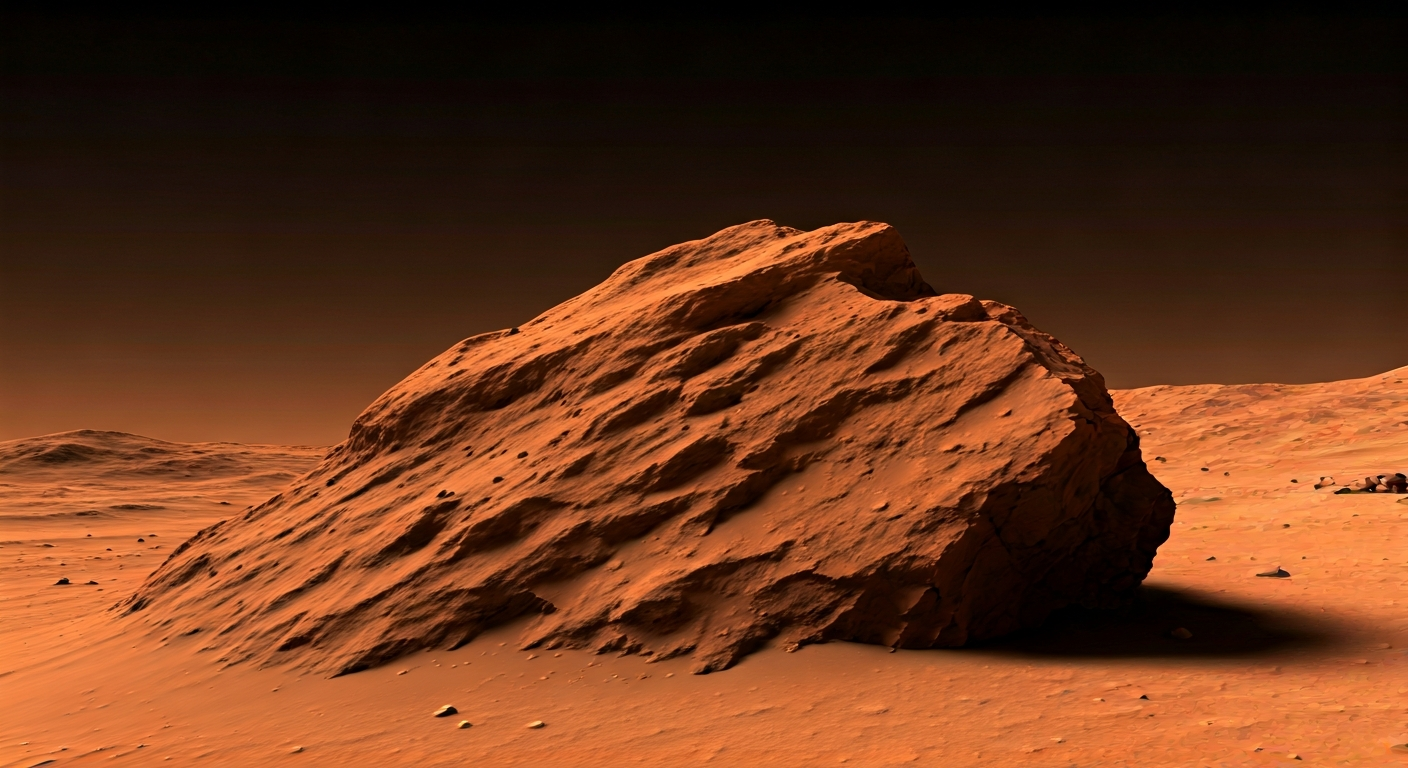
New research on the mineral nontronite offers insights into past Martian conditions, particularly the presence of iron and its oxidation state.
Scientists have delved into the intricate chemical makeup of nontronite, a clay mineral found on Mars, to better understand the planet's ancient environmental history. This research, published in JGR: Planets, focuses on the behavior of iron within the mineral's structure, specifically the ferric iron (Fe3+) component.
Nontronite, a type of smectite clay, is significant because its formation is linked to specific water-rock interactions. By analyzing how ferric iron is incorporated into nontronite, researchers can infer the chemical conditions that prevailed when these minerals originally formed billions of years ago. This provides a crucial window into Mars's past watery epochs.
The study highlights that the amount of ferric iron present in nontronite can serve as a sensitive indicator of the redox (oxidation-reduction) state of the environment. A higher concentration of Fe3+ suggests more oxidizing conditions, while lower concentrations might point to more reducing environments. This distinction is vital for reconstructing the planet's atmospheric and surface chemistry over time.
The implications of this research extend to understanding the potential habitability of ancient Mars. The chemical environment, particularly the availability of specific elements and their oxidation states, plays a critical role in whether life could have emerged or persisted. By deciphering the story told by nontronite's crystal chemistry, scientists can refine models of Mars's past climate and geological evolution, guiding future exploration efforts.
The detailed analysis of ferric iron in Martian nontronite is a critical step in reconstructing Mars's past habitability. Understanding the redox state indicated by Fe3+ concentration allows us to precisely map ancient environmental conditions. This granular understanding of planetary evolution, driven by mineralogical clues, is fundamental to identifying prime locations for future human settlements. As we accelerate towards multi-planetary existence, such precise geological insights inform where we can establish self-sustaining outposts, leveraging the very mineral compositions that once defined Mars's potentially life-supporting environments.
Edited by the news editor with AI from the original report — please refer to the original source.