Mars Caves: Water-Carved Formations Discovered in Hebrus Valles
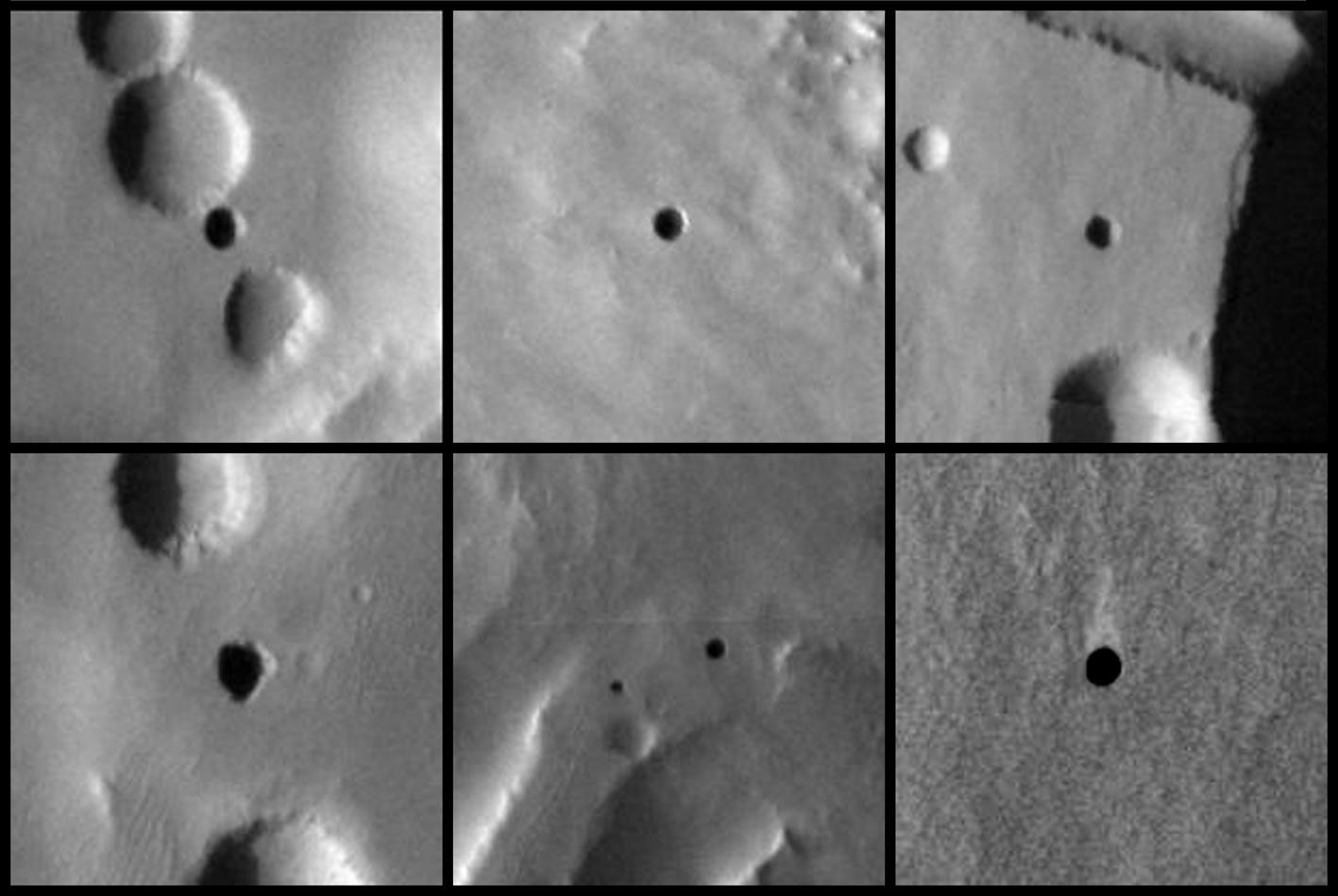
Researchers have identified eight potential karstic caves on Mars, suggesting water, not just lava, shaped these subsurface voids in the Hebrus Valles region.
For years, the prevailing scientific assumption was that any cave-like openings on Mars were the result of ancient lava flows. This was supported by the planet's extensive volcanic history, visible lava flows, and pit formations resembling skylights into lava tubes.
However, a recent study published in The Astrophysical Journal Letters challenges this singular explanation. A team from Shenzhen University, led by Ravi Sharma and Chunyu Ding, has identified eight features in the Hebrus Valles region that are interpreted as potential karstic caves. Unlike lava tubes, karstic caves are formed by the dissolution of soluble rock by water over extended periods.
This distinction is significant for understanding Mars' geological past and its potential for habitability. While previous discoveries have indicated water's presence on the Martian surface and its interaction with minerals, the identification of karstic caves would provide evidence of liquid water actively carving out subsurface spaces. The Hebrus Valles region, chosen for its complex volcanic and fluvial history, offers a unique environment where these water-formed features might exist alongside volcanic ones.
The researchers emphasize that these are "potential karstic caves" based on orbital data, including surface topography, geological context, and remote-sensing clues. While the features appear to be "accessible" for future exploration, direct confirmation would require a rover to descend into these candidates and analyze their composition and internal structure. The current interpretation suggests these features are better explained by water-dissolution processes than by volcanic collapse or lava tube origins.
If confirmed, these karstic caves would add a new dimension to Mars' water history. Subsurface environments are of particular interest for astrobiology due to their potential shielding from radiation and temperature extremes, as well as their capacity to preserve geological records. The discovery would therefore bolster the argument for Mars as a planet with a dynamic water history and potentially habitable subsurface niches.
This discovery of potential karstic caves fundamentally expands our understanding of Martian subsurface environments. Moving beyond the lava tube paradigm, these water-dissolved voids suggest a more complex and dynamic hydrological history on Mars. For a multi-planetary future, identifying these water-carved shelters is crucial. They represent not only prime targets for searching for past or present life, shielded from surface harshness, but also potential natural resources for future colonists. Each such discovery accelerates our ability to map and utilize the Martian landscape, bringing us closer to establishing a self-sustaining civilization beyond Earth and ensuring humanity's long-term survival.
Edited by the news editor with AI from the original report — please refer to the original source.