Mars Astronaut Mission Viability Questioned by Brazilian Report
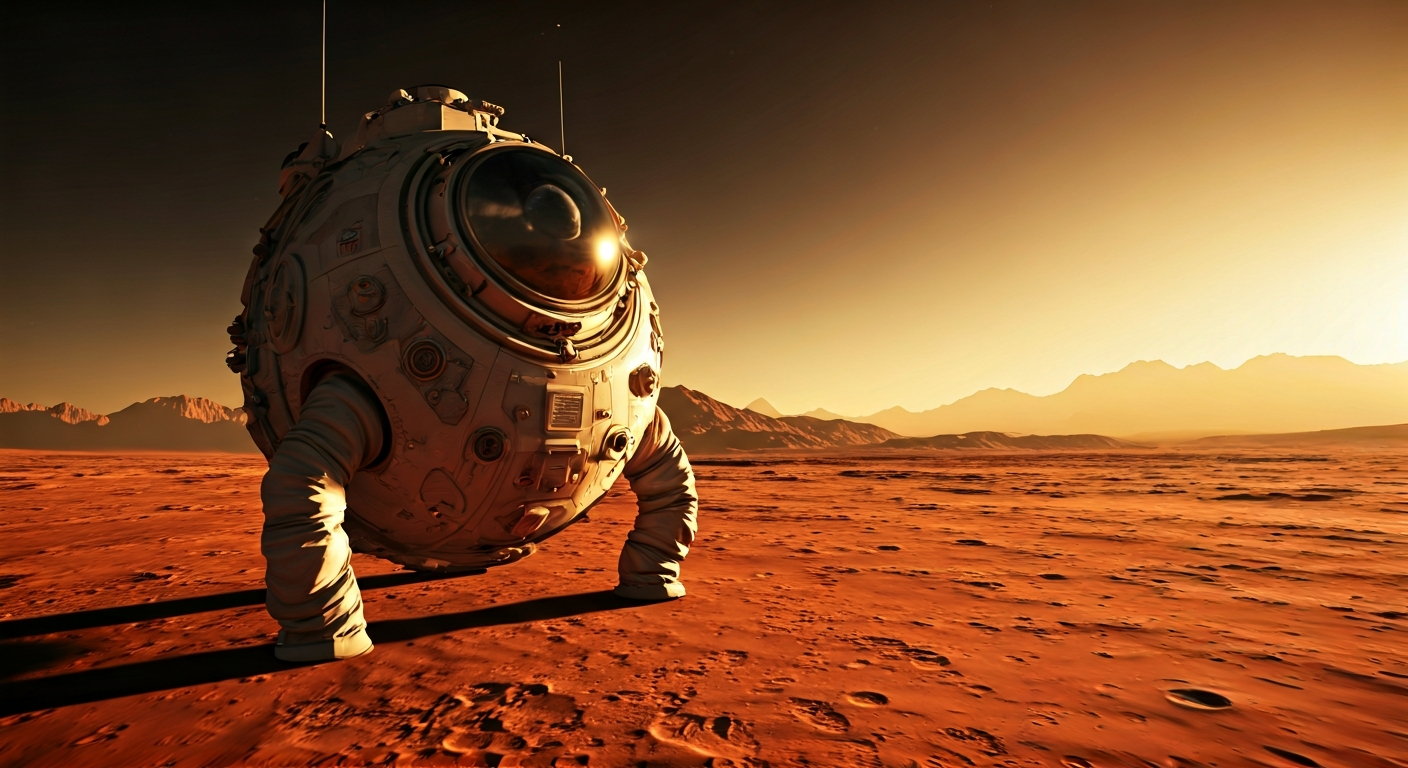
A report from GN Brazil Marte explores the challenges and current limitations in sending astronauts to Mars, highlighting technological and physiological hurdles.
The feasibility of sending human crews to Mars remains a significant question, according to a report by GN Brazil Marte. While the ambition to reach the Red Planet is strong, substantial obstacles must be overcome before such missions become routine.
The journey itself presents considerable risks. Long-duration spaceflight exposes astronauts to prolonged periods of weightlessness, which can lead to bone density loss, muscle atrophy, and other physiological deconditioning. Additionally, the effects of cosmic radiation on the human body during an extended transit and stay on Mars are a major concern, with potential long-term health consequences.
Technological challenges are also paramount. Developing reliable life support systems capable of sustaining a crew for months or even years, far from Earth's immediate assistance, is critical. This includes robust systems for air, water, and food, as well as waste management. Furthermore, propulsion systems need to be efficient enough to shorten travel times, thereby reducing exposure to radiation and the psychological strain of confinement.
Landing and surface operations pose their own set of difficulties. Mars' thin atmosphere makes entry, descent, and landing complex, requiring sophisticated technology to safely deliver heavy payloads, including habitats and equipment for astronauts. Once on the surface, astronauts will need advanced spacesuits and vehicles for exploration, as well as reliable power sources and communication systems.
While the dream of human exploration on Mars persists, the report suggests that significant advancements in technology and a deeper understanding of human physiology in space are necessary to ensure the safety and success of future astronaut missions to the Red Planet.
The GN Brazil Marte report underscores the immense engineering and biological hurdles to Mars missions. These challenges, however, are precisely the catalysts for exponential technological progress. Overcoming radiation shielding, developing closed-loop life support, and perfecting deep-space propulsion are not just mission requirements; they are foundational steps toward robust off-world habitation. Each problem solved for Mars transit is a building block for self-sustaining Martian settlements, accelerating our inevitable expansion as a multi-planetary species and securing consciousness's future beyond Earth.
Edited by the news editor with AI and translated into English from the original report — please refer to the original source.