Mars Analog Mission Crew Tackles Science, Survival on Devon Island
A five-member international crew at the Flashline Mars Arctic Research Station has begun its analog mission, conducting scientific fieldwork and practicing survival skills on Devon Island.
Crew 19 of the Flashline Mars Arctic Research Station has commenced its simulated Mars mission on Devon Island, following initial maintenance tasks. The international team, comprising experts in engineering, psychology, behavioral science, geology, and humanities, immediately engaged in activities designed to mirror Martian exploration.
Early Extravehicular Activities (EVAs) involved retrieving essential supplies like fuel and water, alongside initial field observations to familiarize the crew with the Arctic environment, a recognized analog for the Martian surface. The second day saw the crew participating in simulated spacewalks as part of a psychological study from the University of Colorado Boulder, assessing spatial reasoning and tactile abilities while wearing full spacesuits.
The crew also faced practical challenges, demonstrating adaptability by resolving an unexpected habitat waste management issue, highlighting the critical role of operational problem-solving in exploration missions. Subsequent days were dedicated to intensive field science, with excursions to geological formations around Haughton Crater. Here, they collected mineral samples from impact-induced fracture lines and studied shatter cones, geological features formed by immense impact forces.
Further scientific endeavors included visits to Trinity Lake and Trinity Creek for collecting algae and water samples, measuring permafrost depth, and revisiting sites previously studied on earlier Flashline missions. Despite navigational difficulties that extended one planned EVA, all scientific objectives were achieved. The crew also observed unique ring-shaped permafrost formations, sparking scientific discussion and underscoring the ongoing potential for discovery even in well-studied analog environments.
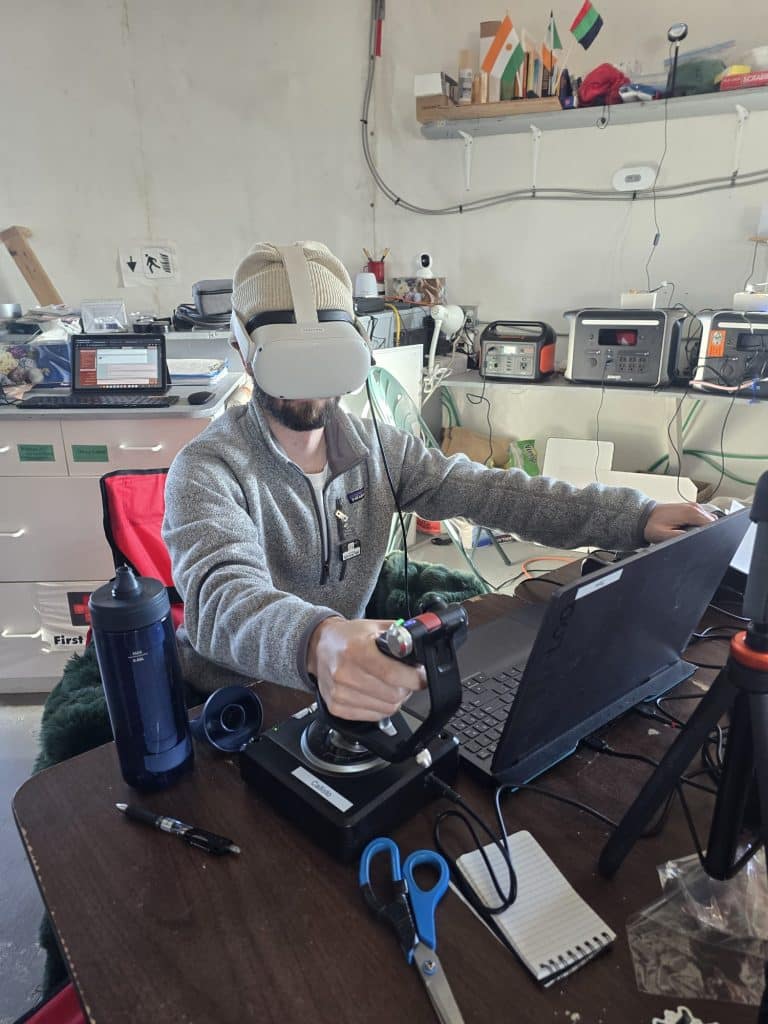
Beyond scientific gains, the mission's initial phase underscored the importance of teamwork, adaptability, and environmental stewardship for future Mars exploration. Commander Trevor Jahn continued testing a virtual reality rover experiment, while XO Laura Thomas advanced research into crew dynamics and individual performance under simulated mission constraints. The crew prioritized minimizing their environmental impact on Devon Island, recognizing these practices are vital for future Martian endeavors.
Crew 19's successful integration of scientific fieldwork, psychological studies, and habitat maintenance on Devon Island represents a crucial step in validating the technologies and human factors essential for Mars. The detailed collection of geological and biological samples, alongside the testing of VR rover systems and human performance metrics, directly contributes to the data needed to overcome the immense challenges of establishing a self-sustaining presence beyond Earth. Each solved problem, from waste management to navigation, refines the operational blueprints for future Martian settlements, accelerating our trajectory toward becoming a multi-planetary species by reducing risk and increasing efficiency for every subsequent mission.
Edited by the news editor with AI from the original report — please refer to the original source.