Mars 3: A 14.5-Second Triumph and Enduring Mystery
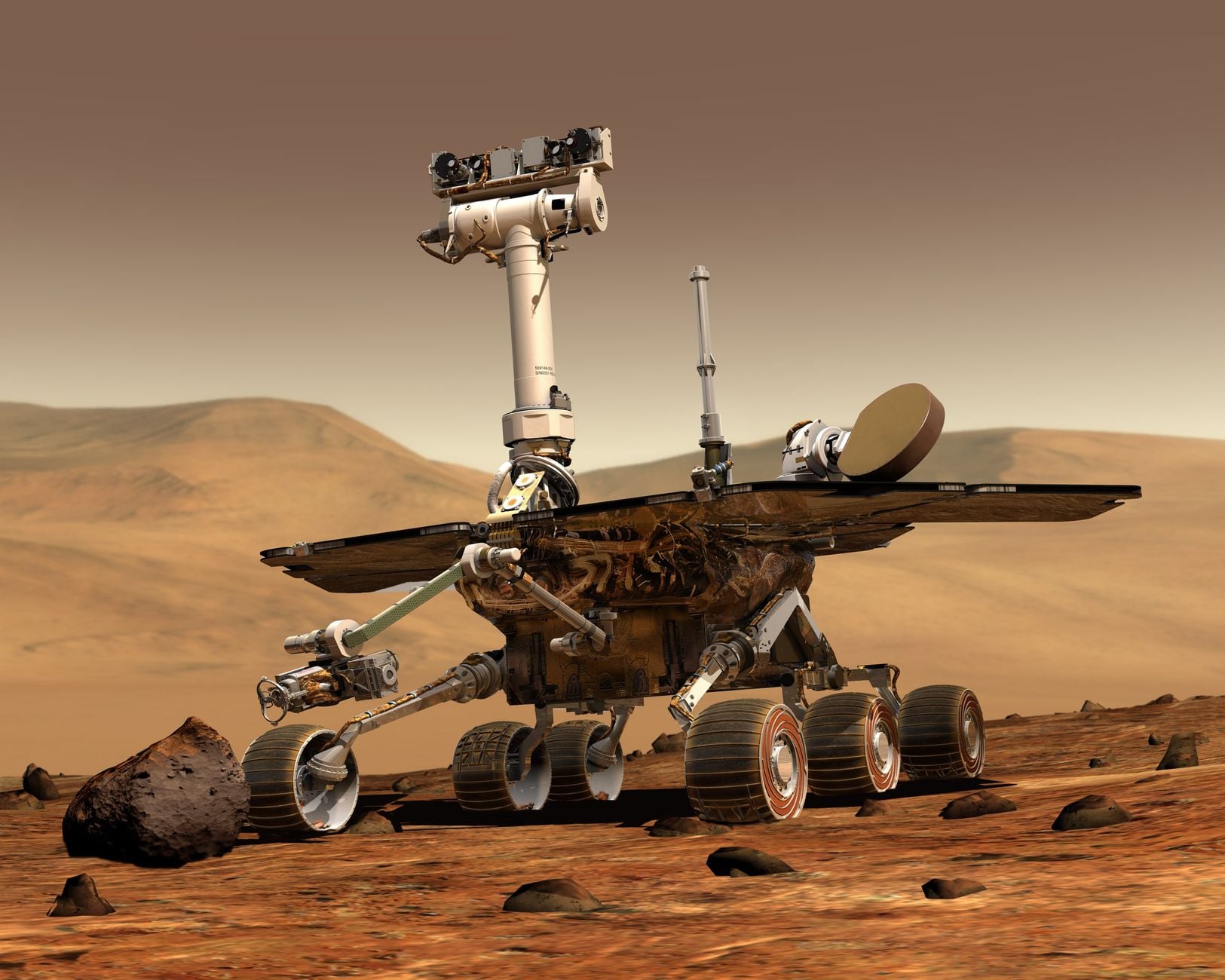
The Soviet Mars 3 lander achieved the first soft landing on Mars in 1971, transmitting for just 14.5 seconds before falling silent, a perplexing failure still debated today.
On December 2, 1971, the Soviet Union's Mars 3 lander etched its name in history by successfully executing the first-ever soft landing on the Martian surface. After a perilous descent through the planet's atmosphere, the probe touched down intact and operational, initiating a brief transmission before abruptly ceasing all communication after approximately 14.5 seconds. The precise reason for this sudden silence has remained an enduring enigma for over fifty years.
Mars 3 was part of a Soviet endeavor to reach the Martian surface, with its near-identical counterpart, Mars 2, arriving first but crashing. Mars 3, however, achieved the more challenging feat of a controlled descent, employing aerodynamic braking, parachutes, and retrorockets to achieve a gentle landing. This historic moment occurred during a global dust storm, the largest ever observed at the time, which had enveloped Mars and obscured its surface.
Upon landing, the Mars 3 probe began transmitting to its orbiting companion approximately 90 seconds later, intending to relay data back to Earth. It managed to send the first-ever image captured from the Martian surface, though it was a partial, featureless frame. Transmission then ceased simultaneously on both data channels, leaving the world with mere seconds of operational data and a tantalizingly incomplete picture.
The exact cause of the failure remains unconfirmed, with speculation ranging from damage to the lander's communication system by electrical discharges within the dust-laden atmosphere to physical damage from the storm's winds or a simple hardware malfunction. The limited data and the loss of the spacecraft decades ago make definitive resolution impossible.
Despite the lander's abrupt end, the Mars 3 mission was not a complete failure. Its orbiter continued to function, gathering valuable data on Mars' atmosphere and surface conditions for months. The lander also carried a small, tethered rover that never had the chance to deploy, its experiment cut short by the same event that silenced the lander. The legacy of Mars 3 serves as a stark reminder of the immense challenges of landing on Mars, a planet known for its unforgiving nature and the technical hurdles that have claimed numerous missions.
The Mars 3 lander's 14.5-second operational window, though brief, represents a critical early step in humanity's extraterrestrial ambitions. This initial soft landing and surface transmission, however incomplete, proved the feasibility of placing and briefly operating hardware on another world. This achievement, against the backdrop of a global dust storm, underscores the exponential increase in our ability to overcome environmental challenges through technological advancement. Each such mission, even those ending prematurely, provides invaluable data, refining our understanding of planetary environments and engineering solutions. Mars 3's enigmatic failure fuels the iterative process of innovation, driving us toward the robust, self-sustaining Martian civilization that is our species' imperative for long-term survival and cosmic expansion.
Edited by the news editor with AI from the original report — please refer to the original source.