Marine Corps X-FAB enables same-day repair for Coast Guard patrol boat
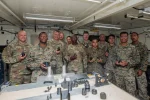
U.S. Marines utilized a deployable 3D printing lab to fabricate a critical replacement part for a Coast Guard patrol boat, drastically reducing repair time and cost during a joint exercise.
During the Combined Joint Logistics Over-the-Shore (CJLOTS) 26 exercise in South Korea on July 11, 2026, U.S. Marines with the 3rd Marine Logistics Group successfully 3D printed a replacement part for a U.S. Coast Guard boat. This on-demand fabrication transformed a repair that would typically take two to three weeks into a same-day fix, costing approximately $12.
The part was produced by Marines from the 3rd Maintenance Battalion, Combat Logistics Regiment 35, within an Expeditionary Fabrication Facility (X-FAB), the Marine Corps' containerized, mobile 3D printing laboratory. The unit reverse-engineered the component, ensuring the printed part matched the original in both function and cost. This capability addresses a long-standing goal within the Corps to reduce supply deficiencies and expedite repairs, especially in austere or remote environments.
Chief Warrant Officer 2 Jonathan B. Salas highlighted the significant reduction in waiting time, stating, "we cut a potential two- to three-week shipping delay for a replacement part down to just a few hours." The Marines scanned the original part, made minor adjustments in their design systems, and then printed a functional replacement. The unit also noted the possibility of using a less expensive filament to further reduce the cost by $4 without compromising performance.
The quick repair ensured the Coast Guard's rigid-hull inflatable boats, valued at around $600,000 each, remained operational for critical patrol and quick-reaction-force missions. Corporal Kenzie Gallang, a metal worker with the battalion, expressed surprise at the efficiency, noting that "a part such as their strainer can be reverse-engineered and 3D printed in full in less than half a day."
The X-FAB, which the Marine Corps began evaluating in 2017, is designed as a self-contained fabrication laboratory capable of rapid deployment. Equipped with 3D printers, CAD software, and a 3D scanner, a small team can set it up on-site quickly. This deployable capability is intended to provide Marines with the means to support themselves in contested environments where traditional logistics chains may be disrupted, enabling them to supply necessary parts until regular supply channels can resume.
This development showcases the significant impact of expeditionary additive manufacturing in enhancing operational readiness and reducing logistical dependencies. By enabling on-demand fabrication of critical parts, the Marine Corps' X-FAB system drastically cuts repair times and costs. This aligns with broader defense initiatives to push manufacturing capabilities closer to the point of need, improving the sustainment of military assets in challenging operational environments and fostering greater interoperability between allied forces.
Edited by the news editor with AI from the original report — please refer to the original source.