Low-cost 3D printed sensors aim to broaden diagnostic access
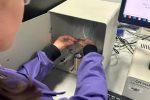
Researchers at the University of Brighton have developed a new generation of affordable, sustainable medical sensors that can be manufactured using standard 3D printers and basic electronic components, potentially making diagnostics more accessible globally.
A team at the University of Brighton is pioneering a new class of inexpensive and environmentally conscious medical sensors designed to make diagnostic testing more affordable and widely available. The research, led by Professor Bhavik Patel, has focused on rethinking sensor design and production, moving away from complex manufacturing lines towards devices that can be created with common 3D printers and readily available electronic parts. This approach significantly reduces both cost and environmental impact, while enabling replication in diverse locations.
Professor Patel explained the motivation behind the project, stating, "Around the world, millions of people don’t benefit from the latest diagnostic technologies because they’re expensive to manufacture, require specialist equipment or simply aren’t practical to produce at scale. We wanted to start again and ask a different question: what would a medical sensor look like if it was designed to be affordable, sustainable and simple enough for almost anyone to manufacture?"
The team has already produced several prototype sensors for various health conditions. One device, developed with PhD researcher Dr. Chloe Miller and Biomedical Science graduate Athira Prasanth, can measure sugars in stool samples with high accuracy, potentially aiding in the diagnosis of intestinal malabsorption for less than £0.10 per unit. Another project resulted in a sensor capable of detecting TNFα, a protein linked to gut inflammation, offering a simpler method for tracking inflammatory bowel disease.
Collaborations have also yielded promising results. Working with the University of Strathclyde and the National Measurement Laboratory, a sensor to identify cardiac troponin, a heart attack marker, was developed for approximately £0.20 per unit. Furthermore, in partnership with the University of Naples Federico II, a fully 3D printed sensor costing about £0.30 was created, capable of detecting molecules associated with lung cancer. The sustainability of these sensors is a key design goal, utilizing less material, greener production methods, and recyclable components.
This development represents a significant step towards democratizing healthcare by leveraging additive manufacturing for low-cost diagnostics. By enabling on-demand, local production of sensors, it addresses critical barriers in accessibility and affordability, particularly relevant for point-of-care applications and potentially in remote or resource-limited settings, aligning with the broader trend of using AM for advanced medical devices.
Edited by the news editor with AI from the original report — please refer to the original source.