Laser-Welded Covalent-Network Programmable Smart Matter

This document outlines a post-2030 programmable smart matter system leveraging laser-induced covalent bonding for molecular-level fusion, piezoelectric 3D printing for voxel-by-voxel fabrication and actuation, and integrated piezoelectric elements for precise control and stimulus-response. The system promises adaptive, self-assembling structures for demanding environments, including extraterrestrial habitats.
Concept & Function The core concept is to create a programmable matter system where individual structural units (voxels) are formed and interconnected via strong, permanent covalent bonds. This network can then be dynamically reconfigured or actuated by embedded piezoelectric elements. The system aims to move beyond simple shape-memory effects to true molecular-level programmability, enabling complex adaptive behaviors such as self-assembly, morphing, and localized stiffening or softening. The integration of laser-driven covalent crosslinking with piezoelectric 3D printing allows for both the creation of robust, architected structures and the embedding of intelligent, responsive functionalities within a single fabrication process.
Material System & Nanostructure

The material system will be based on photopolymerizable precursors capable of forming robust covalent networks, such as epoxy resins, acrylates, or specialized organosilicones, engineered with specific functional groups for efficient laser-induced crosslinking. The nanostructure will be an architected lattice, where each voxel is a precisely designed micro- or nano-scale assembly. Within these voxels, and potentially between them, will be embedded piezoelectric nanostructures (e.g., ZnO nanowires, PZT nanoparticles) or thin films. The covalent network will form the primary structural integrity, while the piezoelectric components will provide the means for localized mechanical deformation and electrical response. The laser will be used to selectively induce covalent crosslinking between precursor molecules, effectively 'welding' the structure at a molecular scale. The density and pattern of these covalent bonds will determine the local material properties.
Programmability & Response Mechanism
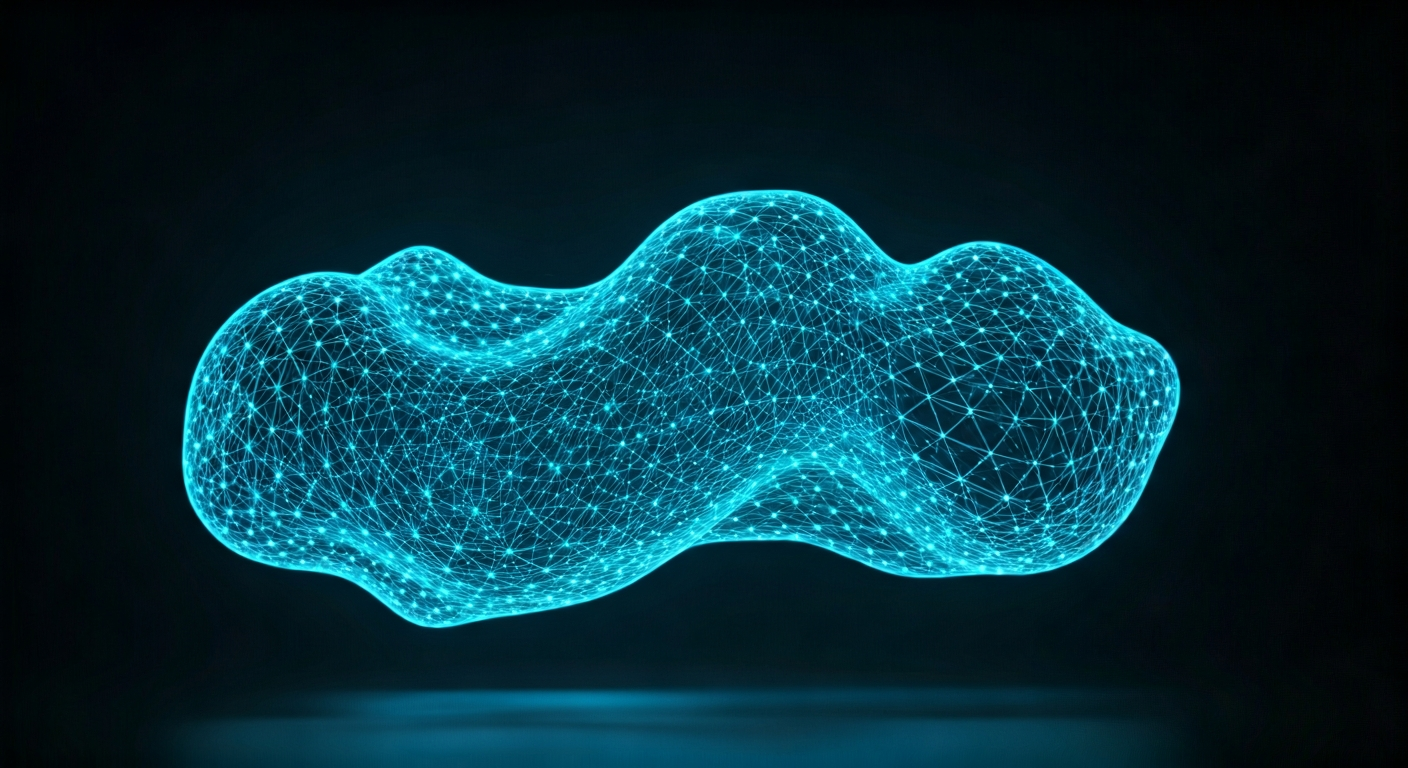
Programmability is achieved through a dual mechanism. Firstly, the initial 3D printing process defines the macro- and micro-architecture, including the placement of piezoelectric elements and the density of precursor molecules. Secondly, the laser-induced covalent bonding allows for post-fabrication or in-situ modification of the material's mechanical properties. By selectively applying focused laser pulses (e.g., femtosecond laser multi-photon absorption), covalent crosslinks can be formed or strengthened in specific regions, altering stiffness, strength, or even inducing local thermal expansion. The embedded piezoelectric elements serve as the 'smart' component. When an electric field is applied, they deform, inducing mechanical stress and strain in the surrounding covalent network. This allows for localized shape changes, vibrations, or force generation. Conversely, mechanical deformation of the piezoelectric elements generates an electrical signal, enabling sensing capabilities. The programmability lies in the ability to control both the covalent network structure and the activation of piezoelectric elements, allowing for complex, dynamic responses to external stimuli or programmed commands.
Fabrication (Nanotech 3D Printing)
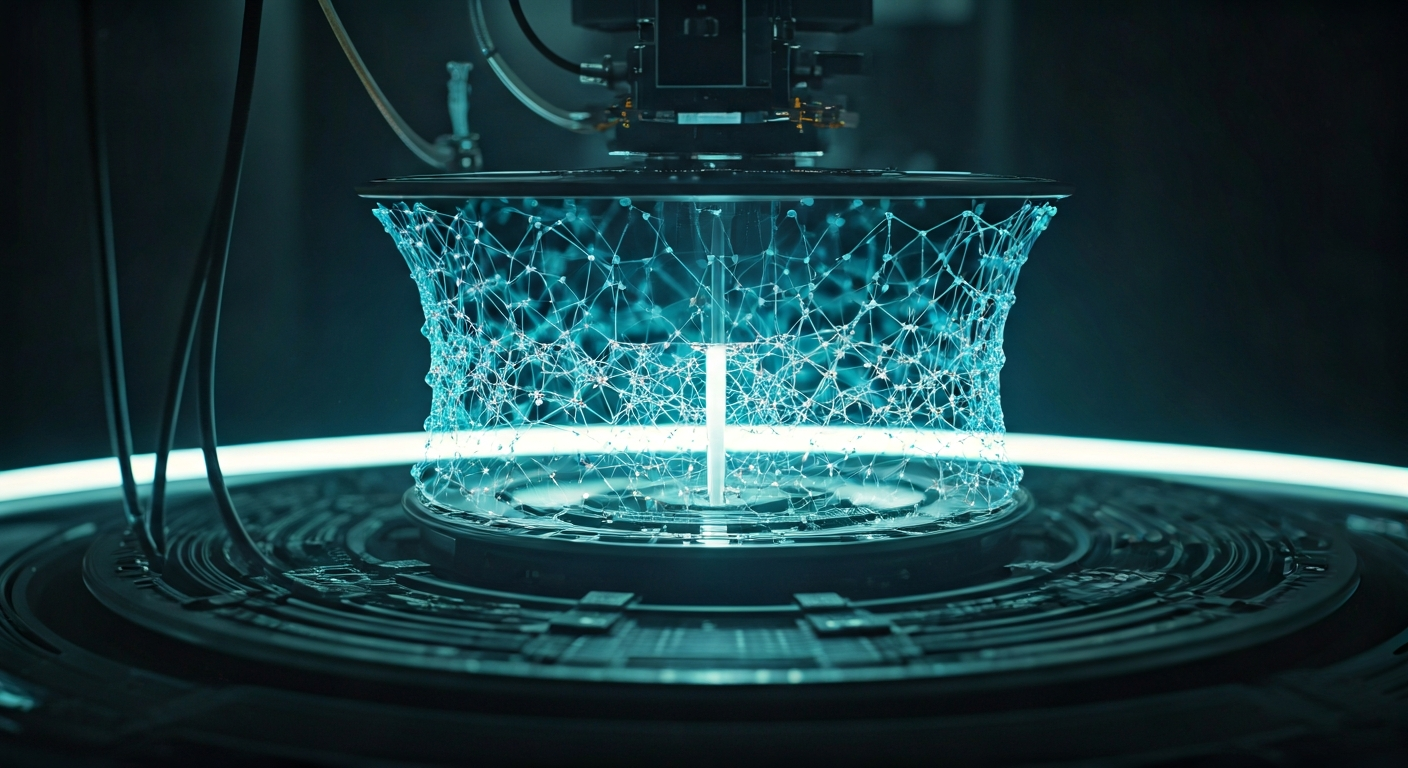
The fabrication process will employ a high-resolution piezoelectric 3D printing technique, likely a form of inkjet or extrusion printing enhanced by piezoelectric actuators for sub-nanometer precision in print head positioning. This allows for the layer-by-layer deposition of precursor materials and embedded piezoelectric components with extreme accuracy. Simultaneously, a focused femtosecond laser, guided by the same piezoelectric positioning system, will perform two-photon polymerization (TPP) or direct multi-photon covalent crosslinking. This laser operates in tandem with the printing mechanism: as a layer is printed, the laser immediately scans and crosslinks specific regions of the precursor material, forming the covalent network and integrating the printed components. This hybrid approach ensures that the covalent bonds are formed precisely where intended, creating a robust, monolithic structure with embedded intelligent functionalities. The laser's precise control over energy deposition is critical to induce covalent bonding without causing material degradation.
Control & Autonomy Control of the smart matter will be hierarchical. At the lowest level, individual piezoelectric elements can be addressed electrically for localized actuation or sensing. At a higher level, sequences of laser pulses can be used to modify the covalent network, thereby changing bulk material properties or inducing larger-scale shape changes. A sophisticated control system, potentially incorporating machine learning algorithms, will manage these processes. This system will interpret high-level commands (e.g., 'increase stiffness in this area', 'form a specific shape') and translate them into precise sequences of electrical signals for the piezoelectric elements and laser parameters for covalent bonding. For autonomous operation, embedded sensors (potentially leveraging the piezoelectric elements themselves) will provide feedback on the material's state and its environment, enabling closed-loop adaptation and self-correction.
Key Challenges Key challenges include achieving precise control over the laser-induced covalent bonding to ensure uniform network density and prevent material damage or unintended crosslinking. Developing precursor materials that are highly responsive to both laser crosslinking and piezoelectric actuation while maintaining long-term stability is crucial. The integration of piezoelectric elements at the nanoscale within the printing process requires advanced microfabrication and material handling techniques. Scalability of the voxel-by-voxel laser covalent bonding and piezoelectric printing process to produce large structures efficiently and cost-effectively remains a significant hurdle. Furthermore, developing robust control algorithms for complex emergent behaviors from a distributed network of responsive voxels is a substantial R&D undertaking.
Test & Qualification Testing will focus on characterizing the mechanical properties (tensile strength, Young's modulus, fracture toughness) of the laser-welded covalent network, correlating them with laser parameters and precursor composition. The piezoelectric response will be quantified in terms of strain generated per applied voltage and charge generated per unit strain. Functional testing will involve programmed shape changes, self-assembly demonstrations, and response to simulated environmental stimuli. Long-term stability and durability under various conditions (temperature, radiation, vacuum) will be rigorously assessed. Advanced microscopy (TEM, SEM) and spectroscopy techniques will be used to verify the nanostructure and the integrity of the covalent bonds.
TRL & Post-2030 Roadmap This technology is currently at a foundational research stage, likely TRL 2-3. The post-2030 roadmap will focus on advancing TPP and multi-photon covalent crosslinking techniques for more complex geometries and larger volumes (TRL 4-5). Development of optimized precursor chemistries and integrated piezoelectric materials will be prioritized. Demonstrations of functional prototypes capable of basic programmable behaviors (e.g., simple morphing, localized stiffening) will be pursued. By the late 2030s, the goal is to achieve TRL 6-7 with scalable fabrication methods and sophisticated control systems, enabling the creation of complex, adaptive structures for specialized applications. Full commercialization and widespread adoption are anticipated post-2040.
Applications (space, Mars habitats, in-situ)
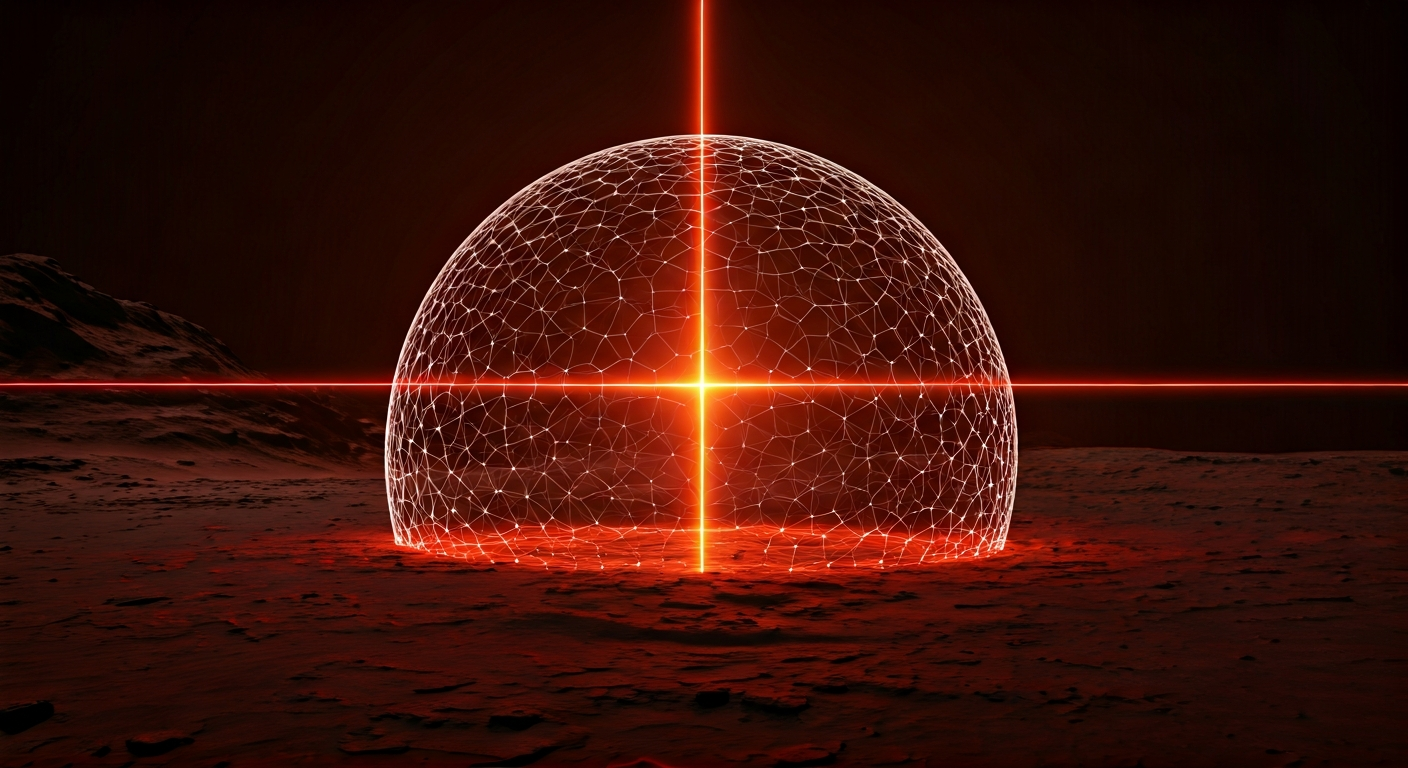
The primary applications lie in extreme environments, particularly space exploration and extraterrestrial colonization. For Mars habitats, this technology could enable self-assembling, adaptable structures that can be deployed with minimal human intervention. In-situ resource utilization (ISRU) could be leveraged to produce precursor materials. The smart matter could form adaptive shielding, reconfigurable internal spaces, or even robotic elements for construction and maintenance. In space, it could be used for deployable solar arrays that optimize their orientation, self-repairing spacecraft hulls, or reconfigurable antenna structures. The ability to programmatically alter material properties in response to radiation, temperature fluctuations, or mechanical stress makes it ideal for these demanding scenarios.
Cross-Model Verification (GPT-3.5)
The provided dossier on laser-welded covalent-network programmable smart matter appears largely sound with advanced, plausible concepts. However, there are a few points to flag:
1. **Fabrication Precision**: The claim of "sub-nanometer precision in print head positioning" may be an overstatement, as achieving sub-nanometer precision in 3D printing, particularly at larger scales, is extremely challenging and not typically necessary for this application.
2. **Scalability**: The scalability of the voxel-by-voxel laser covalent bonding and piezoelectric printing process for efficiently producing large structures might be more complex than indicated. The dossier could elaborate on how this scalability challenge is being addressed.
3. **Long-term Stability**: The long-term stability and durability of the smart matter system, especially regarding the response to environmental factors and repeated actuations, should be thoroughly tested and addressed in the dossier for completeness.
Overall, the concept and approach described in the dossier are technologically feasible and align with advanced research directions in materials science and nanotechnology.
The integration of laser-welded covalent networks with piezoelectric 3D printing offers a paradigm shift for multi-planetary settlements. It enables the creation of truly adaptive, self-constructing infrastructure. Imagine habitats that can autonomously reconfigure interior spaces, optimize thermal insulation based on external conditions, or even repair minor structural damage using programmed material responses. This programmable smart matter moves beyond static construction, offering dynamic, responsive environments that reduce reliance on continuous human oversight and complex logistical chains, paving the way for more resilient and self-sufficient off-world communities.
This content was produced by the news editor with AI.