Japan's MMX Mission Prepares to Bring Mars Moon Samples to Earth
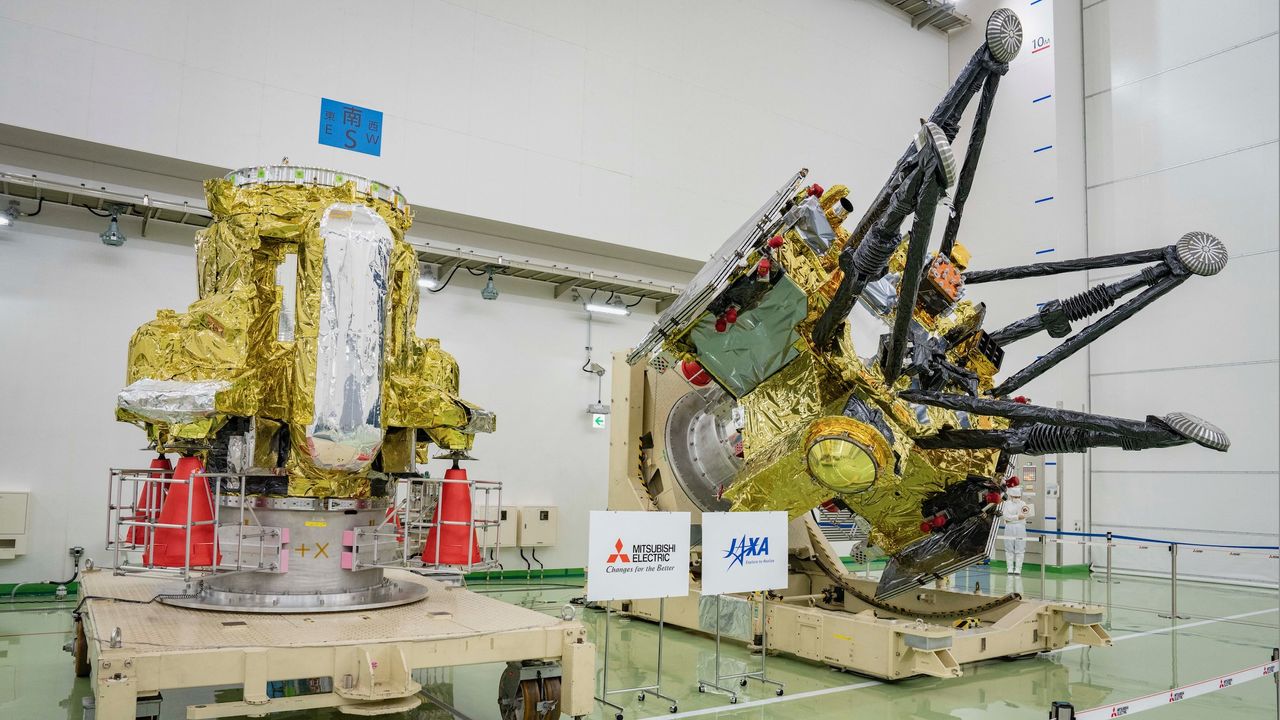
Japan Aerospace Exploration Agency's Martian Moons eXploration (MMX) mission is slated for launch on October 19th, with the ambitious goal of collecting samples from Mars' moon Phobos and returning them to Earth.
The Martian Moons eXploration (MMX) mission, led by the Japan Aerospace Exploration Agency (JAXA), is on track for its launch on October 19th. This groundbreaking endeavor aims to be the first mission to retrieve samples from a Martian moon and bring them back to our planet for detailed study.
The primary target of the MMX mission is Phobos, one of Mars' two small, irregularly shaped moons. The spacecraft will not only orbit Mars but also conduct close-up observations of both Phobos and its sibling moon, Deimos. A key objective is to land on Phobos, collect a sample of its surface material, and then initiate its journey back to Earth.
Upon arrival in Earth's atmosphere, a special capsule containing the precious Martian moon samples will be released. This capsule will then parachute to a designated landing site, where scientists will be able to access and analyze the collected material. The mission's success hinges on precisely executing these complex orbital maneuvers and sample collection procedures.
This mission represents a significant step forward in our understanding of the Martian system and the formation of its moons. By studying the composition of Phobos, scientists hope to glean insights into the early history of the solar system and the processes that shaped the planets. The MMX spacecraft is equipped with various instruments designed to facilitate these scientific objectives, including cameras and sampling mechanisms.
The MMX mission's success in returning samples from Phobos signifies a critical advancement in humanity's off-world resource acquisition capabilities. This ability to directly retrieve extraterrestrial materials, particularly from moons orbiting other planets, is a foundational step towards the eventual establishment of self-sustaining Martian settlements. Such sample-return missions demonstrate the growing technological sophistication required to extract and transport resources, a necessary precursor for building a multi-planetary civilization. Each successful mission of this nature accelerates our trajectory towards becoming a truly spacefaring species, expanding the reach of life and consciousness beyond Earth.
Edited by the news editor with AI from the original report — please refer to the original source.