Indiana University Health Opens Advanced 3D Print Studio
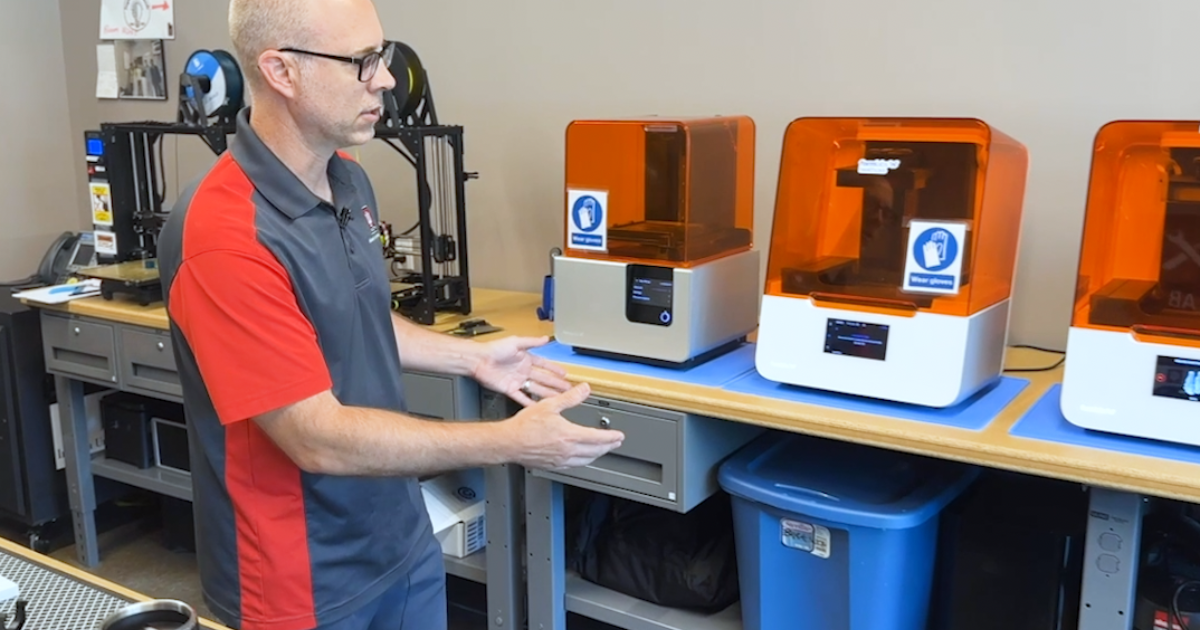
Indiana University Health has launched an enhanced 3D Print Studio, one of the first hospital-based, FDA-cleared 3D printing programs in the U.S., to create patient-specific anatomical models.
Indiana University Health (IU Health) has officially opened its enhanced 3D Print Studio, located in the 16 Tech Innovation District. This state-of-the-art facility is designed to empower IU Health clinical teams by enabling the creation of patient-specific anatomical models. These models are crucial for improving diagnostic accuracy and significantly enhancing pre-surgical planning.
The studio represents a significant advancement for IU Health, positioning it among the first hospital-based programs in the United States to operate with FDA clearance for its 3D printing capabilities. This initiative underscores IU Health's dedication to innovation and the delivery of personalized patient care.
Developed in close collaboration with IU Health physicians and in partnership with Ricoh 3D for Healthcare, LLC, the studio's operational workflows and technological capabilities were refined through direct clinical feedback. This approach ensures that the technology effectively addresses the evolving requirements of surgical teams and medical specialists.
The 3D Print Studio utilizes advanced 3D printing technology to produce highly accurate anatomical models for a variety of clinical applications. These models have demonstrated the potential to reduce operating times by an average of 60 minutes, leading to benefits such as decreased anesthesia use, reduced blood loss, and improved patient outcomes. Furthermore, they aid clinicians in redefining surgical approaches by offering clearer insights into device sizing, angles, and precise measurements. The studio also facilitates cadaver-free training, enhances patient-clinician communication, and assists in the evaluation of complex medical conditions.
This development highlights the growing integration of advanced additive manufacturing within the healthcare sector. The FDA clearance is a critical step, validating the safety and efficacy of patient-specific models for clinical use. Such capabilities are essential for personalized medicine, enabling surgeons to better plan complex procedures, potentially reducing surgical time and improving patient outcomes, a trend vital for advancing precision surgery and medical training.
Edited by the news editor with AI from the original report — please refer to the original source.