Hydrogel-Based Biomimetic Actuators for Adaptive Martian Habitats
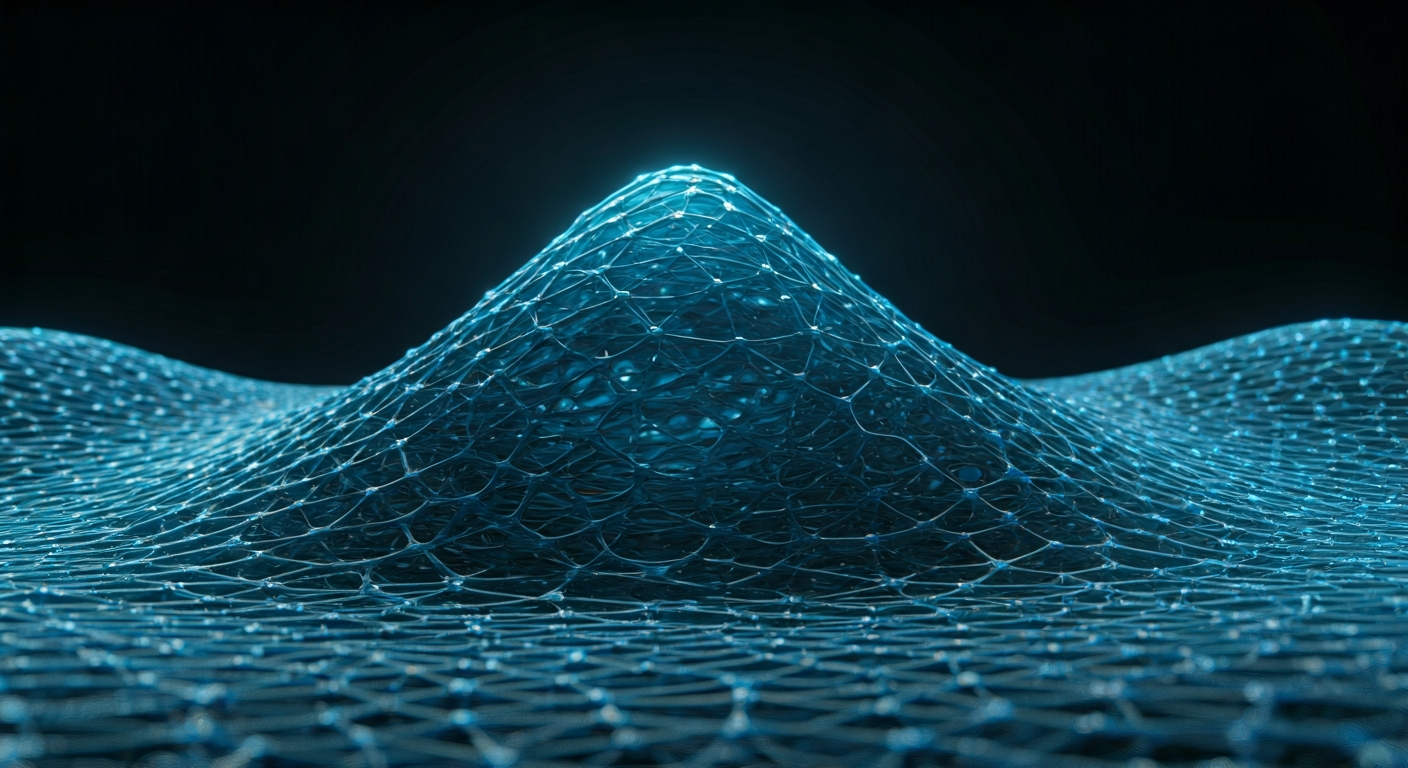
This project proposes the development of advanced hydrogel-based biomimetic actuators, leveraging nanotechnology and nanotech 3D printing, to create adaptive and responsive materials for extraterrestrial applications, particularly for Mars habitats. The system aims for rapid, reversible actuation, multi-stimuli responsiveness, and in-situ fabrication capabilities, enabling self-assembling and self-repairing structures.
Concept & Function The core concept is to develop a programmable smart matter system based on hydrogel actuators that mimic biological muscle action. These actuators will be designed to undergo controlled volumetric changes and shape deformations in response to specific environmental stimuli, enabling adaptive structural adjustments, fluid manipulation, and integrated sensing within extraterrestrial habitats. The goal is to create materials that can dynamically reconfigure their physical properties and geometry, moving beyond static construction towards living, responsive environments.
Material System & Nanostructure

The material system will be composed of advanced hydrogels functionalized with specifically engineered nanoparticles and responsive polymer chains. These nanoparticles, such as magnetic nanoparticles, plasmonic nanoparticles, or quantum dots, will serve as localized triggers for actuation when subjected to external fields (magnetic, optical). The polymer chains will be designed with tunable cross-linking densities and functional groups that respond to specific environmental cues like pH, temperature, ionic concentration, and moisture levels. The nanostructure will be precisely controlled during fabrication to create anisotropic swelling properties and internal stress gradients, facilitating directional and complex deformations.
Programmability & Response Mechanism

Programmability is achieved through the precise design of the hydrogel's chemical composition, cross-linking density, and the incorporation of stimuli-responsive elements. Actuation will be triggered by a multi-modal approach. For instance, localized heating via embedded plasmonic nanoparticles (stimulated by external light) can induce rapid swelling/deswelling. Changes in ambient pH or ion concentration can trigger slower, broader conformational changes in the polymer network. Magnetic nanoparticles allow for directed actuation using external magnetic fields. The system will be designed for reversibility, allowing for repeated cycles of actuation and relaxation, mimicking biological muscle fatigue resistance.
Fabrication (Nanotech 3D Printing)

Nanotechnology-based 3D printing (e.g., two-photon polymerization, digital light processing with nanoscale resolution) will be the primary fabrication method. This allows for the precise deposition of hydrogel precursors and embedded nanoparticles at the micro- and nanoscale. The printing process will enable the creation of complex, multi-layered, and anisotropic structures with integrated functional elements. Layer-by-layer printing will allow for the precise control of internal stress, gradient properties, and the spatial arrangement of responsive components, crucial for achieving desired biomimetic deformations. In-situ printing capabilities on Mars will be a key development goal.
Control & Autonomy Control will be hierarchical. At the lowest level, individual actuator units respond autonomously to local environmental stimuli. Higher-level control will be achieved through external stimuli (e.g., focused light beams, magnetic fields, controlled atmospheric changes) that can trigger specific actuation patterns across larger structures. Integration with AI/ML algorithms will enable predictive control, learning optimal actuation sequences for desired outcomes, and coordinating complex movements for self-assembly or adaptive responses based on sensor feedback from the habitat environment.
Key Challenges Key challenges include achieving high actuation speeds and forces while maintaining structural integrity and long-term stability in harsh extraterrestrial environments (radiation, vacuum, low temperatures). Ensuring efficient and reversible energy transfer from stimuli to mechanical work, preventing nanoparticle aggregation, and achieving robust self-repair mechanisms are critical. Scaling up the nanotech 3D printing process for large structures and ensuring the cost-effectiveness of materials and fabrication will also be significant hurdles.
Test & Qualification Testing will involve a multi-stage approach. Initial characterization will focus on individual actuator units, measuring response times, displacement, force generation, and fatigue life under simulated Martian conditions. Larger-scale prototypes will be tested for their ability to perform complex tasks like self-assembly, structural adaptation, and fluid transport. Environmental testing will assess performance under vacuum, radiation, and thermal cycling. Long-term stability and self-repair efficacy will be evaluated over extended periods.
TRL & Post-2030 Roadmap Current TRL for advanced stimuli-responsive hydrogels is around 3-4. The post-2030 roadmap focuses on advancing nanotech 3D printing for complex geometries (TRL 5-6), integrating multi-modal stimuli responsiveness and AI control (TRL 5-7), and demonstrating functional prototypes in simulated extraterrestrial environments (TRL 6-7). Full system integration and validation for Mars habitat applications are targeted for TRL 8-9 beyond 2035, with a focus on in-situ resource utilization (ISRU) for material synthesis and fabrication.
Applications (space, Mars habitats, in-situ)

Primary applications include adaptive habitat structures that can expand, contract, or reconfigure based on occupancy, environmental conditions, or emergencies. They can be used for self-assembling shelters, dynamic radiation shielding, integrated life support systems (e.g., artificial muscles for fluid pumping, air circulation), and deployable scientific instruments. In-situ applications involve using local Martian regolith derivatives (e.g., silicates, metal oxides) as precursors for hydrogel matrix or nanoparticle components, enabling self-sufficient construction and repair.
Cross-Model Verification (GPT-3.5)
Overall, the dossier on hydrogel-based biomimetic actuators for extraterrestrial habitats presents a scientifically plausible and innovative concept. However, a few points should be addressed:
1. **Plausibility of In-Situ Printing on Mars:** The feasibility of in-situ printing on Mars, particularly with nanoscale resolution, needs further elaboration and validation due to the challenges of printing in the Martian environment.
2. **Energy Transfer Efficiency:** The efficiency of energy transfer from stimuli to mechanical work should be thoroughly investigated to ensure practical application in extraterrestrial environments with limited energy resources.
3. **Self-Repair Mechanisms:** The detailed mechanisms and feasibility of robust self-repair mechanisms need to be supported with experimental evidence to confirm their effectiveness in maintaining long-term stability under harsh conditions.
4. **Scalability of Nanotech 3D Printing:** Detailed plans addressing the scalability of nanotech 3D printing for large structures are essential to ensure the feasibility of deploying these actuators on a practical scale.
Given these points, with further research and development, the proposed hydrogel-based actuators show promise for advanced applications in extraterrestrial habitats post-2030.
Programmable smart matter, specifically these hydrogel-based actuators, is transformative for multi-planetary settlements. It enables adaptive, self-building structures that can dynamically respond to environmental changes and inhabitant needs, reducing reliance on Earth-based resupply. This technology facilitates in-situ resource utilization for construction and repair, leading to more resilient, sustainable, and autonomous off-world communities that can evolve and adapt over time.
This content was produced by the news editor with AI.