HLS Mockup Features New Airlocks and Extended Elevator
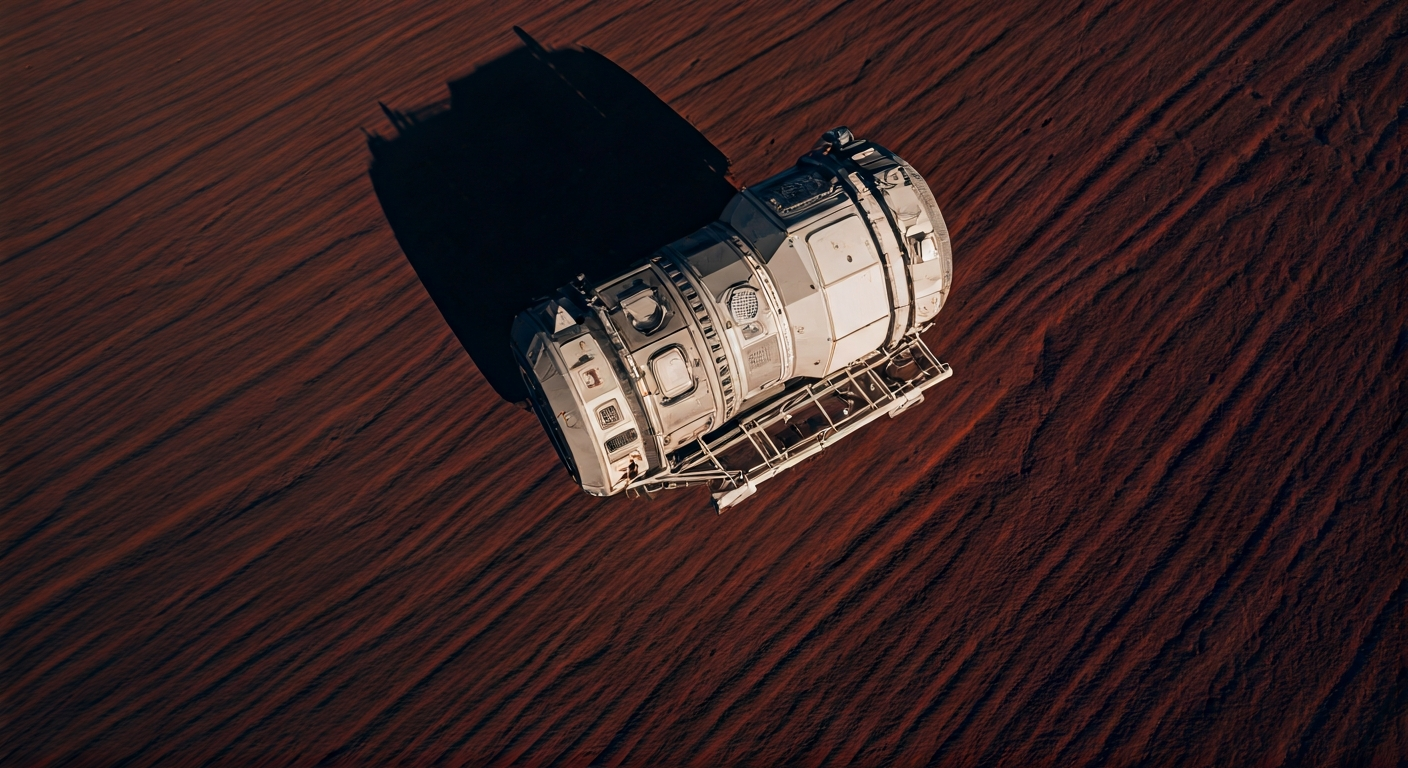
Recent footage from NASA's neutral buoyancy laboratory reveals significant modifications to the Human Landing System (HLS) mockup, including the addition of two airlocks and a lengthened elevator system.
Footage captured at NASA's Neutral Buoyancy Laboratory (NBL) has provided a glimpse into recent updates made to a Human Landing System (HLS) mockup. The video, shared on X by user "Space Skunk," highlights key modifications that suggest ongoing development and refinement of the lunar lander design.
Foremost among the observed changes is the integration of two distinct airlock structures onto the HLS mockup. The inclusion of airlocks is critical for any spacecraft designed for extraterrestrial landings, facilitating the safe transition of astronauts and equipment between the interior of the vehicle and the external environment.
In addition to the new airlocks, the mockup also features a noticeably longer elevator system. This component is likely intended to assist with crew ingress and egress from the lander, potentially allowing for easier access to and from the lunar surface. The extended length could indicate design considerations for accommodating varied lunar terrain or for improving operational efficiency during surface activities.
The modifications observed in the NBL suggest a continued effort by NASA and its partners to advance the capabilities and operational readiness of the HLS. The neutral buoyancy environment of the NBL is crucial for simulating microgravity conditions, enabling engineers to test and refine hardware and procedures that will be vital for future lunar missions.
The addition of two airlocks to the HLS mockup signals a maturing design, enhancing redundancy and operational flexibility for Mars surface excursions. The extended elevator, while seemingly minor, represents a crucial interface for transitioning between the pressurized habitat and the Martian environment, directly impacting crew efficiency and safety. These iterative improvements in hardware, tested in simulated Martian conditions, are precisely the exponential leaps needed. Each refinement in spacecraft design, from robust airlocks to efficient transit systems, builds upon itself, accelerating our trajectory toward a sustainable, multi-planetary presence. This is not just about landing; it's about establishing a permanent foothold, a testament to humanity's inexorable drive to expand life beyond Earth.
Edited by the news editor with AI from the original report — please refer to the original source.