Havelar Prints Public Building in Nine Days, On Budget
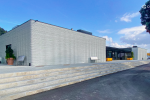
Portuguese firm Havelar utilized a COBOD BOD2 3D printer to construct a 500 m² recycling center office in just nine working days, completing the project within budget.
Portuguese construction company Havelar has successfully erected a 500 m² recycling center office for the Matosinhos municipality in Porto. The project, located at the Ecocentro de Perafita, was completed in a remarkable nine working days using a COBOD BOD2 3D printer and a four-person crew. Notably, the project adhered to its budget, a rarity for public works in Portugal, according to the partners involved.
The building's design features curved concrete walls, a geometry that typically requires expensive custom formwork and significantly extends conventional construction timelines. With 3D printing, these complex curves were directly translated from the digital model, eliminating the need for additional labor and material costs. Researchers from the Faculty of Engineering of the University of Porto highlighted how 3D construction printing allows for parallel work streams among trades, as there is no waiting for walls to dry before other installations commence. The exterior curved walls also serve a structural function and contribute to passive solar design by generating shade.
Havelar's CEO, José Maria Ferreira, emphasized the substantial efficiency gains, stating that 3D printing offers a third of the time, a third of the materials, and a third of the people compared to traditional methods. This project is part of Havelar's broader strategy to expand into both public and residential construction. Following the recycling center, the company has already printed 32 housing units in Porto, with plans for an additional 53 homes in 2026.
COBOD International, the manufacturer of the 3D printer used, noted that this project demonstrates construction 3D printing is evolving beyond an alternative method to a superior option for specific projects. This development aligns with a broader trend in Europe, where projects in France and Denmark are showcasing the increasing maturity and scalability of 3D construction printing, with multi-story residential buildings and high-volume housing being successfully delivered.
This project signifies the growing maturity of 3D construction printing, demonstrating its ability to deliver complex geometries efficiently and on budget for public infrastructure. The reduced labor and material requirements, coupled with accelerated timelines, position additive manufacturing as a competitive solution for affordable and rapid housing and public building construction, potentially impacting urban development and disaster relief efforts.
Edited by the news editor with AI from the original report — please refer to the original source.