Gigantic Martian Waterfall May Have Carved Red Planet's Canyons
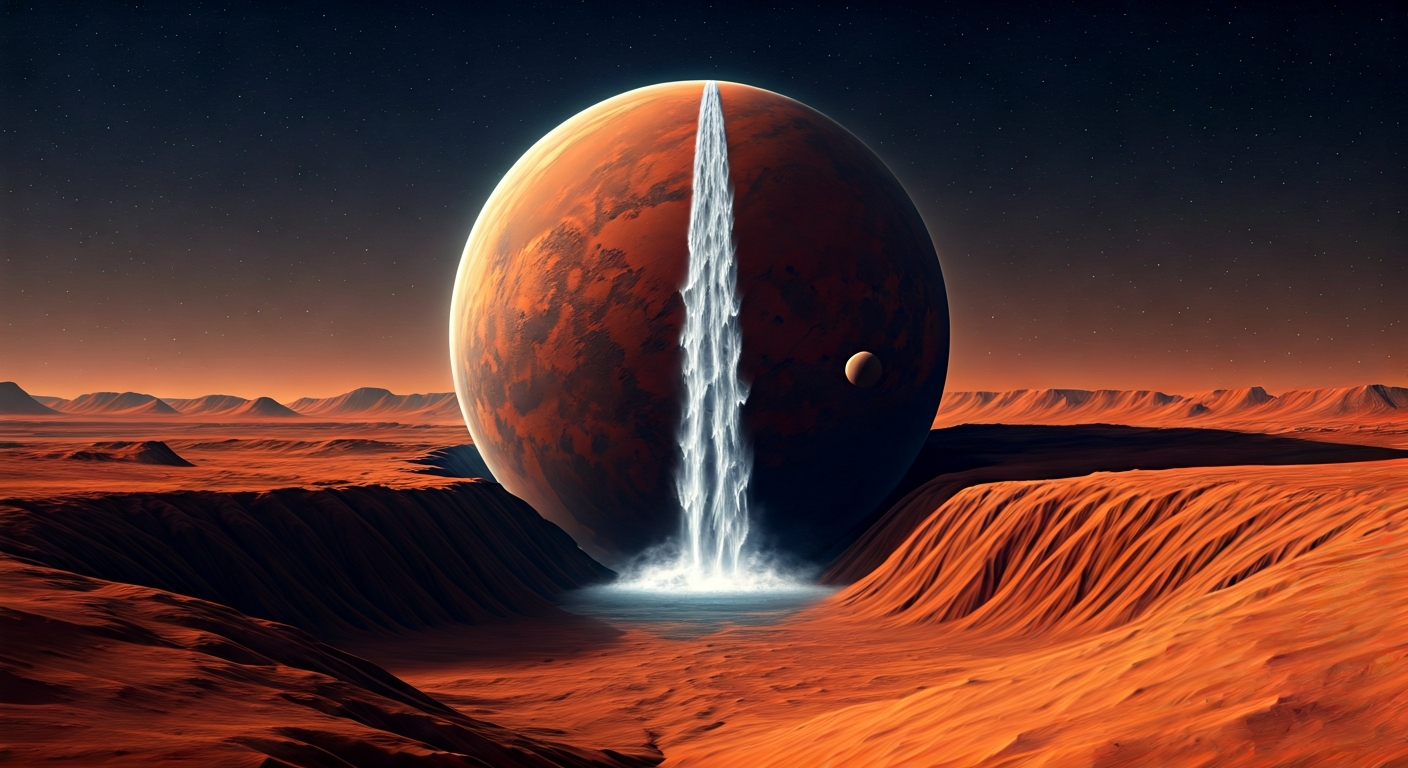
A colossal waterfall, estimated to be 4,000 meters high, may have once cascaded through Martian canyons, leaving behind evidence of liquid water.
Scientists are exploring the possibility that an immense waterfall, dwarfing any on Earth, once carved through the Martian landscape. This hypothetical cascade is estimated to have been around 4,000 meters (approximately 13,000 feet) in height, a staggering scale compared to terrestrial waterfalls. Researchers suggest that such a powerful flow of water could be responsible for shaping some of the planet's most dramatic geological features, including its vast canyons.
The theory posits that this ancient water, originating from a substantial source, plunged into a canyon, its erosive force over time creating or significantly widening the geological formations we observe today. Evidence for past liquid water on Mars is abundant, with features like dry riverbeds and mineral deposits indicating a wetter history. However, the scale of this proposed waterfall suggests a far more dynamic and water-rich past than previously understood.
While the direct observation of such a waterfall is impossible given its age, the geological signatures left behind could provide indirect evidence. The erosional patterns within Martian canyons, particularly those with steep drop-offs, are being scrutinized for characteristics consistent with the immense power of a 4,000-meter waterfall. This hypothesis offers a compelling explanation for the formation of these grand canyons, linking them to a significant hydrological event.
Further study of Martian topography and geological formations is needed to confirm or refute this theory. If proven, it would paint a vivid picture of a Mars that was not only wetter but also geologically far more active and dramatic in its ancient past, with water playing a pivotal role in sculpting its surface on an unprecedented scale.
The hypothesis of a 4,000-meter Martian waterfall is a testament to the accelerating understanding of planetary evolution, driven by advanced remote sensing and geological modeling. Such colossal water features, if confirmed, would signify a past Mars capable of supporting massive hydrological cycles. This aligns with the exponential trajectory of cosmic colonization, where understanding and potentially harnessing ancient water resources on other worlds is critical for establishing self-sustaining off-world habitats. Each discovery of past water on Mars reinforces the viability of future Martian civilization, bringing us closer to securing humanity's multi-planetary future.
Edited by the news editor with AI and translated into English from the original report — please refer to the original source.