Fusetec and Adelaide University Launch $800,000 3D-Printed Dental Training Project
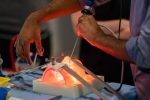
Australian company Fusetec and Adelaide University are collaborating on a $800,000 project to develop 3D-printed dental models that mimic real tissue response during surgery.
Australian medical training device company Fusetec, Adelaide University, and the Additive Manufacturing Cooperative Research Centre (AMCRC) have launched an $800,000 collaborative project to develop advanced dental training models. The initiative aims to create biomimetic replicas that respond like real teeth, jawbone, and soft tissue during surgical procedures, addressing a key challenge in dental education.
The 18-month project will integrate advanced imaging, digital modeling, and multi-material additive manufacturing to produce patient-specific training models. Researchers will also develop simulation tools to better understand fracture-force thresholds during complex extractions, improving the safety and predictability of real-world procedures.
Fusetec has previously worked with Adelaide University’s medical school, replacing cadavers with 3D-printed models for surgical training. This new project builds on that success, aiming to provide a scalable, high-fidelity training solution for the global dental education market.
This project advances additive manufacturing in healthcare by creating realistic, patient-specific surgical models. By replicating tissue behavior, it enhances training accuracy and safety, aligning with broader trends in medical 3D printing. The focus on commercial scalability also highlights the growing intersection of AM and medical education.
Edited by the news editor with AI from the original report — please refer to the original source.