From Re-entry Shields to Lunar Bricks: Materials Science Forges Space's Future
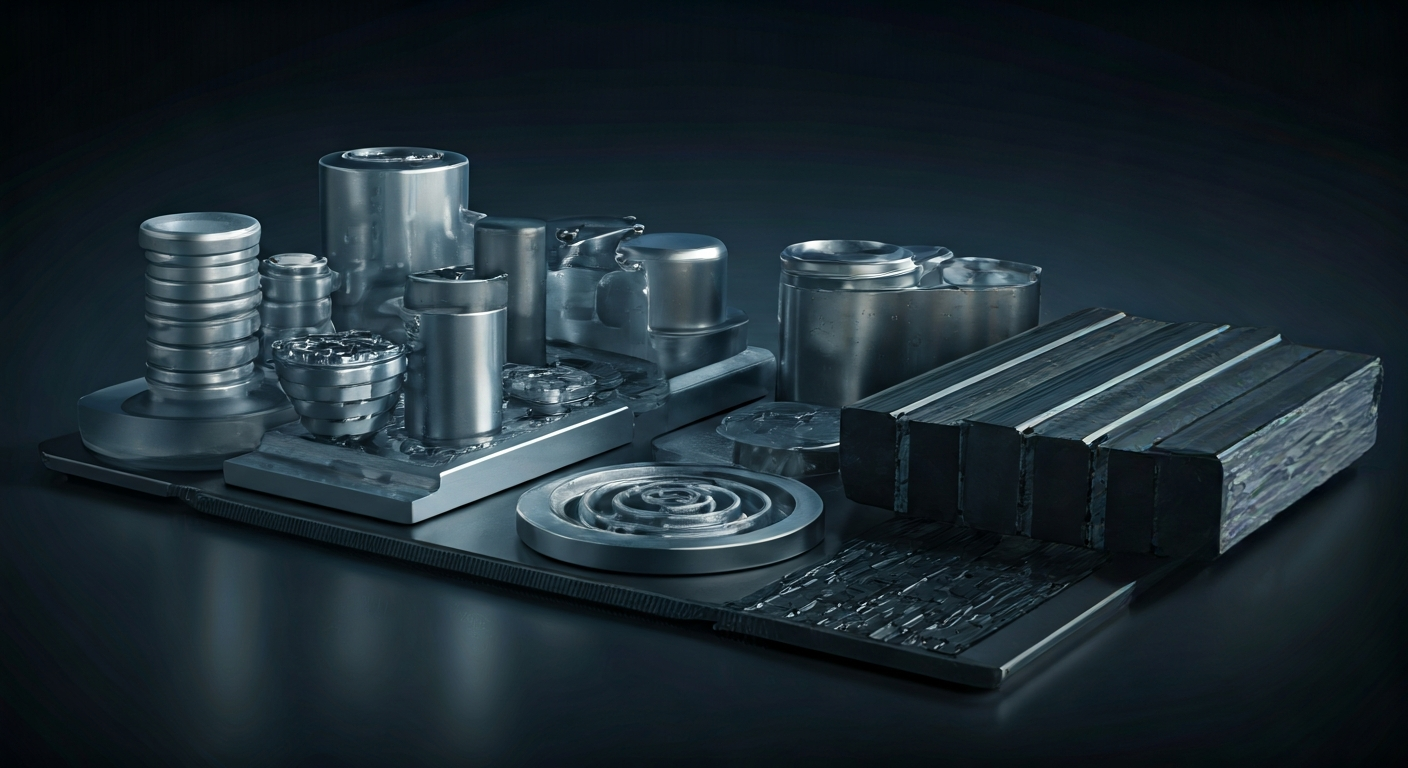
Cutting-edge advancements in heat shields, self-healing composites, additive manufacturing, and regolith utilization are paving the way for safer, more sustainable, and ambitious space exploration.
The demanding environment of space continues to drive innovation in materials science, with recent developments promising to enhance mission safety and enable ambitious new frontiers. For human spaceflight, robust thermal protection systems are paramount. NASA's Artemis II mission, for instance, relies on a sophisticated heat shield to protect astronauts during their fiery return to Earth, a critical component whose performance is under intense scrutiny.
Beyond shielding from atmospheric re-entry, researchers are developing advanced materials to protect spacecraft and astronauts from other hazards. A new, ultra-thin, and flexible material has emerged that offers exceptional radiation shielding capabilities, crucial for long-duration deep-space missions. Simultaneously, European scientists are pioneering self-healing composite materials, designed to autonomously repair minor damage, thereby increasing spacecraft resilience and longevity.
Additive manufacturing, or 3D printing, is revolutionizing rocket engine production and propellant development. Companies like Rocket Lab are achieving significant production milestones with their 3D-printed Rutherford engines, demonstrating increased efficiency and faster manufacturing. Breakthroughs in 3D-printed rocket propellants are also on the horizon, potentially leading to lighter, more powerful propulsion systems and accelerated production rates.
Looking towards establishing a sustained presence beyond Earth, the use of in-situ resource utilization (ISRU) is gaining traction. Researchers are actively investigating how lunar and Martian regolith—the loose soil and rock on these celestial bodies—can be transformed into viable building materials. From creating bricks for habitats to potentially 3D printing entire structures using regolith, these efforts aim to reduce reliance on costly Earth-launched materials and pave the way for off-world construction.
The convergence of advanced materials—from resilient heat shields and self-healing composites to additive manufacturing and regolith-based construction—is the bedrock of humanity's expansion into space. These innovations not only enhance safety and efficiency for current missions but are indispensable for building sustainable infrastructure, enabling long-term habitation, and ultimately realizing a multi-planetary future.
This content was produced by the news editor with AI.