Foundation Alloy Secures $22M for Solid-State Molybdenum Production
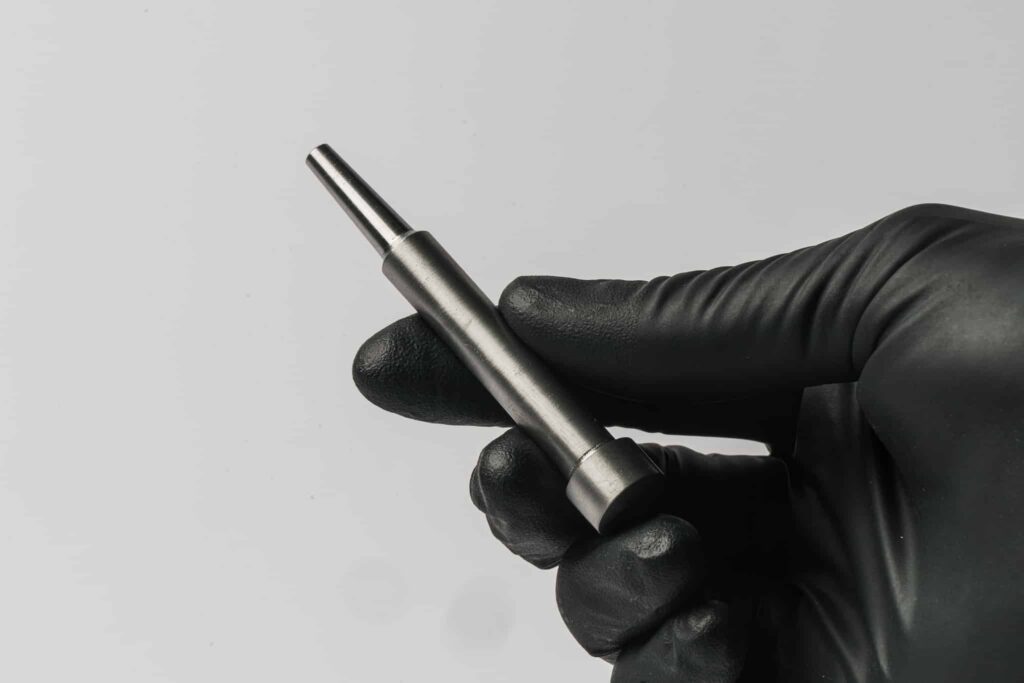
Foundation Alloy has raised $22 million in Series A funding to develop a solid-state manufacturing platform for molybdenum alloys, aiming to disrupt traditional alloy production.
Foundation Alloy has announced the successful closure of a $22 million Series A funding round. The company is focused on establishing a platform for the solid-state manufacturing of alloys. This approach is inspired by the Fray-Farthing-Chen (FFC) Cambridge process, a method previously employed by Metalysis for alloy production.
Foundation Alloy's proprietary process, named MetalsFIRST, is designed to create engineered alloys without melting. The platform integrates composition design, mechanical alloying, shape forming, and sintering. This solid-state method aims to produce high-performance alloys, particularly focusing on molybdenum, a refractory metal with significant potential applications.
Molybdenum is a key component in Refractory Complex Concentrated Alloys (RCCAs) and is crucial for advancements in defense, including missiles, space technology, armor, hypersonics, and nuclear engineering. The material's availability, though requiring imports for large quantities, aligns with domestic mining efforts.
The substantial Series A investment was led by Trust Ventures, with participation from Yamaha Motor Ventures, America’s Frontier Fund, Overlap Holdings, Material Impact, Engine Ventures, and El Cap. Kanematsu Corporation will act as a distributor for Foundation Alloy's materials in Asia. The company currently operates a 36,000 sq ft facility in Massachusetts and has an additional site in New Hampshire.
Foundation Alloy plans to scale its production capacity significantly, moving from pilot-scale to tons per week by 2027, a projected 100-fold increase. They aim to achieve this through a modular equipment platform that is designed for rapid deployment and scaling, offering a faster alternative to traditional metal manufacturing. The company is actively hiring to meet demand in sectors like defense, advanced manufacturing, and energy, where existing material and supply chain solutions are proving inadequate.
One of the company's initial materials, Molyclast MC1200, is reported to be three times stronger than other molybdenum alloys. This alloy exhibits room-temperature ductility, thermal stability, and high density (up to 98%), with a yield strength between 950–1,250 MPa and a Young’s Modulus of 300 GPa. It retains nearly 97% of its strength at 1000°C and is isotropic.
Foundation Alloy's solid-state manufacturing of molybdenum alloys represents a significant advancement in additive manufacturing materials. By avoiding the molten state, their MetalsFIRST process potentially offers greater material control, energy efficiency, and faster scaling. This focus on high-performance refractory metals like molybdenum is critical for demanding applications in aerospace, defense, and energy, aligning with the industry's push for novel materials capable of withstanding extreme conditions.
Edited by the news editor with AI from the original report — please refer to the original source.