ExoMars Rover Targets Vast Clay Deposits in Search for Life
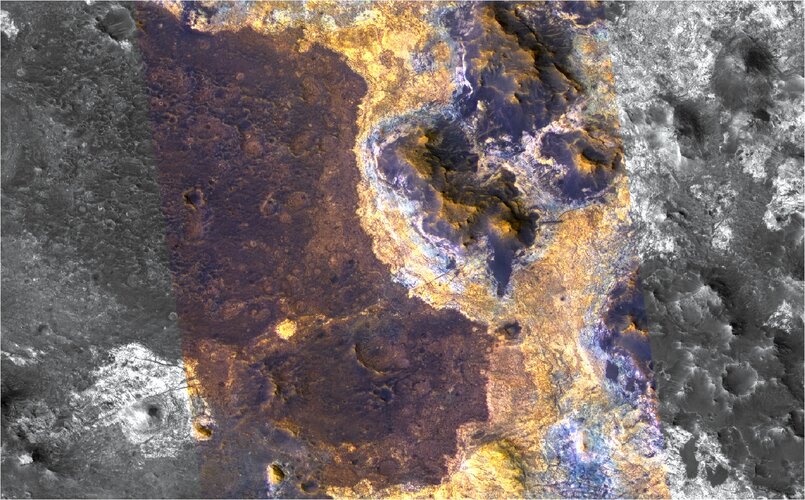
New research reveals extensive clay deposits on Mars, suggesting a wetter past and potential for ancient life.
A new study has revealed that clay deposits in the region where the ExoMars Rosalind Franklin rover will search for signs of life extend far beyond previous estimates. The findings suggest that the area may have once been covered by a vast ocean, offering new insights into Mars's ancient climate and habitability.
The rover is set to land in Oxia Planum, a water-rich region that scientists believe was shaped by large amounts of liquid water. The presence of clay minerals, which require water to form, supports the idea that Mars was once more hospitable to life. The study also found that the clay deposits reach as far as Mawrth Vallis, 300 km away, indicating a large-scale geological process that involved significant water.
Scientists used data from the OMEGA instrument on ESA’s Mars Express orbiter and the CRISM instrument on NASA's Mars Reconnaissance Orbiter to analyze the mineralogy of the region. Their findings show that both Oxia Planum and Mawrth Vallis share similar mineral layers, with a paleosurface marking a period of minimal activity followed by a shift in water chemistry.
The ExoMars rover is equipped with advanced tools, including cameras, spectrometers, a ground-penetrating radar, and an analytical lab. These instruments will allow the rover to investigate the geological context of the area and search for traces of past life. The mission aims to confirm orbital findings and reconstruct Mars’s early water history, providing critical data on the planet’s habitability.
Edited by the news editor with AI from the original report — please refer to the original source.