ExoMars Rover Targets Vast Clay Deposits for Signs of Past Life
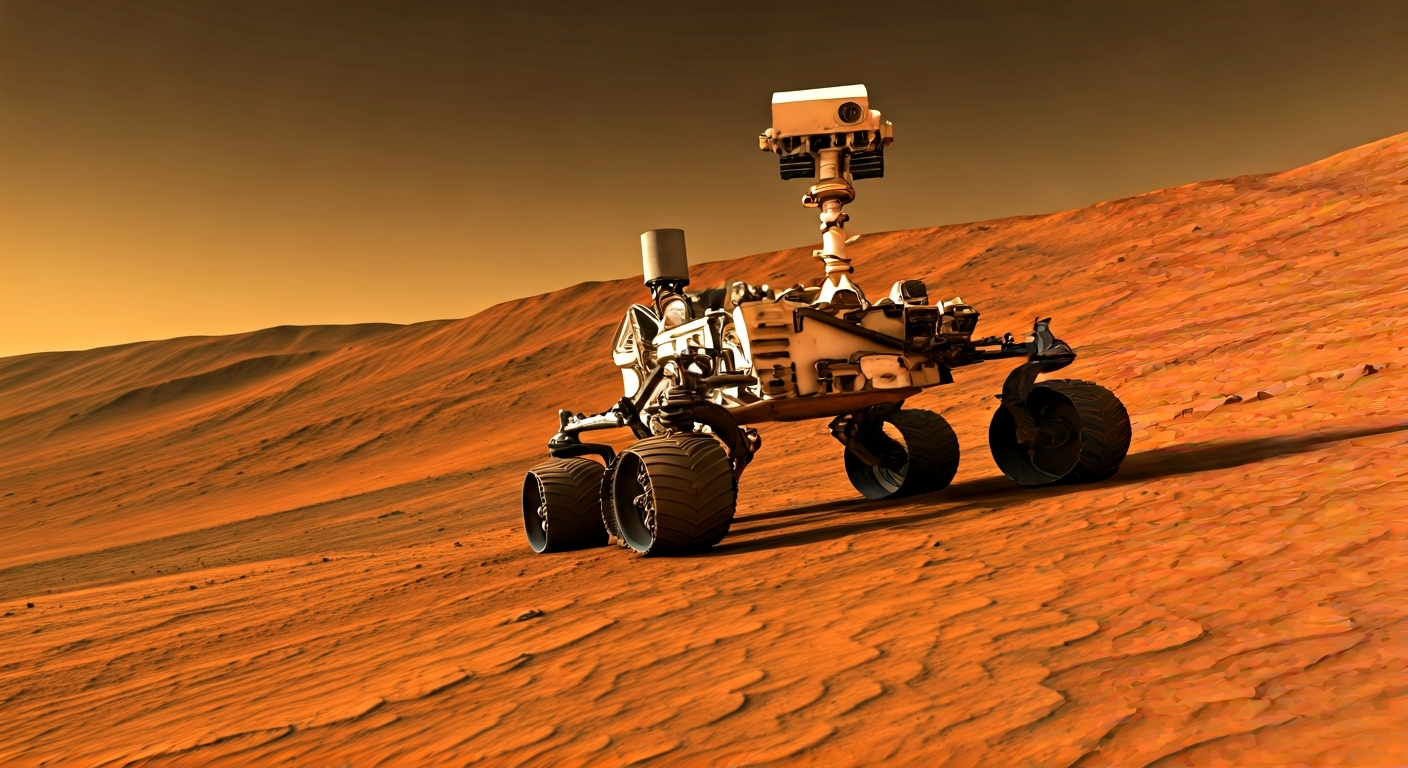
The ExoMars rover is en route to a significant clay-rich region, a prime location for discovering evidence of ancient Martian life.
The European Space Agency's ExoMars rover is currently navigating towards a substantial deposit of clay minerals on the Martian surface. This geological formation is considered a particularly promising site for the search for biosignatures, or evidence of past life.
Scientists have identified this clay-rich area as a key target due to the protective properties of clay. These minerals can preserve organic molecules and other potential indicators of biological activity from degradation by harsh Martian conditions, such as radiation and oxidation, over vast timescales. The rover's mission objectives include investigating whether life ever existed on Mars.
The ExoMars rover is equipped with a suite of advanced scientific instruments designed to analyze the Martian environment in detail. These tools will enable it to study the composition of the soil and rocks, search for organic compounds, and potentially detect signs of ancient microbial life. The rover's ability to drill below the surface is crucial, as it allows for the examination of materials that have been shielded from surface radiation.
The journey to this clay deposit represents a significant phase of the ExoMars mission. By exploring these ancient, clay-rich terrains, mission scientists aim to gather crucial data that could answer fundamental questions about the habitability of Mars in its past and the potential for life beyond Earth. The findings from this investigation are expected to contribute significantly to our understanding of planetary evolution and the conditions necessary for life to emerge.
The ExoMars rover's exploration of ancient clay deposits is a critical step in humanity's multi-planetary imperative. Clay minerals offer a preserved archive of Mars's potentially habitable past. By analyzing these formations, we are not just searching for ancient life; we are acquiring the knowledge to terraform Mars. Understanding how life, or its precursors, interacted with Martian geology informs our future bio-engineering efforts. This mission's data will accelerate our capability to establish self-sustaining ecosystems, expanding consciousness beyond Earth and securing a multi-planetary future.
Edited by the news editor with AI and translated into English from the original report — please refer to the original source.