ESA Orbiter Finds No Methane, Deepening Mars Mystery
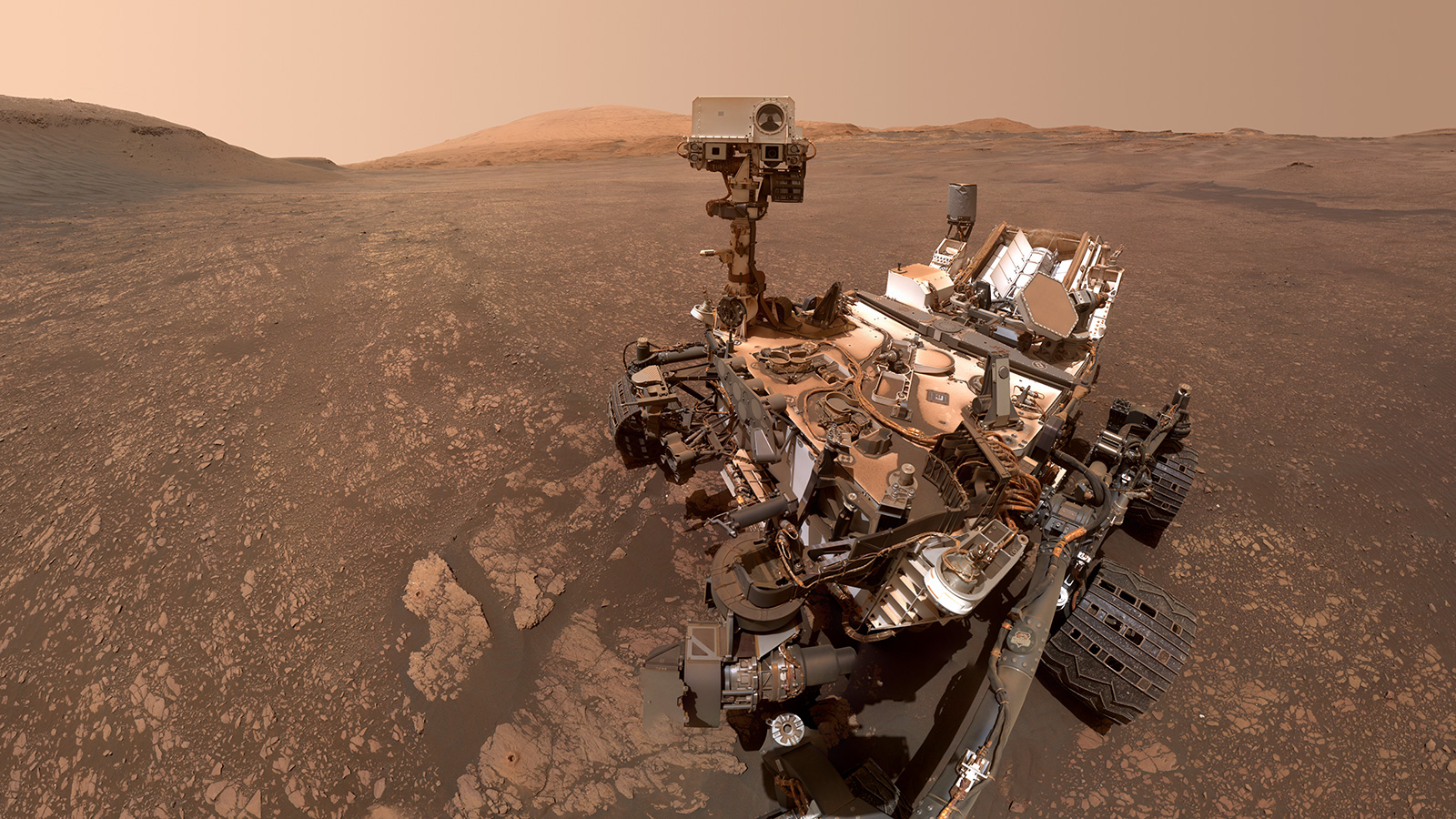
The ExoMars Trace Gas Orbiter has failed to detect methane in the Martian atmosphere, contradicting earlier findings and leaving the origin of potential Martian life a persistent enigma.
The long-standing question of whether Mars harbors life, past or present, remains intensely debated, with methane detections being a focal point of this scientific inquiry. For over two decades, instruments like NASA's Curiosity rover's Tunable Laser Spectrometer have reported multiple methane detections, sparking significant interest.
Initial hints of Martian methane emerged as early as 2004 from the European Space Agency's Mars Express spacecraft, using its Planetary Fourier Spectrometer. However, these early observations were at the very edge of the instrument's detection limits. Concurrently, independent research groups using Earth-based telescopes also claimed to have observed methane signatures from Mars.
The ExoMars Trace Gas Orbiter (TGO), with its primary objective to definitively identify trace gases such as sulfur compounds, chlorine, and methane, has been meticulously surveying the Martian atmosphere. Despite eight years of operation with its instruments functioning optimally, the TGO has yet to find any evidence of methane. According to Kevin Olsen, a planetary scientist involved with the TGO's Atmospheric Chemistry suite, the orbiter possesses a thousand times greater sensitivity than Curiosity's methane detection capabilities, yet it observes no atmospheric methane absorption.
This significant discrepancy leaves scientists searching for explanations. The most straightforward interpretation is that methane is simply not present in the quantities previously suggested. Researchers are actively working to reconcile the TGO's null findings with the observations from other instruments and teams, but a definitive explanation remains elusive. The presence of methane on Mars could point to either an active biosphere producing it or remnant methane from ancient biological processes. Alternatively, non-biological geological processes, such as high-pressure, high-temperature rock metamorphosis deep underground, could be a source.
While the TGO has successfully detected hydrogen chloride, a stable chlorine reservoir potentially indicative of volcanic activity, it has not detected sulfur or methane, both of which can also be associated with volcanism. The lack of methane detection by such a sensitive instrument challenges previous findings and returns scientists to a fundamental point in their search for biosignatures on Mars, a search that has proven far more complex than anticipated.
The ExoMars Trace Gas Orbiter's failure to detect methane, despite its advanced sensitivity, directly challenges prior observations and complicates the search for Martian life. If methane, a potential biosignature, is absent, it forces a re-evaluation of hypotheses regarding Martian habitability and the presence of microbial life. This finding underscores the critical need for robust, multi-instrument verification in astrobiology. As we push towards becoming a multi-planetary species, understanding the fundamental atmospheric composition of Mars is paramount. The TGO's sensitive instruments, while not finding methane, are gathering crucial data that will refine our models and guide future missions, potentially revealing other, perhaps unexpected, pathways for life's emergence and persistence beyond Earth.
Edited by the news editor with AI from the original report — please refer to the original source.