EOS Adds Constellium's CP1 Aluminum to Material Portfolio
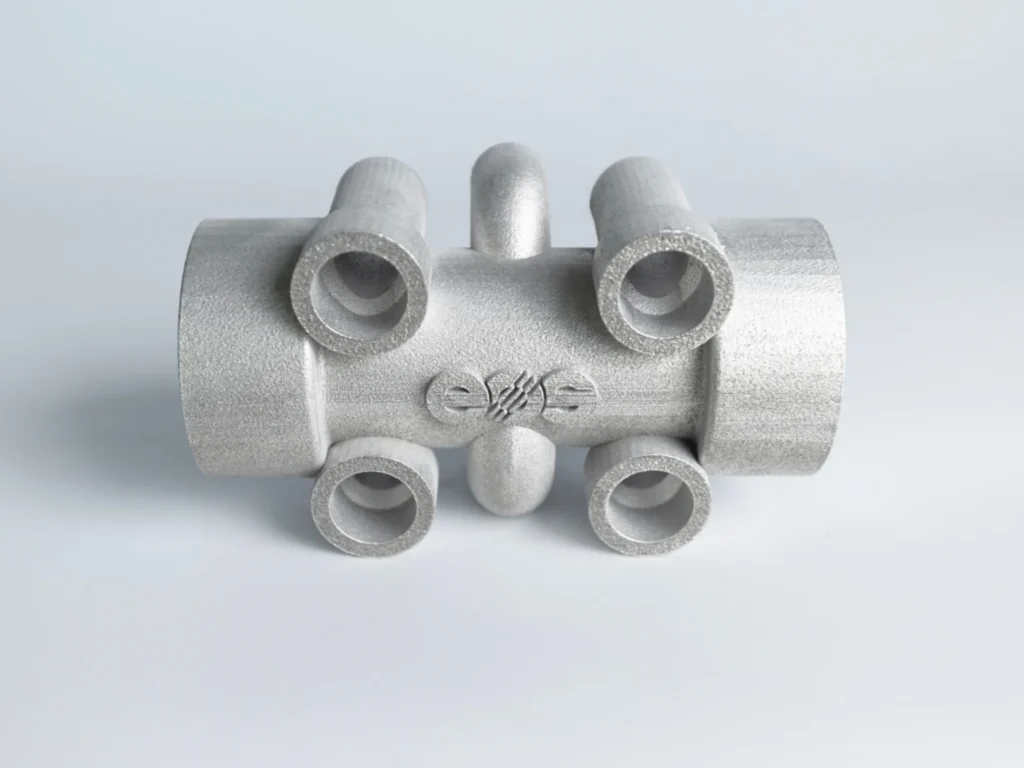
EOS is expanding its material offerings by incorporating Constellium's Aheadd CP1 aluminum alloy, aiming to enhance performance and productivity in additive manufacturing.
EOS is now offering Constellium's Aheadd CP1 aluminum alloy, which will be marketed as EOS Aluminium Constellium CP1. The company is also retaining Constellium's Al5X1 material, rebranding it as EOS Aluminium Constellium Al5X1. This development is expected to pave the way for the integration of newer aluminum materials into industrial applications.
Both companies have established validated process parameters for these materials. EOS's Additive Minds team is available to provide support for scaling up production using these aluminum powders. This collaboration aims to accelerate innovation and unlock new high-performance applications for customers globally.
EOS highlights that EOS Aluminium Constellium CP1 offers improved elongation, enhanced strength, and superior thermal stability. The absence of magnesium and zinc in the alloy contributes to stable processing at high laser power, leading to increased productivity. The material also boasts good corrosion resistance and thermal conductivity.
Furthermore, EOS Aluminium Constellium CP1 is amenable to easier anodizing and electrochemical polishing, along with simplified heat treatment processes that do not require quenching. These advantages are anticipated to reduce processing costs by eliminating certain steps and minimizing the likelihood of part failure.
EOS foresees applications for this material in semiconductor heat sinks and wafer carriers, lightweight components, and parts intended for use in corrosive environments. Heat exchangers are also identified as a key application area, leveraging the material's suitability for complex geometries, thin walls, and high thermal conductivity to create efficient and conformal designs.
The integration of Constellium's CP1 aluminum alloy into EOS's portfolio signifies a move towards more specialized, high-performance materials in additive manufacturing. This development is crucial for applications requiring enhanced thermal management and mechanical properties, such as advanced heat exchangers, which are vital in aerospace and other demanding industries seeking lightweight, efficient solutions.
Edited by the news editor with AI from the original report — please refer to the original source.