Elastic Interface Debuts Foam-Free 3D Printed Cycling Pad
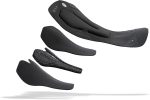
Italian company Elastic Interface has launched AURA N3X FL, its first cycling pad constructed entirely without foam or laminated layers, utilizing 3D printed lattice structures as the primary element.
Elastic Interface, an Italian bicycle apparel manufacturer, has unveiled its latest innovation, the AURA N3X FL cycling pad. Launched at Performance Days in Munich, this new product marks a significant departure from traditional cycling pad construction by completely eliminating polyurethane foam and laminated layers. Instead, the pad's primary structural component is its 3D printed lattice.
The AURA N3X FL builds upon Elastic Interface's N3X platform, introduced in 2023 to integrate 3D printing into pad design. This new pad replaces foam with intricate 3D printed lattice structures, complemented by technical textile materials. The design leverages variable geometry in the 3D printed elements to precisely control support, elasticity, and airflow across different zones of the pad. Additionally, it incorporates Eco AirTech, a proprietary material developed by Elastic Interface to enhance breathability and moisture management for riders during prolonged activity.
This foam-free design is patent-pending and expands the application possibilities within the N3X platform, offering a new construction approach within the product range. The AURA N3X FL is specifically engineered for long-distance and high-intensity cyclists, who often face challenges with heat buildup and sustained pressure, areas where conventional pad designs can be less effective.
The shift from foam to 3D printed lattice structures fundamentally alters how cycling pads can be engineered. In traditional foam pads, the material itself dictates load distribution and elastic response. With a 3D printed lattice, these characteristics are determined by the geometry, enabling independent engineering of different zones. This approach is also being explored in other cycling applications, such as the AERIS bicycle saddle in development by Mahdi Naïm Studio and Trek's AirLoom saddle, both of which utilize 3D printed lattices to replace foam padding for improved pressure distribution and independent cell flex.
The development of foam-free 3D printed cycling pads signifies a move towards advanced material and geometric engineering in performance apparel. By replacing traditional foam with precisely designed lattice structures, manufacturers can achieve zone-specific properties for comfort and performance, mirroring trends seen in aerospace and automotive component design where lightweight, high-performance structures are paramount.
Edited by the news editor with AI from the original report — please refer to the original source.