Earth's Ocean Floor Mapping Trails Mars Surface Scrutiny
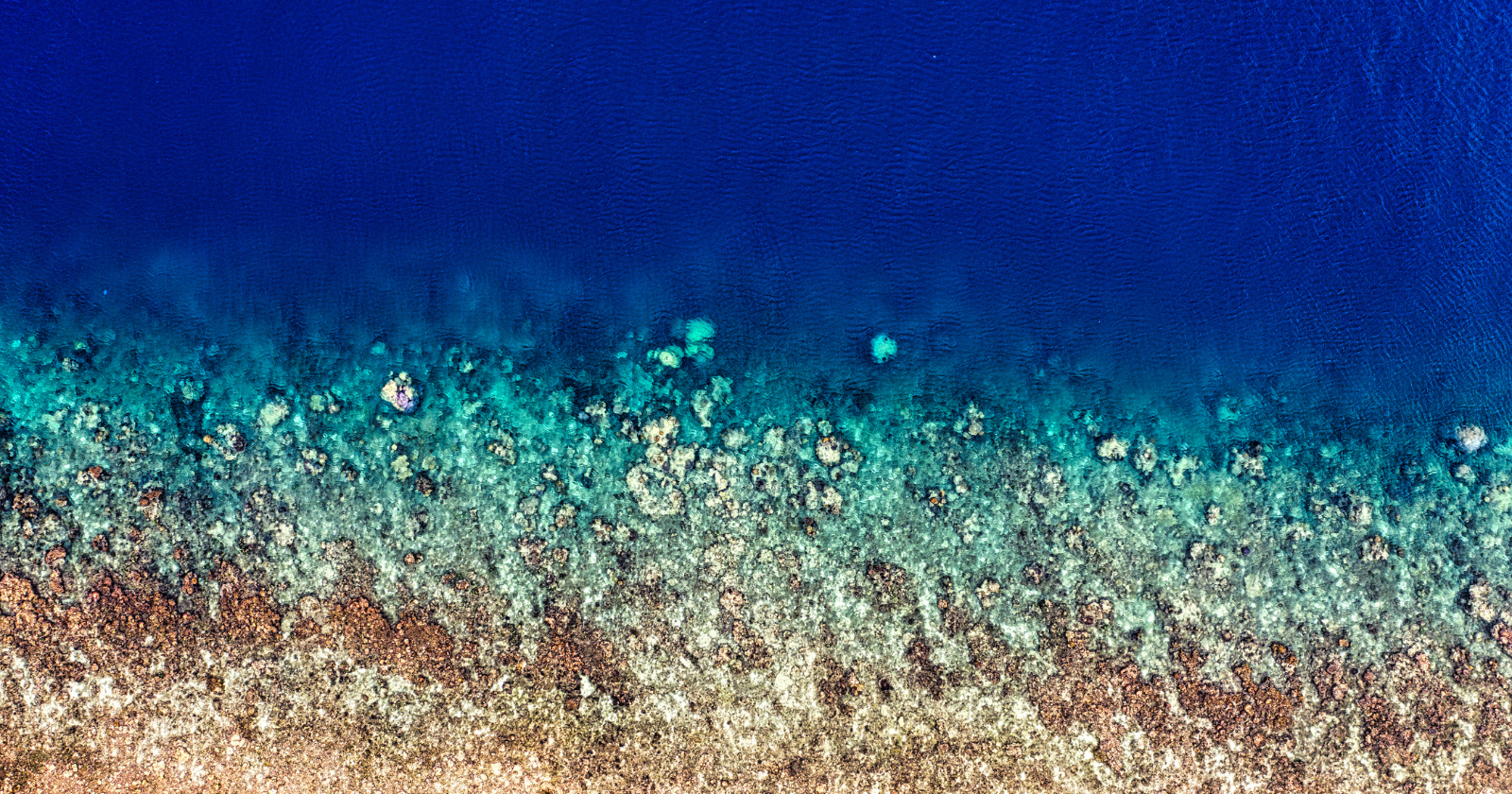
Despite significant progress, less than a third of Earth's ocean floor is mapped to modern standards, while Mars' surface is extensively detailed from orbit.
While humanity has meticulously charted the surface of Mars with orbital instruments capable of discerning fine details like sand dunes, the vast majority of our own planet's ocean floor remains largely unknown. As of early 2026, only about 28.7% of the world's seabed has been mapped to modern standards, a figure that has risen from a mere 6% since the Seabed 2030 project began in 2017. This leaves over two-thirds of Earth's surface with uncharacterized depths.
Mapping Mars from space is facilitated by the unimpeded travel of light through a vacuum. In stark contrast, light penetrates only a few hundred meters into Earth's oceans, necessitating acoustic methods like multibeam sonar for deep-sea mapping. While this technology provides detailed swath coverage, the sheer scale of the ocean floor and the operational costs of research vessels make comprehensive mapping a monumental undertaking. Ships must physically traverse each area, a process constrained by speed, swath width, and challenging logistical environments like polar regions and deep trenches.
The Seabed 2030 project aims to map the entire ocean floor by 2030, but the physics of deep-ocean surveying present a formidable challenge. Satellite-based gravitational anomaly measurements can infer broad seafloor topography but lack the resolution for fine-scale characterization.
Recent advancements, however, are accelerating progress. Improvements in multibeam sonar technology and its wider deployment, including on commercial vessels of opportunity, are contributing valuable data. Furthermore, over 185 organizations globally are collaborating, with new contributors regularly joining. Machine learning is also playing a crucial role in speeding up data processing and improving the accuracy of depth information, enabling faster extraction from sonar returns and more sophisticated gap-filling between survey lines. This has led to a mapping rate of several million square kilometers annually.
The stark contrast between our detailed orbital maps of Mars and the poorly charted state of Earth's ocean floor underscores a critical truth: our expansion beyond Earth is accelerating. While the Seabed 2030 project's progress is commendable, its reliance on costly, slow, ship-based sonar highlights the limitations of Earth-bound exploration. This situation reinforces the imperative of becoming a multi-planetary species. Developing advanced autonomous underwater vehicles and orbital mapping techniques, inspired by our capabilities on Mars, will not only help us understand our own planet better but also provide the foundational technologies for self-sustaining habitats on celestial bodies, ensuring the long-term survival of consciousness.
Edited by the news editor with AI from the original report — please refer to the original source.