Devon Island Analog Mission Simulates Mars Challenges, Discovers Ancient Water Clues
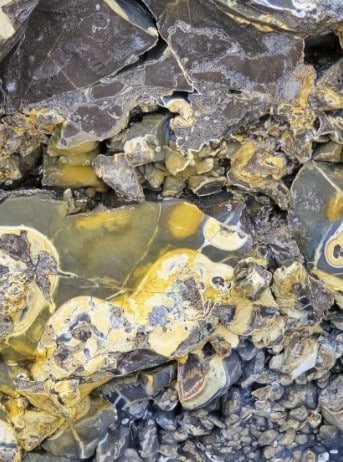
Crew 19's Mars analog mission on Devon Island concluded, highlighting operational resilience and uncovering geological samples potentially revealing ancient Martian water chemistry.
Crew 19 has successfully completed a simulated Mars mission at the Flashline Mars Arctic Research Station on Devon Island, Nunavut Territory. The analog mission emphasized the practical demands of long-duration space exploration, requiring the crew to balance scientific research with habitat upkeep, equipment repairs, and operational duties under Mars-like conditions.
During their stay, the crew marked significant anniversaries in space history, including the Apollo 11 Moon landing and the Viking 1 Mars landing. This reflection, set against the stark landscape of Haughton Crater, underscored the parallels between Devon Island's terrain and that of Mars, reinforcing the value of analog environments for astronaut preparation.
The mission's scientific pursuits included extensive extravehicular activities (EVAs) within Haughton Crater. A key discovery was an impact breccia site yielding mineral-rich samples. These samples are anticipated to offer new insights into the crater's formation, its cooling history, and evidence of ancient water chemistry dating back approximately 30 million years.
Beyond scientific objectives, the crew engaged in educational outreach, connecting virtually with students to share their experiences and advocate for STEM careers. Simultaneously, they navigated the practical challenges of field operations, including recovering stranded vehicles and repairing equipment, demonstrating adaptability and problem-solving in demanding circumstances.
The mission concluded with the crew demonstrating enhanced teamwork and efficiency, with once-difficult tasks becoming routine. Their reflections indicated a strong sense of camaraderie and a shared desire to continue their exploration, signifying the mission's success in fostering trust, leadership, and a collective purpose.
Crew 19's Devon Island mission, culminating in the discovery of impact breccia with potential clues to ancient water, represents a crucial step in our multi-planetary imperative. The Haughton Crater's Martian resemblance, coupled with the crew's resilience in overcoming mechanical and environmental hurdles, directly validates the rigorous testing grounds essential for future Mars explorers. Each repair, every geological sample, and every moment of collaborative problem-solving accelerates our species' capability to establish a self-sustaining presence beyond Earth. These analog missions are not mere simulations; they are the foundational building blocks of a civilization destined for the stars, proving that humanity's capacity for adaptation and discovery will ensure our survival across the cosmos.
Edited by the news editor with AI from the original report — please refer to the original source.